
Zeynep Sonmez uses watermelon racket symbol after apparel ban
The Turkish tennis player said tournaments barred her pro-Palestinian brooch, so she put a watermelon-shaped dampener on her racket at Wimbledon.
By Lucas Ferreira · Science & Environment Writer
3 min read
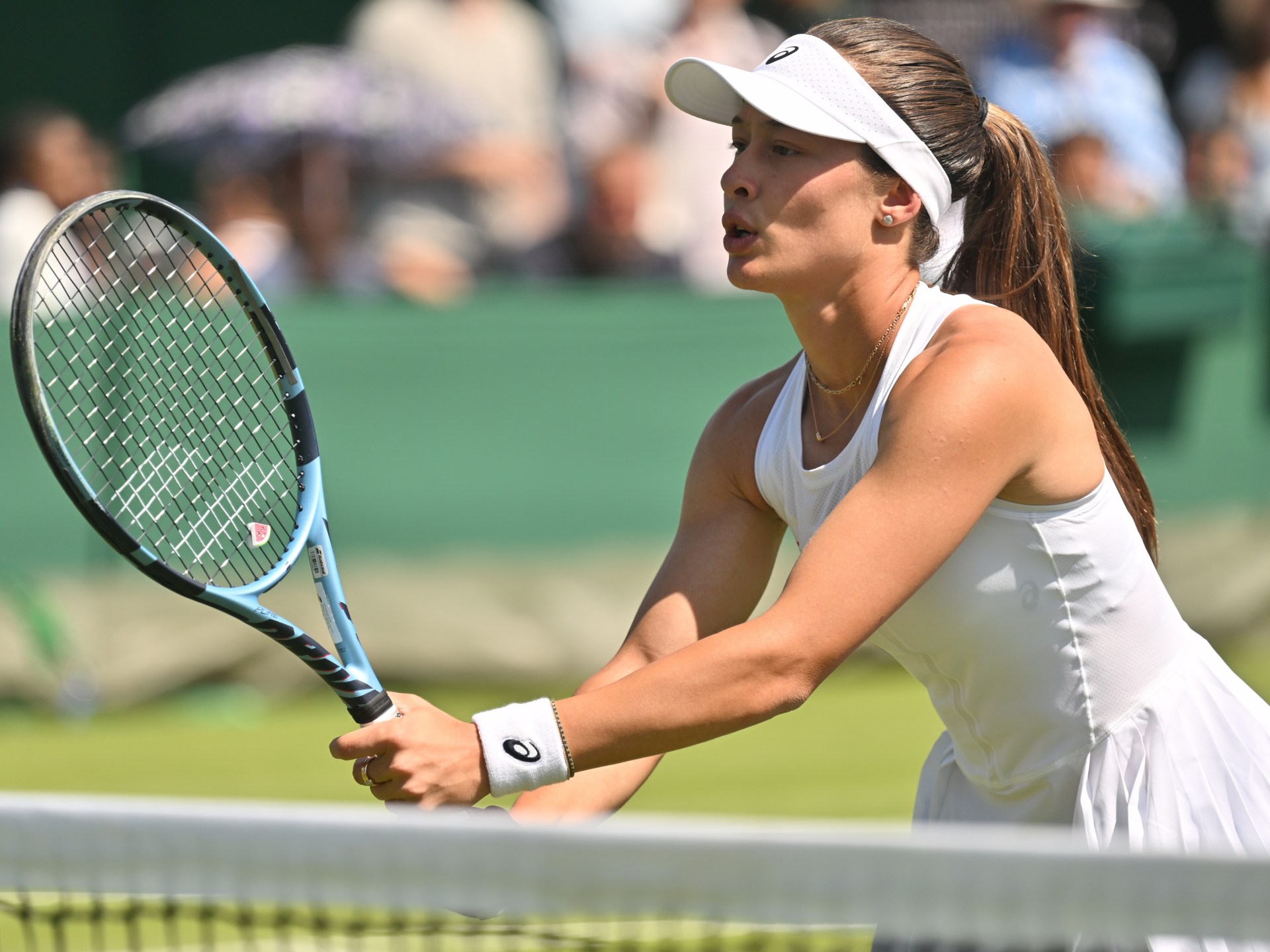
Turkish tennis player Zeynep Sonmez lost in the second round of Wimbledon, but her racket drew attention beyond the scoreline. According to Al Jazeera, Sonmez used a watermelon-shaped vibration dampener after tournament officials would not let her wear a pro-Palestinian brooch.
Sonmez, 24, was beaten 7-5, 6-3 by American Claire Liu in the singles draw. She later appeared in the women’s doubles at the All England Club with Spain’s Jessica Bouzas Maneiro against Shuko Aoyama of Japan and En-Shuo Liang of Taiwan, Anadolu images showed.
In comments to Turkiye’s Anadolu agency after her match, Sonmez said she had previously worn a brooch but was no longer allowed to do so at tournaments. She said she challenged officials over what she saw as different treatment for displays of support for Ukraine and Palestine.
“I argued with the managers that the Ukrainian flag is allowed, but the Palestinian one is not,” Sonmez told Anadolu, according to Al Jazeera. She said officials told her they would not allow the Palestinian symbol on her clothing.
Al Jazeera reported that Sonmez then turned to a watermelon-themed dampener on her racket strings. The fruit has become a sign of Palestinian solidarity because its colours match the Palestinian flag, and Al Jazeera said watermelon is also a common crop among Palestinian farmers.
Sonmez told Anadolu that officials could not object to the dampener as part of her equipment, according to Al Jazeera. Her gesture was praised in Turkiye by Youth and Sports Minister Osman Askin Bak, who said sport can reflect universal human values, Al Jazeera reported.
Omer Celik, spokesperson for Turkiye’s governing Justice and Development Party, also backed Sonmez, according to Al Jazeera. Celik described Israel’s war in Gaza as genocidal; Al Jazeera reported that the war has killed at least 73,000 Palestinians since Oct. 7, 2023.
Rise in Turkish tennis
Al Jazeera reported that Sonmez was born in Istanbul on April 30, 2002, and has family roots in Arhavi, a town on Turkiye’s Black Sea coast. Her interest in the sport was shaped in part by working as a ballgirl at a WTA event in Istanbul, where she watched Cagla Buyukakcay win a title on home courts.
Turkish sports media had called Sonmez a future “golden racket” as early as 2016, according to Al Jazeera. After a strong 2025 season, she received the Athlete of the Year award at the Harper’s Bazaar Turkiye Women of the Year ceremony in Istanbul.
Sonmez is coached by Issam Jellali and Mehmet Bayraktar, Al Jazeera reported. After a Wimbledon qualifying defeat to Ukraine’s Daria Snigur, she shifted toward a more attacking style built around moving forward to the net.
Her results have made her the highest-ranked Turkish player in WTA history, according to Al Jazeera. She reached a career-best No. 51, passing Buyukakcay’s national mark of No. 60.
Sonmez won her first WTA 250 singles title in Merida, Mexico, in 2024, defeating American Ann Li 6-2, 6-1 in a 70-minute final, Al Jazeera reported. She became the first Turkish player in the Open Era, male or female, to reach the third round of a Grand Slam at Wimbledon in 2025.
She repeated that third-round Grand Slam result at the 2026 Australian Open, where Al Jazeera said she beat Anna Bondar and 11th seed Ekaterina Alexandrova before losing to Yulia Putintseva. At Stuttgart’s Porsche Tennis Grand Prix, she earned her first top-10 win by defeating world No. 8 Jasmine Paolini 6-2, 6-2.
This story draws on original reporting from Al Jazeera.