
Yemen fuel costs push families toward risky power fixes
In Taiz, fires linked to solar batteries and cars converted to cooking gas are adding to the toll of Yemen’s energy crisis.
By Sofia Marchetti · World Affairs Correspondent
3 min read
A deadly house fire in Taiz has put renewed attention on the risks Yemenis face as they turn to cheaper substitutes for public power and petrol. Al Jazeera reported that a lithium battery used in a home solar system caused an explosion last week that killed a mother and two of her children.
Dr Mohammed Saeed, head of the emergency department at the burns centre at Al-Thawra General Hospital Authority, told Al Jazeera the father remains in intensive care and a third child was discharged. The family had been pulled from the burning home in the Beer Basha area, where neighbours rushed to help after the early-morning blast.
Taiz has no functioning public electricity grid, according to Al Jazeera, leaving residents to choose between costly private generators and solar systems. Many households have adopted solar power, but Saeed said his unit often receives patients burned in battery fires from Taiz and nearby governorates.
Hospital sees thousands of burn cases
Saeed said Al-Thawra’s burns unit recorded 2,729 cases in the first half of this year, including 13 deaths. He said many cases involved exploding solar batteries, cars converted to cooking gas, household gas leaks and petrol-related accidents.
The danger is tied in part to do-it-yourself installations, according to electrical engineer Dawood Abdullah. He told Al Jazeera that solar power can be a safe and useful alternative to generators, but families often install systems without trained help and store batteries in unsafe areas.
Abdullah said batteries should not be placed in living spaces and should be kept in ventilated areas. He also said poor-quality batteries and faulty installation increase fire risk, arguing that trained specialists should handle solar installations.
Ramez Nabil, media officer for the Yemeni Green Media Center, told Al Jazeera that solar energy remains a clean and durable option for homes and businesses. But he said Yemen’s economic strain has pushed some people toward cheap equipment and unqualified installers, creating a need for public safety campaigns.
Drivers convert cars to cooking gas
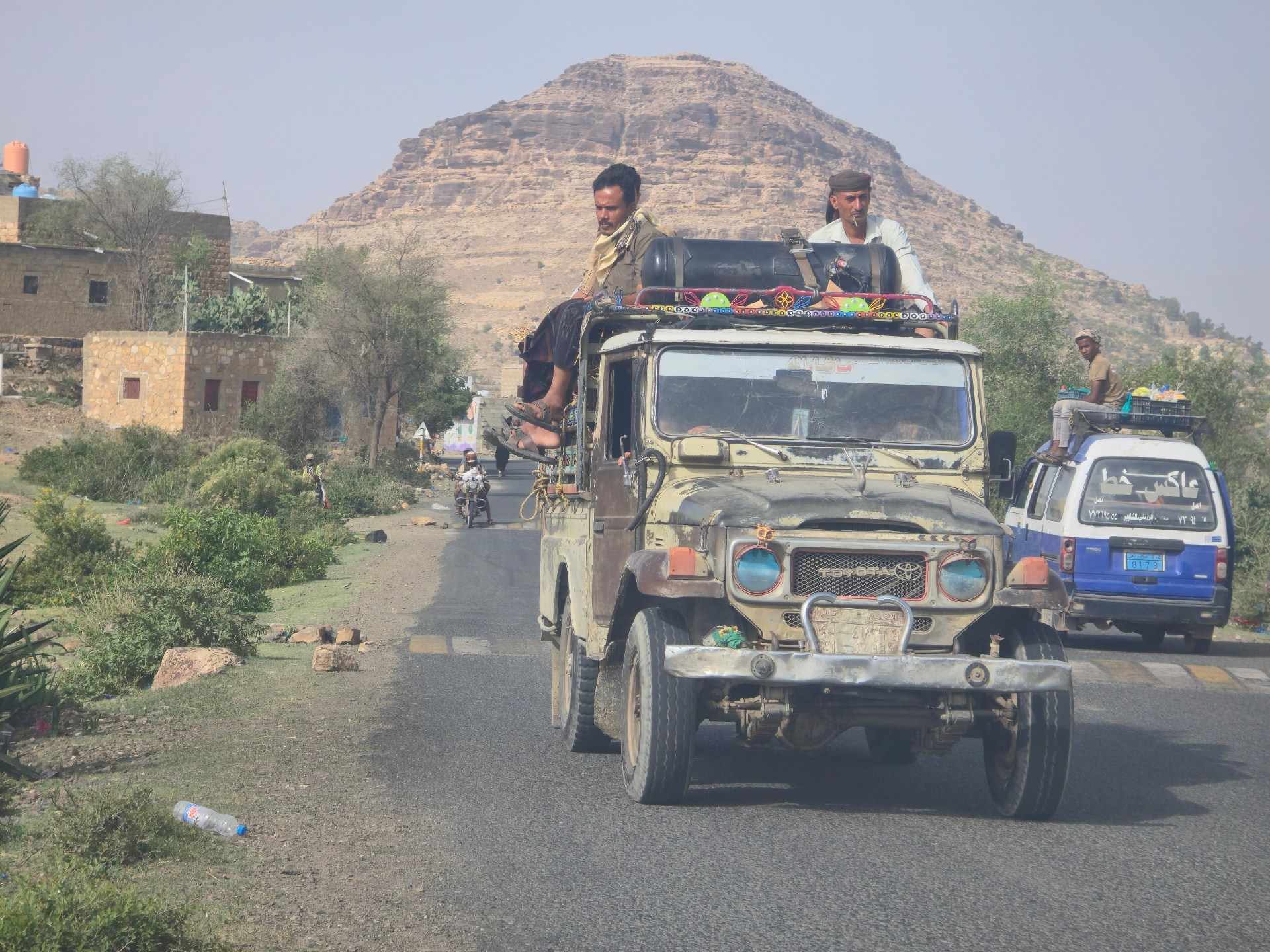
The energy squeeze is also changing transport. Al Jazeera reported that some drivers, including bus and passenger-car owners, have modified vehicles to run on cooking gas because petrol is far more expensive.
A litre of petrol costs 1,500 Yemeni riyals, or about $0.95, while cooking gas costs 500 riyals, or about $0.30, according to Al Jazeera. The price gap has encouraged conversions even though authorities and safety officials warn of fire hazards.
In one case, 40-year-old Ammar Saleh was recovering at Al-Thawra Hospital after his vehicle caught fire while he was filling it with cooking gas, Al Jazeera reported. His brother, Mohammed Saleh, said a bystander lit a lighter during the refuelling, causing flames that burned Ammar before he was taken first to a clinic and then to the hospital.
Taiz police planning and information manager Malik Al-Sabri told Al Jazeera that battery accidents are among the main causes of house fires in the governorate, accounting for 30 to 40 percent of fires. He said fires have risen because of unsafe solar systems and unregulated vehicle conversions.
Al-Sabri said the Civil Defence division of Taiz police has banned unauthorised vehicle conversions and is enforcing safety conditions for any modifications. Al Jazeera reported that authorities have also held workshops to warn the public, while an underground market for engine conversions continues.
This story draws on original reporting from Al Jazeera.