
Wong Kim Ark descendants enter renewed birthright citizenship fight
A Supreme Court case from 1898 is central again as Trump seeks to restrict citizenship for some children born in the United States.
By Lucas Ferreira · Science & Environment Writer
4 min read
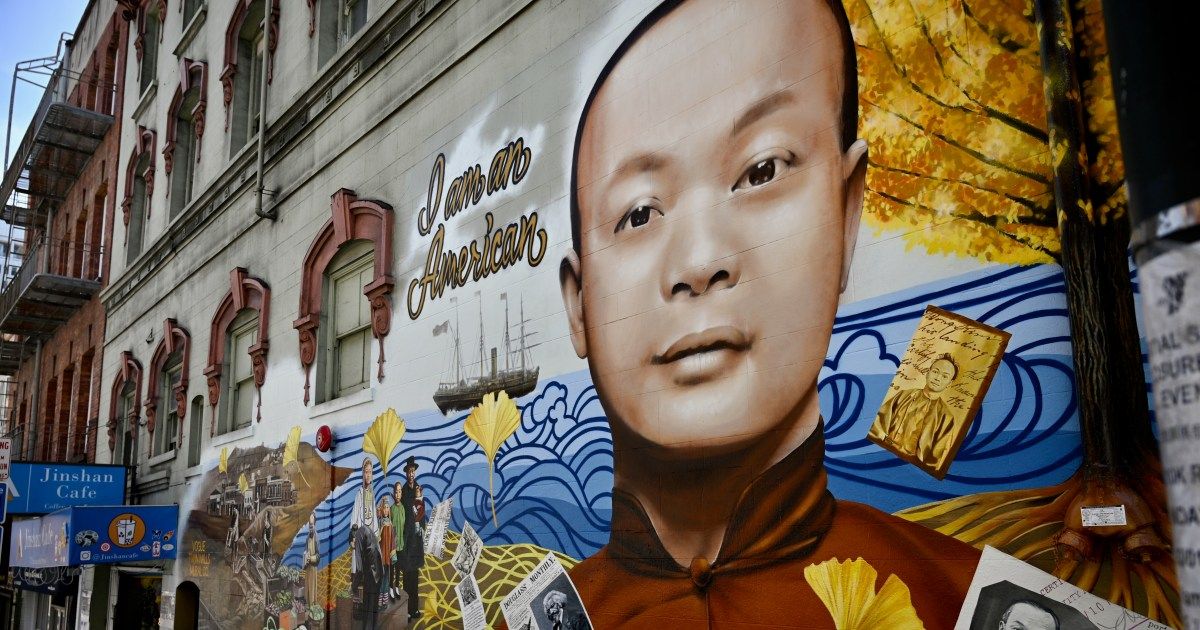
The family of Wong Kim Ark has become part of a renewed national fight over birthright citizenship after President Donald Trump moved to limit the constitutional rule that made Wong a U.S. citizen. The dispute carries high stakes for children born in the United States to immigrant parents, a right the Supreme Court reaffirmed on June 30.
Al Jazeera reported that Sandra Wong, Wong Kim Ark’s great-granddaughter, grew up in San Francisco knowing little about her father’s Chinese American family. She learned more at her father’s funeral in 2011, when a newspaper clipping pointed to a major legal fight involving her great-grandfather.
That family history gained new public attention after Trump, during his 2015 presidential campaign, called for ending birthright citizenship. The principle comes from the Fourteenth Amendment, which grants citizenship to people born or naturalized in the United States and subject to its jurisdiction.
A 19th-century case returns to the center
Wong Kim Ark was born in San Francisco in 1873 to Chinese parents, according to Al Jazeera. His childhood came during a period of intense anti-Chinese hostility in California and across the U.S. West.
The Fourteenth Amendment had been ratified only a few years earlier, after the Civil War, to overturn a Supreme Court ruling that denied citizenship to Black people. Carol Nackenoff, co-author of American by Birth: Wong Kim Ark and the Battle for Citizenship, told Al Jazeera that the prevailing U.S. view at the time was that citizenship was tied to birthplace, not ancestry.
Congress later passed measures including the Chinese Exclusion Act, which barred most Chinese immigrants from entering the country. Wong, who worked as a laborer and cook, traveled to China to find a wife and see his parents, who had returned to Asia in 1889, Al Jazeera reported.
In 1895, Wong returned to San Francisco aboard the SS Coptic. Customs official John Wise denied him entry, saying Wong was a Chinese citizen because of his parents. Wong was held aboard ships for nearly five months before being released on $250 bail, according to Al Jazeera.
Wong challenged the decision. In 1898, the Supreme Court ruled that he was a U.S. citizen because he had been born in the United States, regardless of his parents’ nationality.
Trump presses for limits
Trump’s 2025 inauguration-day executive order sought to restrict birthright citizenship to children with at least one parent who is a U.S. citizen or permanent resident. Under that approach, children born to temporary or undocumented immigrants would be excluded.
Trump has argued that birthright citizenship encourages so-called chain migration, in which citizens sponsor relatives for immigration. In a March 30 social media post cited by Al Jazeera, he also argued that the Fourteenth Amendment’s citizenship clause was meant to address the children of formerly enslaved people after the Civil War.
Supporters of birthright citizenship have warned that undoing Wong’s case could leave some children without citizenship. On June 30, the Supreme Court upheld the precedent from Wong’s case, and Al Jazeera reported that the decision cited Wong more than 100 times. Trump has since called for a constitutional amendment and asked the Supreme Court to reconsider, according to Al Jazeera.
Nackenoff told Al Jazeera that Trump’s effort has revived interest in Wong’s case. She also cited a March University of Rochester survey that found 24 percent of U.S. citizens oppose birthright citizenship.
San Francisco marks Wong’s story
In San Francisco’s Chinatown, organizers recently unveiled a mural of Wong at 751 Sacramento Street, the site Al Jazeera identified as his birthplace. The mural includes the words “I am an American.”
A bust of Wong is also planned for Nam Kue Chinese School, which teaches children about Chinese culture. Vincent Pan, co-executive director of Chinese for Affirmative Action, told Al Jazeera that public memorials help show that the people behind legal precedents were real individuals.
Sandra Wong and her brother Norman, both great-grandchildren of Wong Kim Ark, have taken on public roles as the case returns to national debate. Sandra Wong told Al Jazeera that she is private by nature, but she appeared at the mural unveiling to honor her great-grandfather and the community that supported him.
This story draws on original reporting from Al Jazeera.