
Veracruz fandangos can keep ‘La Bamba’ going for an hour
At Veracruz fandangos, musicians and dancers shape ‘La Bamba’ as an open-ended community jam rather than a fixed pop song.
By Lucas Ferreira · Science & Environment Writer
2 min read
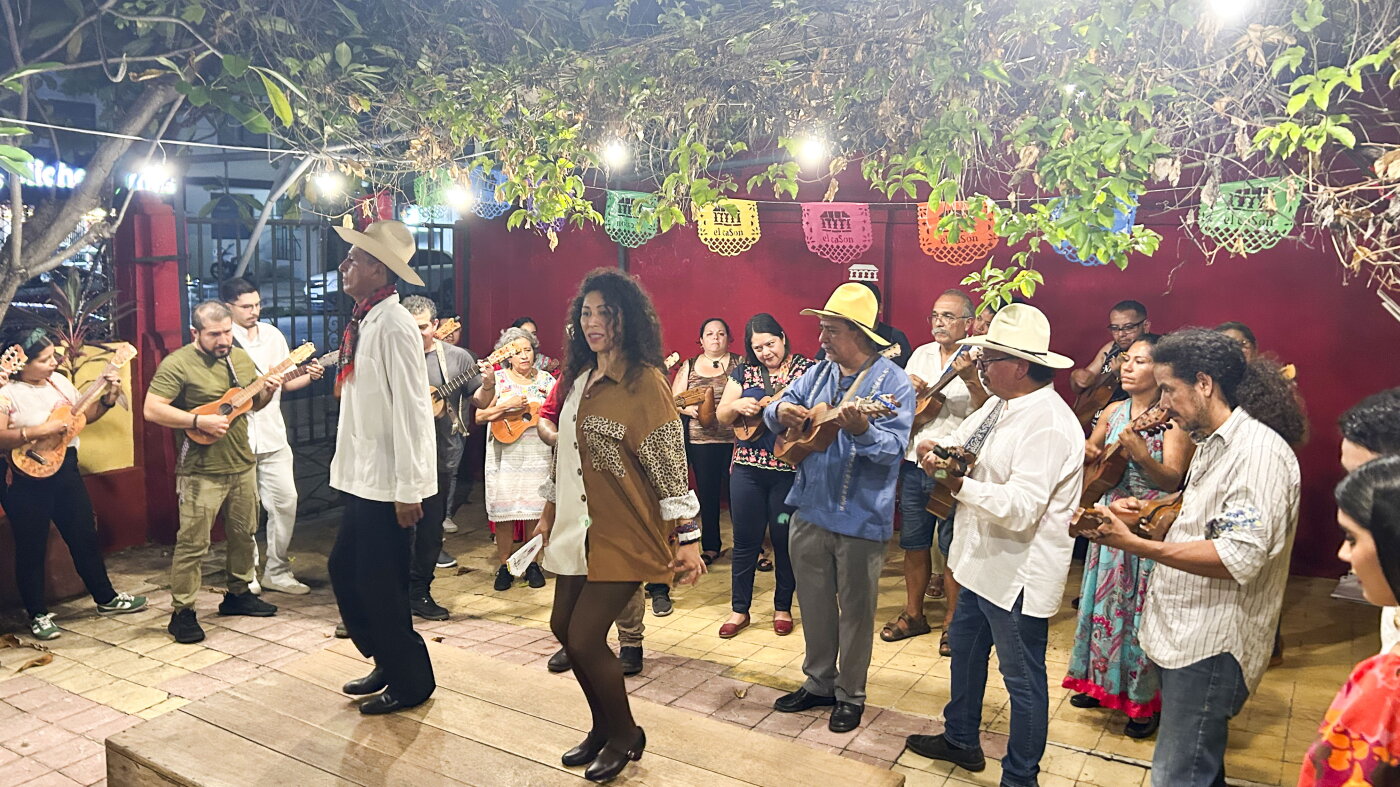
A Veracruz fandango La Bamba performance can run far longer than the familiar rock-and-roll recording because it is built as a community jam, with musicians joining in and dancers taking turns. NPR reported that musician and instrument maker Tacho Utrera has seen the song and its dancing continue for an hour at large fandangos in Tlacotalpan, though that is an example rather than a standard duration for every gathering.
“La Bamba” is the best-known song in son jarocho, the regional music tradition of Veracruz, according to NPR. That traditional song predates and differs from Ritchie Valens’ 1958 rock version, which helped make its melody widely known outside Mexico.
What happens at a Veracruz fandango?
A fandango is a communal event where people play instruments, sing and dance. Rather than presenting a setlist with fixed song lengths, participants gather around a wooden dance platform called a tarima; musicians may join the players already there, while dancers rotate onto the platform.
ABC News described the format in a 2013 report as an open jam in which performers can trade improvised verses and play together. With no required endpoint for the song, a familiar progression such as “La Bamba” can continue while the group changes around it.
Why can ‘La Bamba’ last so long?
The music and dance work together. Players commonly use the jarana, a small eight-string guitar native to the region, NPR reported. Dancers perform zapateo, heel-driven steps on the tarima that serve as percussion and help the string players hold time.
In the Veracruz gathering NPR observed, audience members joined a trio of musicians until about two dozen jarana players were performing “La Bamba”; that rendition lasted roughly 15 minutes. Utrera said the largest Tlacotalpan fandangos can include as many as 80 musicians, with dancers continually changing, allowing a performance to last much longer.
NPR describes fandangos as a tradition more than 300 years old, while characterizing son jarocho as shaped by European, Caribbean and Indigenous influences. ABC News separately traced the Veracruz style to interactions among Spanish, Indigenous and Afro-Mexican communities. The result is a participatory form in which the people playing, singing and dancing collectively determine how long a song lasts.
NPR reported that son jarocho and fandangos lost standing in the 1960s and 1970s, according to musician Gilberto Gutiérrez. The report says fandangos now take place in Veracruz for occasions including baptisms, birthdays, wakes and saints’ days, as well as informal celebrations.
This story draws on original reporting from NPR.