
Analysts say U.S. wars keep outrunning Washington’s plans
NPR reported that conflicts in Afghanistan, Iraq and Iran show a recurring gap between U.S. firepower and political results.
By James Whitfield · Staff Writer
4 min read
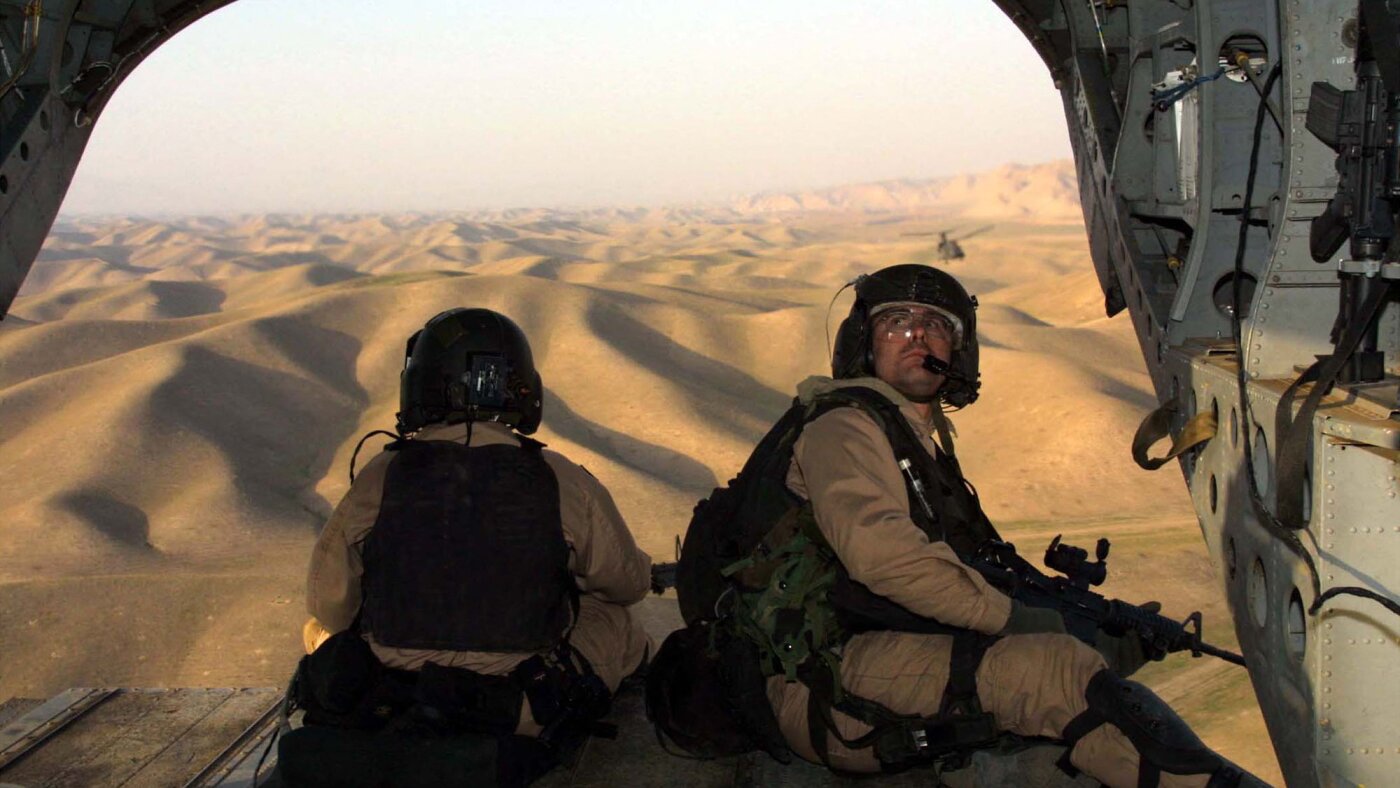
The United States has repeatedly opened wars with rapid military gains, then struggled to turn battlefield success into durable political outcomes, NPR reported. Analysts cited by NPR say the pattern has reappeared across Afghanistan, Iraq and the current war with Iran, where U.S. goals remain unresolved despite major strikes.
NPR’s Greg Myre reported that the U.S. has spent more than 20 of the past 25 years at war in three major conflicts in the same region: Afghanistan, Iraq and Iran. Presidents have presented American military power as a route to fast, decisive results, but the outcomes have fallen short of the political aims set at the start, according to NPR.
Under President George W. Bush, U.S. forces removed the Taliban from power in Afghanistan in 2001 and Saddam Hussein from power in Iraq in 2003 within weeks, NPR reported. Under President Trump, U.S. bombing, aided by Israel, killed many Iranian leaders on the first day of the war and struck Iran widely, according to NPR.
The later results have been less clear. NPR reported that the Taliban returned to power in Afghanistan as the U.S. withdrew in 2021 after a 20-year war. Iraq has reached a degree of stability but still faces serious problems after years of violence, while Iran’s theocratic government remains in place and the war has not been settled.
Experts point to planning failures
Peter Bergen, a CNN national security analyst and author of “All The Presidents’ Wars,” told NPR that the United States is often effective at destroying targets and killing enemies early in a war, but falls short in planning for what follows. He said Washington has repeatedly failed to prepare for the peace after the shooting starts.
Paul Salem, a Middle East analyst at the Center for Strategic and International Studies, told NPR that the U.S. has relied heavily on military force while giving less weight to diplomacy. Salem said the recent histories of Afghanistan, Iraq and Iran do not support the idea that removing or weakening leaders will produce stable new political orders.
Bergen made a similar argument, telling NPR that the U.S. has acted like an empire while resisting the long-term commitments empires usually require, such as language expertise, extended deployments and sustained control of territory.
Iran raises the same questions
Trump had pledged to avoid “forever wars,” but NPR reported that his attack on Iran puts the U.S. in direct conflict with its strongest regional adversary. The administration has avoided ground troops, which has kept U.S. casualties lower than in the earlier wars, according to NPR.
Douglas Lute, a retired Army lieutenant general and former U.S. ambassador to NATO, told NPR he opposes the Iran war and does not favor ground troops. But he said a bombing-only campaign cannot support broad aims such as regime change unless U.S. leaders reduce their objectives.
NPR reported that Trump has at different points called for eliminating Iran’s nuclear program, removing its government, and destroying its air force, navy and missile program. Lute said the mismatch between goals, methods and resources resembles mistakes he saw while coordinating Iraq and Afghanistan policy under Presidents Bush and Obama.
Local forces blunt U.S. advantages
NPR reported that weaker opponents have used asymmetric tactics to reduce the value of U.S. firepower. In Afghanistan and Iraq, militants used roadside bombs and suicide attacks; in Iran, officials have turned to low-cost drones and largely closed the Strait of Hormuz even after U.S. attacks badly damaged Iran’s conventional navy.
Harvard professor Stephen Walt wrote in Foreign Policy, as cited by NPR, that warfare has been shifting in favor of local defenders even when they face technologically superior militaries. Salem told NPR that State Department advice has often been dismissed, including during the Iran conflict.
The analysts pointed to the 1991 Gulf War as a counterexample. NPR reported that President George H.W. Bush set the limited objective of expelling Iraqi forces from Kuwait, assembled United Nations support and built a broad coalition before launching the war. Lute told NPR that those restrained goals made the campaign more realistic than later U.S. wars.
Trump is seeking an end to the Iran war, NPR reported. Salem said Iran remains vulnerable to U.S. strikes but can impose costs on the global economy and indirectly on the U.S. president, leaving open the prospect of more confrontations.
This story draws on original reporting from NPR.