
US tariff fight gives Lula a sovereignty opening before Brazil vote
Lula is using US trade pressure to challenge Flavio Bolsonaro as Brazilians weigh October’s presidential election.
By Daniel Okafor · Business Editor
4 min read
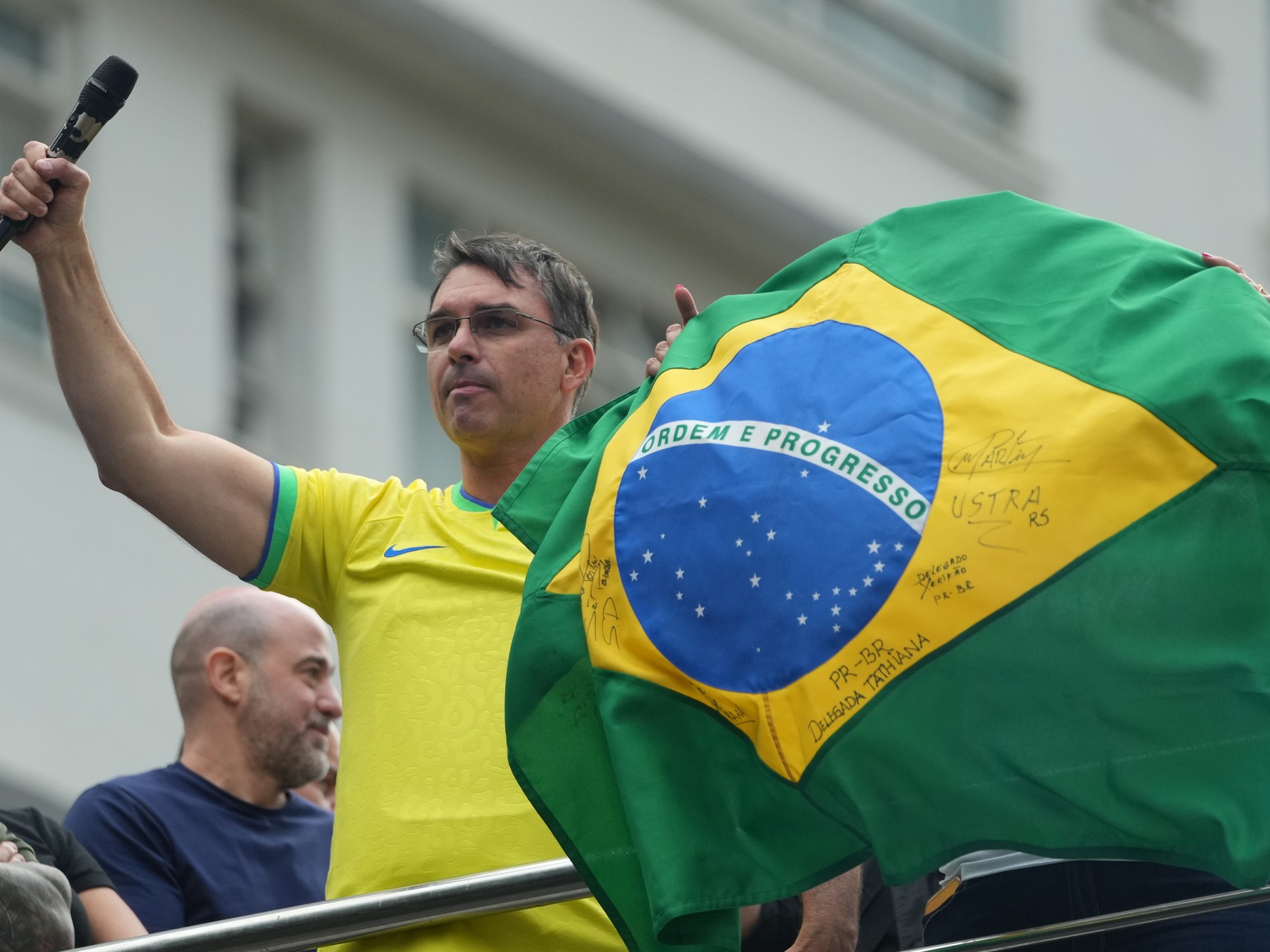
US trade pressure on Brazil is reshaping the country’s presidential campaign by giving President Luiz Inacio Lula da Silva a chance to present himself as a defender of national sovereignty, Al Jazeera reported. The issue matters because Lula is seeking a fourth non-consecutive term against Senator Flavio Bolsonaro, the son of jailed former President Jair Bolsonaro.
Brazil is due to hold the first round of its general election on October 4, with a possible runoff on October 25 if Lula and Flavio Bolsonaro advance, according to Al Jazeera. Jair Bolsonaro is serving a 27-year prison sentence after prosecutors accused him and allies of plotting to overturn his 2022 loss to Lula.
Trump’s administration last week announced 25 percent tariffs on many Brazilian imports, following a yearlong investigation that accused Brazil of unfair trade practices, Al Jazeera reported. Washington said Brazil gave improper preference to Pix, its state-run payments system, maintained an 18 percent tariff on US ethanol and did not enforce deforestation rules strictly enough, which US officials said benefited Brazilian timber producers.
The new levies follow earlier tariffs of up to 50 percent on Brazil that Trump linked to the criminal case against Jair Bolsonaro, according to Al Jazeera. Trump had described that investigation as a “witch-hunt.”
A recent Quaest survey for Folha de S Paulo put Lula ahead of Flavio Bolsonaro by 45 percent to 37 percent in a hypothetical second-round matchup, Al Jazeera reported. Gimena Sanchez, director for the Andes at the Washington Office on Latin America, told Al Jazeera that Bolsonaro’s movement fears the tariff fight could increase Lula’s support because many Brazilians oppose US pressure.
Trump ties put Bolsonaro camp under strain
Trump has long supported Jair Bolsonaro, including through a recorded endorsement before Bolsonaro’s failed 2022 re-election bid, Al Jazeera reported. Gustavo Blum, a Brazilian geopolitics analyst, told Al Jazeera that Trump has been a central figure for the Bolsonaro family and other far-right politicians in Latin America since his first term.
Blum said that relationship has become harder for the Bolsonaros to defend as Washington imposes new trade penalties. He told Al Jazeera that the tariffs make it more difficult to argue that Trump is acting in Brazil’s interests rather than US interests.
The Bolsonaro family is also facing legal and political pressure inside Brazil. In June, a Brazilian Supreme Court panel convicted Eduardo Bolsonaro, another of Jair Bolsonaro’s sons, of lobbying Washington to interfere in his father’s trial, Al Jazeera reported. The court sentenced Eduardo Bolsonaro to four years and two months in prison.
Flavio Bolsonaro has faced separate scrutiny after reports that he sought about $24m from Daniel Vorcaro, the jailed former head of collapsed lender Banco Master, to help fund a film about his father, according to Al Jazeera. Flavio acknowledged asking for the money but denied wrongdoing.
Pix and gang sanctions enter the campaign
Flavio Bolsonaro has asked Washington to postpone the new tariffs until after the election, saying they would give Lula the political result he wanted, Al Jazeera reported. Lula accused Bolsonaro of inviting foreign pressure and called the request another act of treason against Brazil.
Sanchez told Al Jazeera that most of the Bolsonaro camp’s lobbying in Washington has not succeeded, though one request did. After Flavio Bolsonaro met Trump at the White House in May, the US State Department designated Brazil’s two largest criminal factions, PCC and Comando Vermelho, as foreign terrorist organisations, according to Al Jazeera.
Flavio Bolsonaro said that designation resulted from his lobbying, while Lula called it an arbitrary measure that threatened Brazilian sovereignty, Al Jazeera reported. The later tariff order also singled out Pix, a free government-run payments network used by more than 90 percent of Brazilians; Flavio told US officials that Pix was good for Brazil.
Patricio Navia, a political scientist at New York University, told Al Jazeera that Brazilians across party lines have reacted poorly to Trump’s involvement. He said many right-wing voters also believe Brazil’s political problems should be settled in Brazil, not Washington.
Navia said Brazilian manufacturers and agribusiness interests, which broadly supported Bolsonaro in 2018 and 2022, have become more cautious because of Trump’s tariff policy. He told Al Jazeera that even politicians aligned with Trump cannot predict how his administration will use trade penalties.
This story draws on original reporting from Al Jazeera.