
US strikes Iran for seventh night as Tehran warns of wider offensive
US Central Command said new strikes began Friday evening, while Iranian officials threatened broader attacks if the campaign continues.
By Sofia Marchetti · World Affairs Correspondent
3 min read
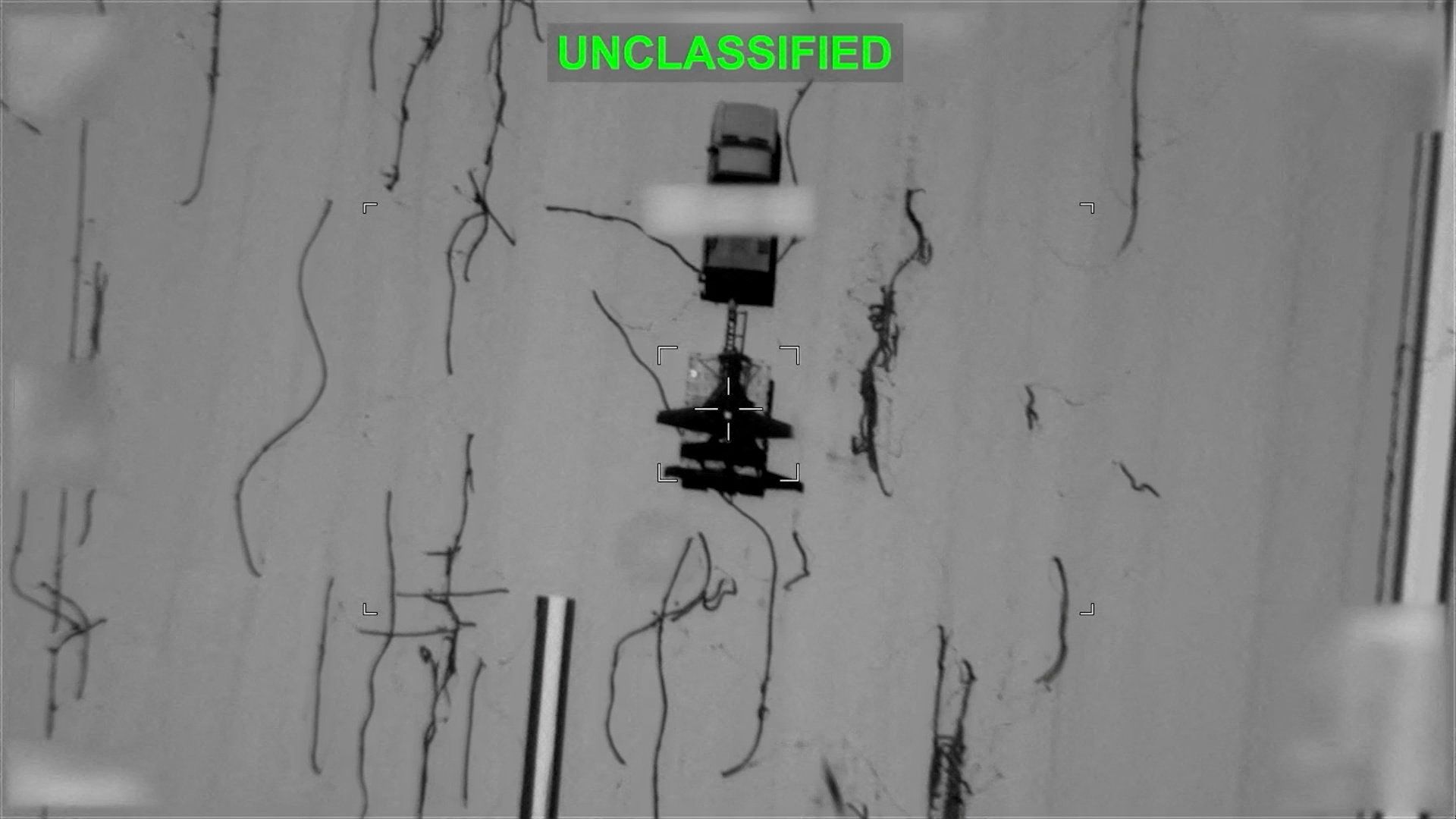
The US military carried out a seventh consecutive night of strikes on Iran on Friday, as Tehran warned it could shift to a broader offensive if the attacks continue. The exchange has raised the risk of more strikes on infrastructure and US-linked assets across the Gulf and the wider region.
US Central Command said in a post on X that the latest strikes began at 19:00 GMT, or 10:30 p.m. in Iran. CENTCOM said the operation was intended to keep weakening Iranian military capabilities under the direction of the commander in chief.
Iranian state media reported blasts in several parts of the country after the US announcement. IRNA, Iran’s state news agency, said five explosions were heard early Saturday in Yazd, in central Iran.
Iranian state television said three explosions were heard in Sirik, a city in southern Iran. Mehr news agency reported blasts in several southern provinces.
Tehran threatens escalation
Iran has accused the United States of hitting civilian infrastructure and committing war crimes. Iranian state media published footage and images showing major damage to bridges and railway lines in the country’s south.
Iran has warned that it could answer by targeting civilian infrastructure in Gulf countries. It has also said it is striking US-linked assets in the region in response to the American campaign.
The Islamic Revolutionary Guard Corps said late Friday that it had hit a depot in Bahrain that housed US unmanned aerial vehicles. Washington has not confirmed that attack.
Earlier Friday, Major-General Mohsen Rezaei, an adviser to Iran’s supreme leader, said Tehran would move beyond deterrence if US strikes did not stop. According to Iranian news agency IRIB, Rezaei warned Iran was ready to resume “full-scale offensive operations” if attacks continued for another two or three days.
Rezaei said Iran would no longer confine itself to like-for-like retaliation and warned that no political border would be safe. He also said Washington’s approach of combining war and negotiation had reached a dead end, and that Iranian attacks would intensify in the coming days, according to IRIB.
Regional infrastructure under pressure
Iran said US attacks from Thursday night into Friday killed eight people. After those strikes, the IRGC said it launched attacks on US military assets in Bahrain, Kuwait, Oman, Qatar, Jordan and Syria.
Kuwait’s Ministry of Electricity, Water and Renewable Energy said Friday that Iran had struck a power and water plant. The ministry said the attack damaged many electricity generation units and started a fire that was later put out.
Kuwaiti authorities urged citizens and residents to ration electricity after the strike. Gulf states rely heavily on desalination plants for water, and the region accounts for 40 percent of global desalinated water production.
Attacks on power and water facilities could have severe humanitarian and economic effects within days, especially in Gulf states that depend on desalination systems. The latest strikes and warnings point to a conflict expanding beyond direct US-Iran military targets.
This story draws on original reporting from Al Jazeera.