
U.S. and Iran trade wider strikes as ceasefire deal falters
U.S. strikes on Iran and Iranian attacks on Gulf states raised new doubts over an interim ceasefire meant to slow the Middle East war.
By James Whitfield · Staff Writer
4 min read
The United States carried out fresh airstrikes in Iran early Thursday, and Tehran answered by targeting U.S.-allied countries across the Middle East, the Associated Press reported. The exchange put more pressure on an interim ceasefire agreement aimed at ending the regional war.
The AP reported that Thursday’s attacks appeared broader than earlier rounds of fire. Sirens sounded at least three times in Bahrain, which hosts the U.S. Navy’s 5th Fleet headquarters, while missiles were aimed at Kuwait and Qatar, according to the AP.
Sirens also sounded Thursday afternoon in Jordan, where U.S. troops and aircraft are stationed, the AP reported. Iranian state TV said Iran’s Revolutionary Guard fired missiles at a U.S. base in Jordan, while Jordanian government spokesperson Mohammad al-Momani said all incoming fire from Iran had been intercepted.
Kuwait’s military said falling debris wounded one person after the country shot down three ballistic missiles, a cruise missile and 10 drones, according to the AP. Bahrain said it intercepted incoming fire, the AP reported. There was no immediate report of damage in Qatar.
U.S. says strikes hit 90 targets
U.S. Central Command said American forces struck 90 targets across Iran, the AP reported. The command released black-and-white video that appeared to show attacks on an airport runway and missile launchers, according to the AP.
The U.S. said the strikes were meant to further reduce Iran’s ability to threaten shipping in the Strait of Hormuz, the AP reported. Before the war began with U.S. and Israeli attacks on Feb. 28, one-fifth of the world’s traded oil and natural gas moved through the waterway, according to the AP.
Shipping through the strait has partly recovered since a tentative deal last month included reopening the route, the AP reported. Lloyd’s List Intelligence said preliminary data showed at least 576 ships passed through in June, compared with 233 in May and more than 3,100 in June 2025.
Iranian state media reported explosions in several areas, including Bushehr, where Iran’s nuclear power plant complex is located, and southern port cities, according to the AP. The state-run IRNA news agency quoted Bushehr local official Ehsan Jahanian as accusing the U.S. of striking near the plant around noon, after Central Command said its latest strikes had ended.
Asked about Bushehr, Central Command referred the AP to a statement listing targets that did not mention the nuclear power plant. Iran’s Health Ministry said two days of U.S. airstrikes killed at least 14 people and wounded 78, most of them reportedly members of the armed forces, according to the AP.
Khamenei buried as talks hang over conflict
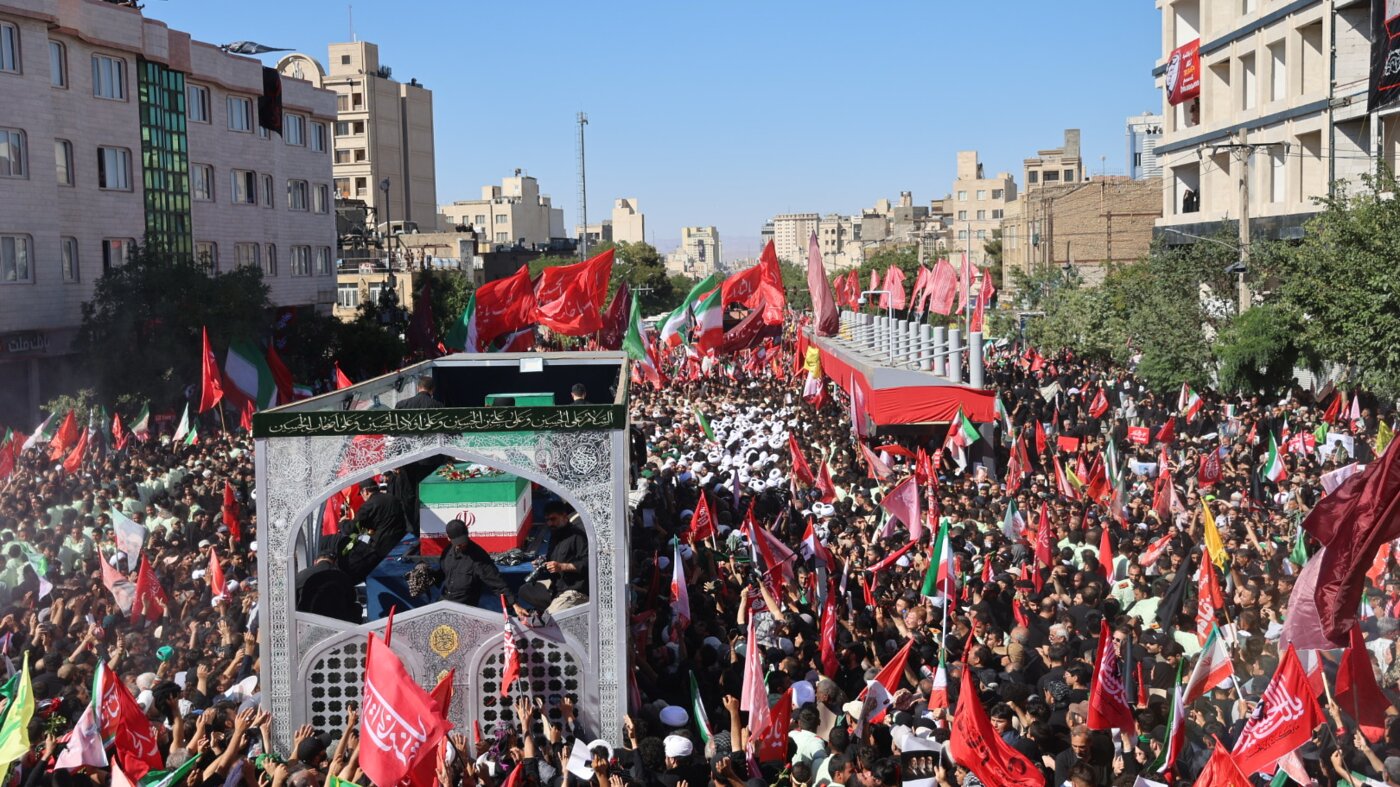
Supreme Leader Ayatollah Ali Khamenei was laid to rest early Friday in his hometown of Mashhad after days of public mourning, the AP reported. Khamenei was killed in the opening strikes of the war, according to the AP.
State media reported a strike on a railway bridge in northeastern Golestan province, and the Revolutionary Guard said two bridges were attacked on the route to Mashhad, the AP reported. Tens of thousands of mourners filled broad streets in Mashhad during Khamenei’s final funeral procession, according to the AP.
President Donald Trump said Wednesday that recent Iranian attacks on ships in the Strait of Hormuz meant the ceasefire was over, the AP reported. Trump wrote on his social media site that the U.S. strikes were retaliation for attacks on three tankers and warned Iran that any repeat would bring a harsher response.
Iranian Parliament Speaker Mohammad Bagher Qalibaf, described by the AP as a key negotiator in talks for a permanent settlement, wrote on X that the U.S. would be hit if it struck Iran. Iranian Foreign Minister Abbas Araghchi said on Telegram that he had spoken with officials from Saudi Arabia, Turkey, Oman and Pakistan, outreach the AP said suggested efforts to calm the conflict.
Negotiations on a final agreement had been due to begin after Khamenei’s funeral, the AP reported. The talks were expected to address reopening the Strait of Hormuz and limits on Tehran’s disputed nuclear program, according to the AP.
This story draws on original reporting from NPR.