
Tunisia Kais Saied crisis enters fifth year with protests and economic strain
Five years after Kais Saied seized emergency powers, Tunisia faces street protests, economic pressure and renewed criticism from abroad.
By Daniel Okafor · Business Editor
4 min read
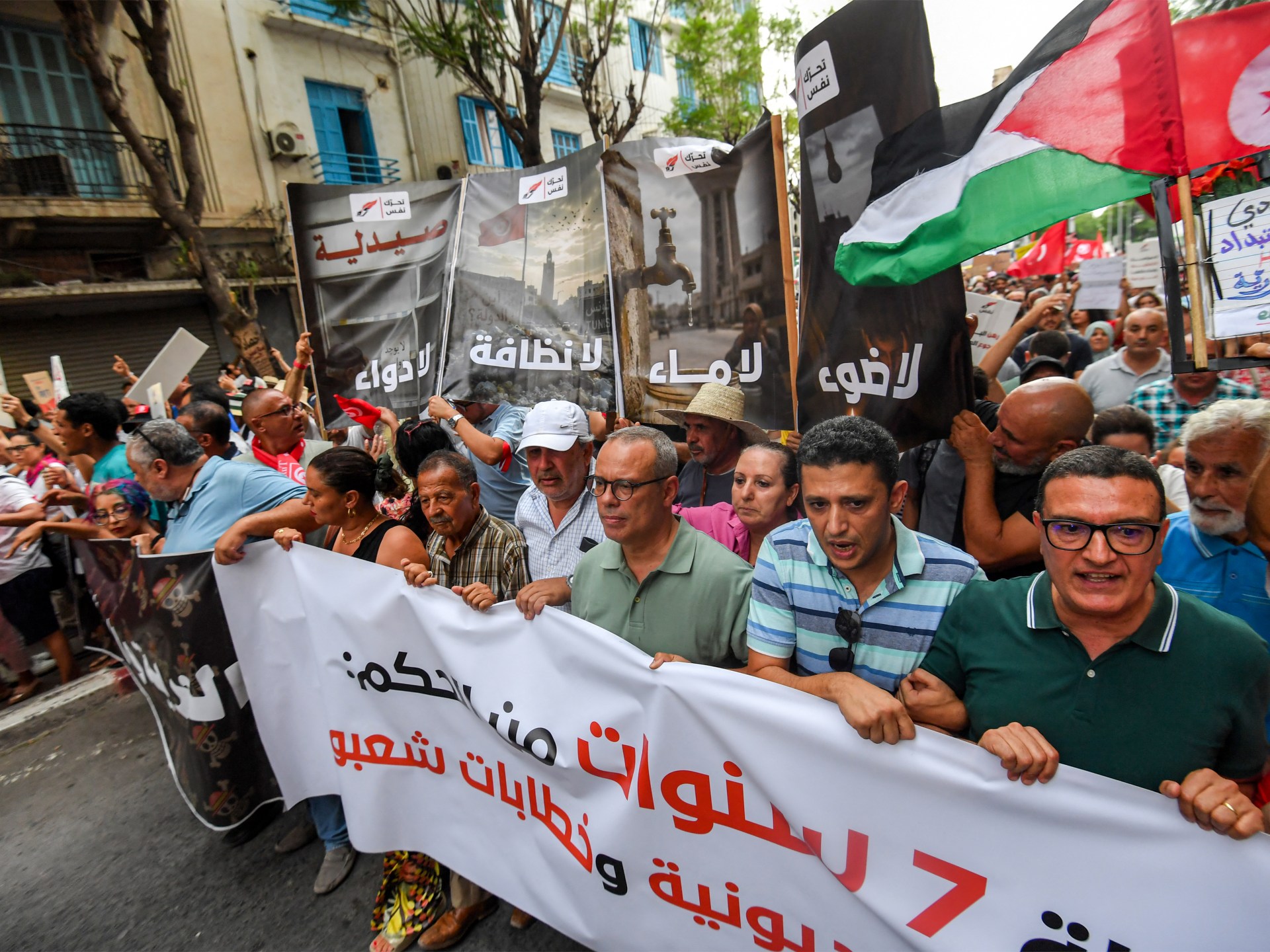
The Tunisia Kais Saied crisis has reached its fifth year with new protests, a strained economy and a widening argument over the president’s rule. Al Jazeera reported that Tunisians remain split over Saied’s July 2021 move to suspend parliament, remove Prime Minister Hichem Mechichi and assume broad emergency powers.
Supporters of Saied describe those steps as a needed correction after years of political failure, according to Al Jazeera. Opposition figures say the period since then has brought weakened institutions, unkept pledges and an exceptional concentration of authority in the presidency.
What happened in Tunisia under Kais Saied?
Saied took sweeping powers in July 2021 after suspending parliament and dismissing the prime minister, Al Jazeera reported. The move shifted Tunisia away from the post-2011 political system that had made it the Arab world’s most prominent constitutional democracy.
On Al Jazeera’s Ma Waraa al-Khabar programme, political and economic analysts described a country facing poor investment conditions, unclear economic direction and political gridlock. Their assessments differed on who deserves most blame, but they agreed the country’s problems now reach across politics and daily life.
Economists point to falling investment and pressure on households
Ridha Chkoundali, an economics professor at the University of Tunisia, told Al Jazeera that Tunisia’s investment rate fell from an average of 20 percent of gross domestic product between 2015 and 2019 to 8 percent in 2023. He linked the drop to conditions that discourage investors and to a tax burden that he said has increased by five percentage points since 2015.
Chkoundali said taxation is being used mainly to raise revenue rather than encourage growth. Al Jazeera also reported that food inflation has risen to nearly three times the overall inflation average, while unemployment has climbed, especially among university graduates, pushing many Tunisians to seek work abroad.
Mohamed Abbou, a former minister of state and former secretary-general of the Democratic Current party, told Al Jazeera that Saied’s governing style is central to the crisis. Abbou said Tunisia has lost credibility because of fear, unpredictability and instability in laws and taxation.
Abbou also criticised Saied’s handling of international financing, saying the president rejected an International Monetary Fund deal to protect a populist image while still applying some IMF-style austerity steps, including limits on public-sector hiring and reduced imports.
Political analyst Souhaib Mezrigui offered a different view on Al Jazeera, arguing that Tunisia’s economic and social problems reflect a lack of clear policy over the past decade. He placed responsibility on the political class that governed after the 2011 revolution, rather than solely on Saied’s administration.
Why are Tunisians protesting Kais Saied?
Thousands of people gathered on Habib Bourguiba Avenue in Tunis on Saturday to mark the anniversary and protest deteriorating living conditions, water and electricity cuts, and democratic backsliding, Al Jazeera reported. The demonstration was organised by opposition parties and the Nafas civil initiative.
Protesters called for Saied to leave office and revived the 2011 slogan, “The people want the fall of the regime,” according to Al Jazeera. A major demand was the release of political detainees held during Saied’s crackdown on opponents.
Among the best-known prisoners is Rached Ghannouchi, the 85-year-old former parliament speaker and Ennahdha leader, who was recently sentenced to life in prison, Al Jazeera reported. His health has worsened in detention, and he recently fainted in Mornaguia prison, where reported temperatures reached 52 degrees Celsius, or 126 degrees Fahrenheit.
Rights groups and families of detainees, including opposition politician Ahmed Nejib Chebbi, have warned about conditions in the prison and the impact on older inmates, according to Al Jazeera. Imed al-Khamiri, an Ennahdha spokesman, told the network that the detention of political figures and opposition leaders is a disgrace to the Tunisian state.
US lawmaker calls for action
US Representative Joe Wilson also criticised Saied on the anniversary, accusing him of turning Tunisia into a one-man dictatorship, according to Al Jazeera. Wilson said Saied’s government had increased corruption, harmed prospects for young people and moved closer to Russian President Vladimir Putin, Iran and Hezbollah.
Wilson said on X that the US State Department should issue a “Level 4: Do Not Travel” advisory for Tunisia, citing the jailing of US citizens. He also said he would keep working to pass the Tunisia Democracy Restoration Act, which would impose sanctions on Saied and people close to him.
This story draws on original reporting from Al Jazeera.