
Trump proposes 20 percent fee for ships using Hormuz
The plan drew legal objections from the IMO and criticism from Brazil as tensions between Washington and Tehran escalated.
By James Whitfield · Staff Writer
4 min read
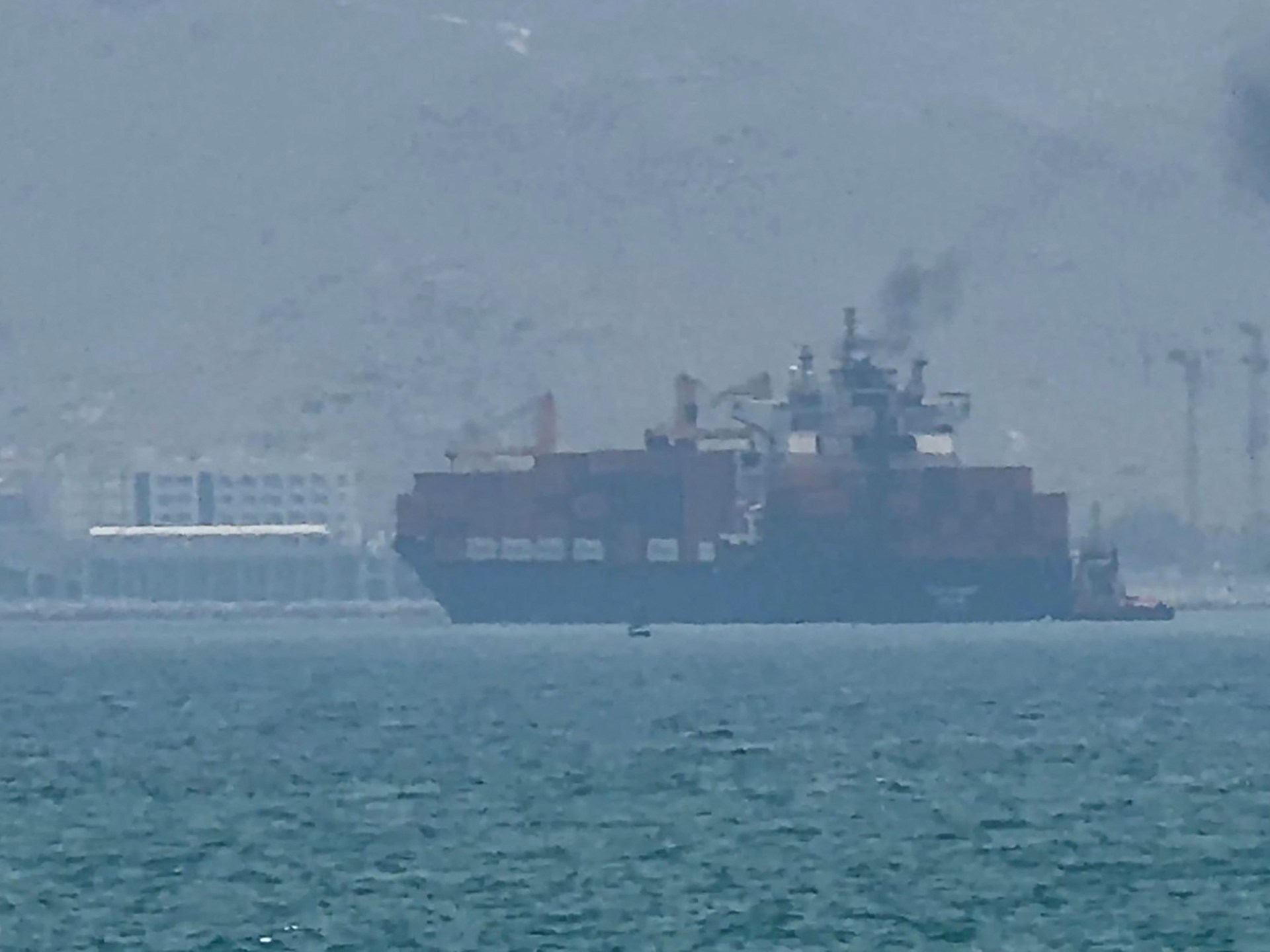
President Donald Trump said the United States will revive a naval blockade tied to Iran and seek a 20 percent charge on cargo moving through the Strait of Hormuz, a move that could add new uncertainty to one of the world’s most sensitive shipping routes. The proposal drew immediate questions over legality and enforcement, with the International Maritime Organization saying there is no legal basis for mandatory transit fees through international straits.
Trump announced the plan Monday in a Fox News interview and on Truth Social. He said the United States would be known as “the guardian” of the Strait of Hormuz and would be reimbursed at a 20 percent rate on all cargo shipped for costs linked to providing security in the area.
The US Navy-led Joint Maritime Information Center later said the blockade would begin at 20:00 GMT on Tuesday, according to Al Jazeera. Trump described the action as a reinstatement of what he called the Iranian blockade, saying it would stop Iranian ships or customers from entering or leaving.
Andreas Krieg, a senior lecturer at the School of Security Studies at King’s College London, told Al Jazeera that the announcement appeared more like an improvised political statement than a developed policy. Krieg said it reflected Trump’s desire to show he still had leverage as Washington’s options had narrowed.
Legal objections to toll plan
Krieg said he did not see a US-run 20 percent toll working in practice because Washington lacks both a legal mechanism to impose charges on international shipping through the strait and physical control of the waterway. He said a US toll could also undercut Washington’s argument that freedom of navigation is protected under international law.
The International Maritime Organization said Monday that it opposed fees for vessels passing through the Strait of Hormuz. The UN shipping agency said it stands against charges for passage through straits used for international navigation and said there is no legal basis for mandatory tolls for transit.
IMO Secretary-General Arsenio Dominguez told Al Jazeera in April that countries do not have the right to impose tolls, payments or charges on such straits. He said any tolls would violate international law.
Marco Rubio, Trump’s secretary of state and national security adviser, made a similar argument in June while discussing the possibility that Iran could charge ships to pass through international waterways. Rubio said no country is allowed to charge tolls or fees on an international waterway, citing existing international law.
Brazilian President Luiz Inacio Lula da Silva criticized Trump’s plan Monday at an event in Sao Paulo. Lula said Trump wanted to unblock the Strait of Hormuz while requiring oil owners to pay 20 percent for each ship, and described the idea as piracy.
Shipping risks rise
Krieg told Al Jazeera that shipping companies will follow the authority that can most directly affect whether vessels can sail safely. He said companies will base decisions on insurance, security and operational continuity rather than on a commercial comparison between US and Iranian demands.
Before the latest conflict, most commercial vessels used established lanes near the middle of the strait, according to Al Jazeera. Vessels now face risks on both sides: sailing closer to Oman could expose them to Iranian attack, while operating closer to Iranian waters in coordination with Iran could bring accusations of violating Trump’s blockade and potential US strikes.
Krieg said the proposal would add legal and commercial ambiguity for shipping companies already receiving conflicting guidance from insurers, naval authorities and regional governments. He said markets are more sensitive to uncertainty than to predictable costs.
The renewed blockade follows a week of fresh US-Iran hostilities that has weakened peace talks, according to Al Jazeera. The United States attacked Iran last week, accusing Tehran of violating terms linked to the Strait of Hormuz, and Iran’s Islamic Revolutionary Guard Corps responded with multiple attacks on US military assets in Gulf countries and Jordan.
Krieg said Washington’s public discussion of new measures without first building international support could encourage Tehran to believe the United States is searching for leverage. He said that perception could make it harder to persuade Iran to pull back in the strait.
This story draws on original reporting from Al Jazeera.