
Supreme Court enters final day with citizenship ruling expected
Justices are set to close the term with major immigration and athlete cases, while new crime data points to a possible low in the U.S. murder rate.
By James Whitfield · Staff Writer
3 min read
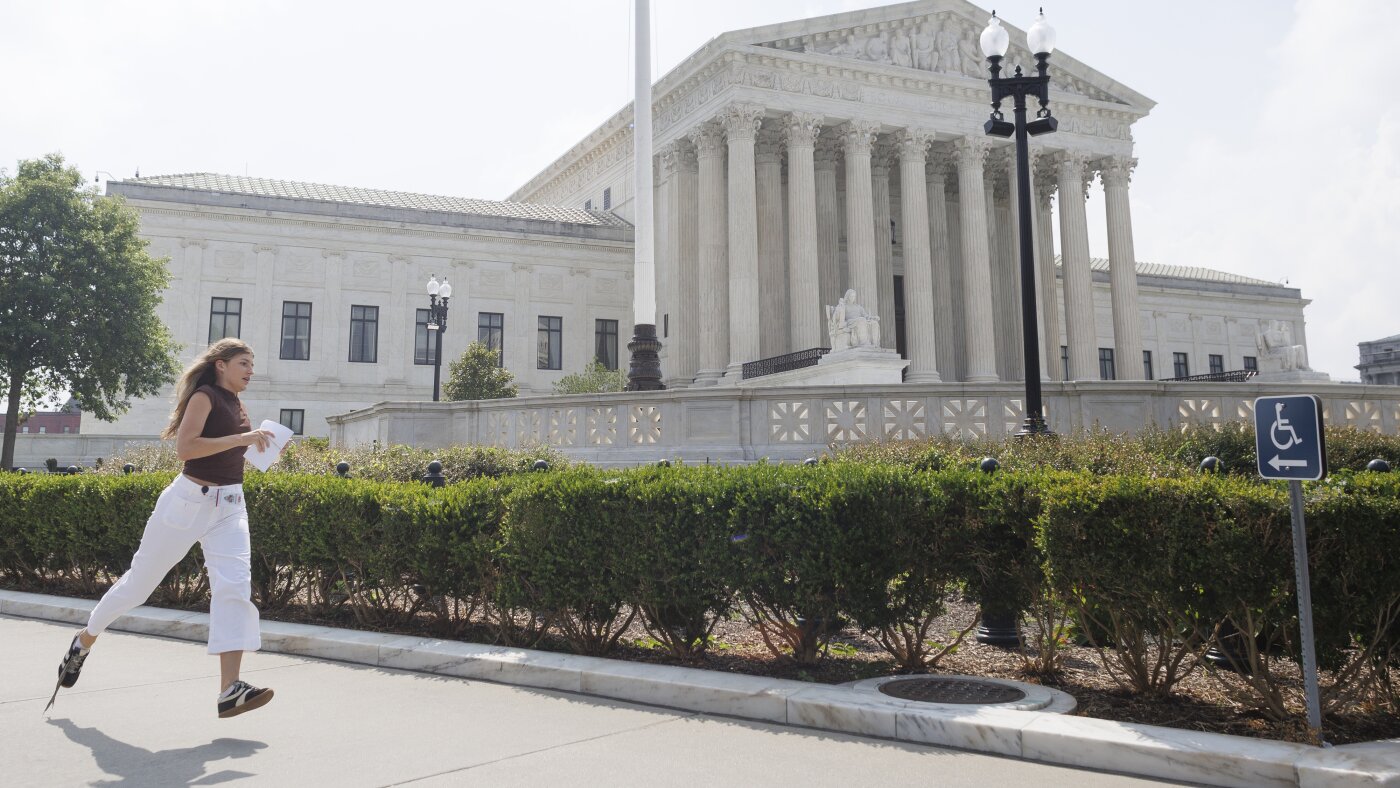
The U.S. Supreme Court is expected to finish its current term Tuesday with major decisions still pending, including a closely watched case on birthright citizenship, NPR reported. The ruling could affect how the government treats children born in the United States to parents who lack legal status or hold temporary visas.
NPR said the case centers on President Trump’s executive order seeking to deny citizenship to those children. The dispute turns on the 14th Amendment, which says people born or naturalized in the United States and “subject to the jurisdiction thereof” are citizens.
NPR’s Ximena Bustillo told Up First that a decision backing Trump could undo more than a century of legal precedent and create practical problems for millions of mixed-status families. She said a ruling against the administration would mark a defeat for one of Trump’s immigration campaign pledges.
The court also is expected to rule on two cases involving bans on transgender athletes, according to NPR. The final-day decisions follow a busy Monday at the court.
NPR reported that justices on Monday upheld grace periods for mail-in ballots, narrowed parts of the federal regulatory system, strengthened the president’s ability to remove members of independent agencies, restricted law enforcement’s use of geofencing warrants and rejected Trump’s effort to fire Federal Reserve governor Lisa Cook.
Immigration fights remain at the court
Bustillo said the administration has sought to limit the legal paths available to people in the United States. NPR reported that last week the Supreme Court gave the administration more authority to end Temporary Protected Status, particularly for Haitians and Syrians.
Some TPS recipients have children who are U.S. citizens, Bustillo said, placing those families within the broader fight over birthright citizenship. Immigrant advocates told NPR that even if the court upholds birthright citizenship, families may still face hard choices about whether to remain together.
U.S. and Iran send delegations to Qatar
The United States and Iran sent delegations to Qatar after recent exchanges of attacks, NPR reported. The White House said Jared Kushner, Trump’s son-in-law, and special envoy Steve Witkoff were traveling there for talks on a long-term peace agreement.
Iranian officials said they would not meet with them, according to NPR. For Iran, NPR reported, the trip appeared focused on talks with Qatari officials over the release of about $6 billion in frozen assets, roughly half of the funds frozen in Qatar and part of a memorandum of understanding signed by the U.S. and Iran.
NPR’s Ruth Sherlock said the speed of the talks reflects distrust between the two countries. She said Iranian officials are concerned the Trump administration may not honor commitments, citing the history of failed negotiations.
Sherlock also reported that Iran is angered by a separate U.S.-brokered road map between Israel and Lebanon to end the war. NPR said that agreement requires Hezbollah to disarm and ties Israel’s withdrawal from occupied areas to Hezbollah doing so first; Hezbollah, which was not part of the deal, rejected it as a surrender of Lebanese sovereignty.
Murder rate approaches recorded low
The U.S. murder rate is nearing a record low, according to crime data analyst Jeff Asher. NPR reported that Asher said in late May that 2025 likely had the lowest murder rate ever recorded, based on data he gathers from about 600 police agencies for The Crime Index.
Asher’s nationally representative sample showed murders down 18.7% in the first four months of this year compared with the same period last year, NPR reported. The same data showed all violent crime down 6.4%.
NPR noted a caveat: the finding would represent the lowest murder rate since the FBI began publishing national murder figures in the 1950s. The Centers for Disease Control and Prevention has older national data on homicide, a broader category than criminal murder.
This story draws on original reporting from NPR.