
Supreme Court allows border agents to block asylum seekers
The 6-3 decision lets the Trump administration revive metering at the US-Mexico border, reversing a lower court ruling.
By Lucas Ferreira · Science & Environment Writer
3 min read
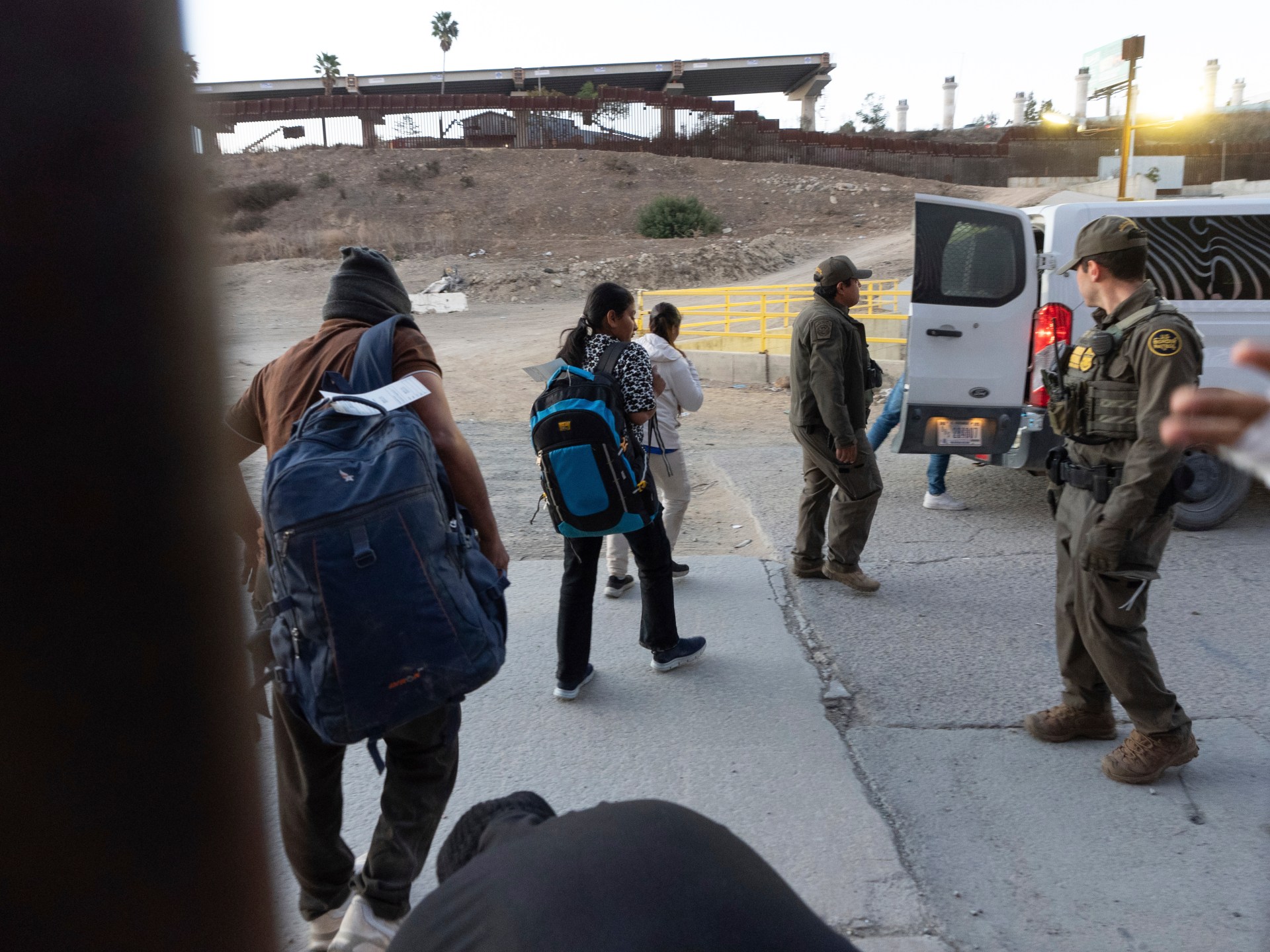
The US Supreme Court ruled Thursday that federal officials may refuse asylum seekers at the US-Mexico border if they have not entered US territory. The decision matters because it permits President Donald Trump’s administration to restart “metering,” a policy that lets border agents physically stop people from crossing to request asylum.
The court split 6-3, with its conservative majority siding with the administration and its three liberal justices dissenting. The ruling overturns a lower court decision that had found the practice unlawful, according to Al Jazeera.
Writing for the majority, Justice Samuel Alito focused on language in the Immigration and Nationality Act that allows a noncitizen who “arrives in the United States” to apply for asylum and requires inspection by federal immigration officials. Alito wrote that the court was deciding only whether a person standing in Mexico had arrived in the United States under that statute.
“The INA neither entitles such an alien to apply for asylum nor requires an immigration officer to inspect him,” Alito wrote. He added that the court was not judging whether metering was a wise policy.
Dissent warns of blocked access to asylum
Justice Sonia Sotomayor, writing in dissent, said the majority’s decision allows the White House to bypass procedures meant to ensure asylum claims receive individual review. She said the ruling could apply even when a person is at the entrance of a designated port of entry and officials have the capacity to process the claim.
Sotomayor wrote that authorities may turn someone away even when that person faces persecution or death if returned. She said the majority relied too heavily on the word “in” and did not give enough weight to the statute’s context and history.
Rights groups have argued that metering is an attempt to avoid domestic legal duties to let people who arrive in the country seek asylum, according to Al Jazeera. Those groups have also said that blocking people at official crossings can push them toward more dangerous routes.
The policy has a history across administrations. Al Jazeera reported that former President Barack Obama’s administration used metering in the final year of his presidency during an increase in border crossings. Trump later formalized the approach during his first term, allowing agents to refuse asylum processing when officials said they lacked capacity. President Joe Biden’s administration ended the practice in 2021.
The ruling follows a separate federal court order earlier in June that required the Trump administration to end a blanket pause on asylum processing. The administration had described that pause as a response to a border “emergency,” according to Al Jazeera.
Separate ruling affects Haitians and Syrians
In another immigration decision Thursday, the Supreme Court allowed the Trump administration to remove Temporary Protected Status protections from many Haitians and Syrians living in the United States, Al Jazeera reported. TPS is granted when the US government determines that returning citizens to a country would be unsafe because of armed conflict, political instability or natural disaster.
About 350,000 Haitians and 6,100 Syrians are believed to live in the US under TPS, according to Al Jazeera. After the ruling, people covered by those protections could lose work authorization and face deportation.
Alito also wrote the majority opinion in the TPS case, saying federal law “plainly bars” judicial review of the executive branch’s decision. He rejected a lower court’s finding that Trump’s actions toward Haitians were likely driven by racial animus, according to Al Jazeera.
This story draws on original reporting from Al Jazeera.