
Student protesters regroup in Delhi after police crackdown
Demonstrators demanding India’s education minister resign returned to Jantar Mantar after clashes near parliament left more than 100 injured.
By Daniel Okafor · Business Editor
3 min read
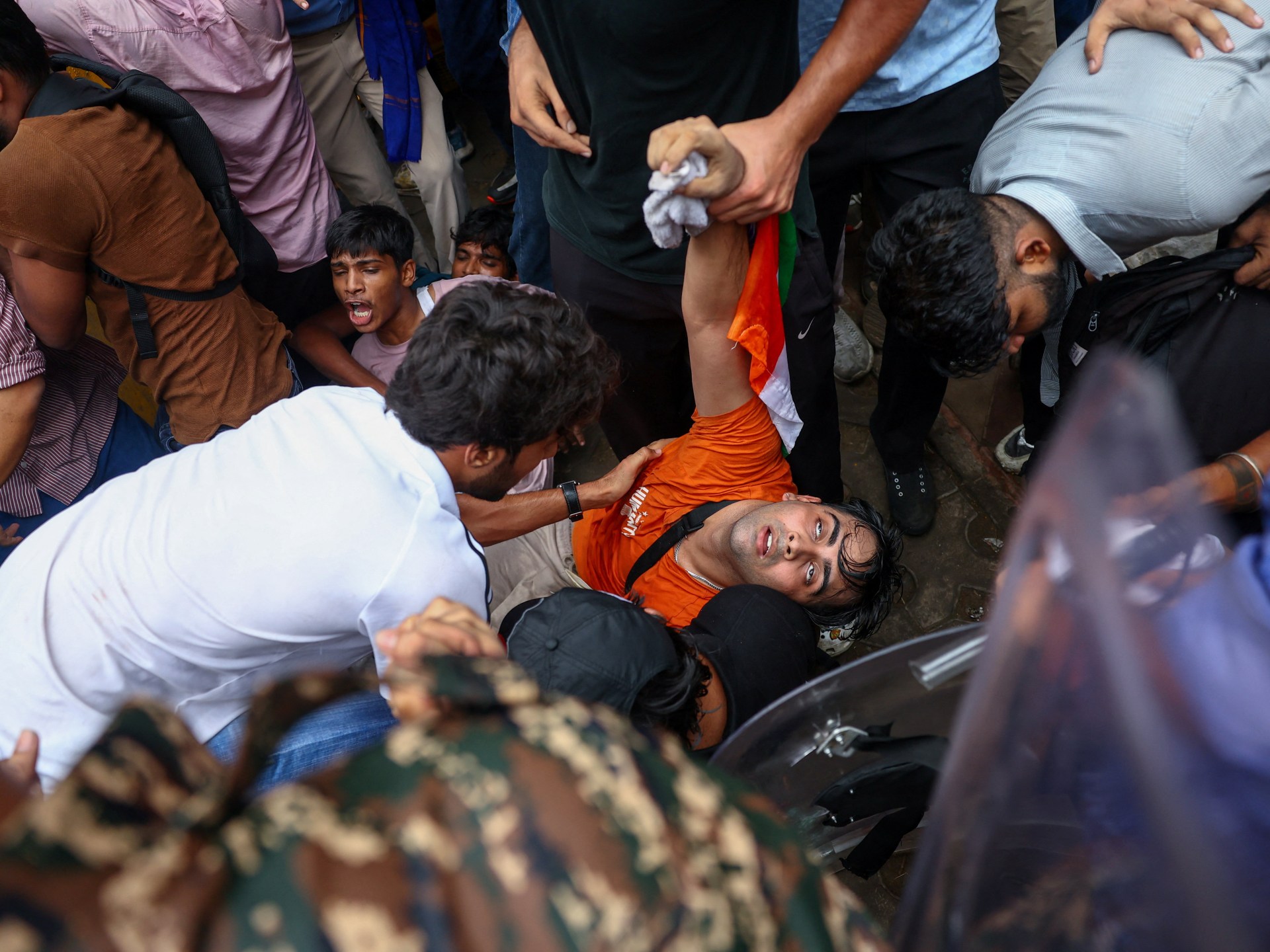
Student-led protesters in New Delhi returned to a central protest site after police used tear gas during a march toward India’s parliament, according to Al Jazeera. The confrontation has intensified pressure on Prime Minister Narendra Modi’s government over alleged entrance-exam leaks and grading failures that protesters say have damaged the futures of millions of students.
Al Jazeera reported that thousands of demonstrators, many of them students, marched Monday on the opening day of parliament’s monsoon session to demand the resignation of Education Minister Dharmendra Pradhan. The outlet reported that more than 100 students were injured after protesters reached near parliament and police moved to disperse them.
The protests have grown over two months of anger about compromised entrance exams, according to Al Jazeera. In some cases, papers were leaked; in others, students who requested copies of their answer sheets found grading errors, the outlet reported. Al Jazeera said more than 20 students died by suicide, with many citing the paper leaks.
Protest leaders vow to continue
The march was called by the Cockroach Janta Party, or CJP, which Al Jazeera described as a political pressure group. Its leader, Abhijeet Dipke, returned Monday night to the protest area near Jantar Mantar, where the outlet reported about 2,000 people remained after the police action.
Dipke told the crowd that Delhi police had beaten students and said the group would keep pressing for Pradhan’s resignation, according to Al Jazeera. He also said Monday’s march was only the first such call and urged supporters not to give up.
Al Jazeera reported that volunteers at Jantar Mantar began clearing debris and repairing tents after the crackdown. More than 100 protesters from student unions had been sleeping there for nearly a month in support of activist Sonam Wangchuk’s hunger strike seeking Pradhan’s resignation, the outlet said.
Wangchuk, 59, was earlier removed from the protest site by police and kept at a government-run hospital, according to Al Jazeera. His family and the CJP have described that as illegal detention, while the Delhi High Court has declined immediate relief, the outlet reported. Wangchuk had ended his hunger strike before Monday’s march but later said he would resume it after seeing police action against students, according to Al Jazeera.
Talks fail to calm standoff
Before the march, CJP representatives met Health Minister JP Nadda, according to Al Jazeera. The group presented three demands: Pradhan’s resignation, Wangchuk’s release from the hospital and compensation of nearly $105,000 for families of students who died by suicide.
CJP spokesperson Ashutosh Ranka told Al Jazeera the meeting was a waste of time, saying the representatives waited four hours and met Nadda for 10 minutes. Nadda said the meeting took place in a cordial atmosphere and that he asked protesters to end their sit-in and help authorities restore normalcy, according to Al Jazeera.
Delhi police have filed at least five criminal cases against protesters connected to alleged violence, stone-throwing and vandalism during the march, Al Jazeera reported. Modi has not addressed the protests, the outlet said.
Political analyst Nilanjan Mukhopadhyay, an author and Modi biographer, told Al Jazeera the scale of the turnout posed a challenge to the prime minister. He said Modi appeared to be relying on a familiar response of refusing concessions and projecting firmness.
By Tuesday morning, protesters had again filled the Jantar Mantar site, according to Al Jazeera. The renewed turnout suggested that Monday’s crackdown had not ended a movement now focused on exam accountability, the education minister’s resignation and the government’s treatment of student demonstrators.
This story draws on original reporting from Al Jazeera.