
SpaceX slips after fast-track Nasdaq-100 inclusion
The newly public rocket and satellite company joined the index less than a month after its IPO, but its shares fell with high-growth tech stocks.
By Daniel Okafor · Business Editor
3 min read
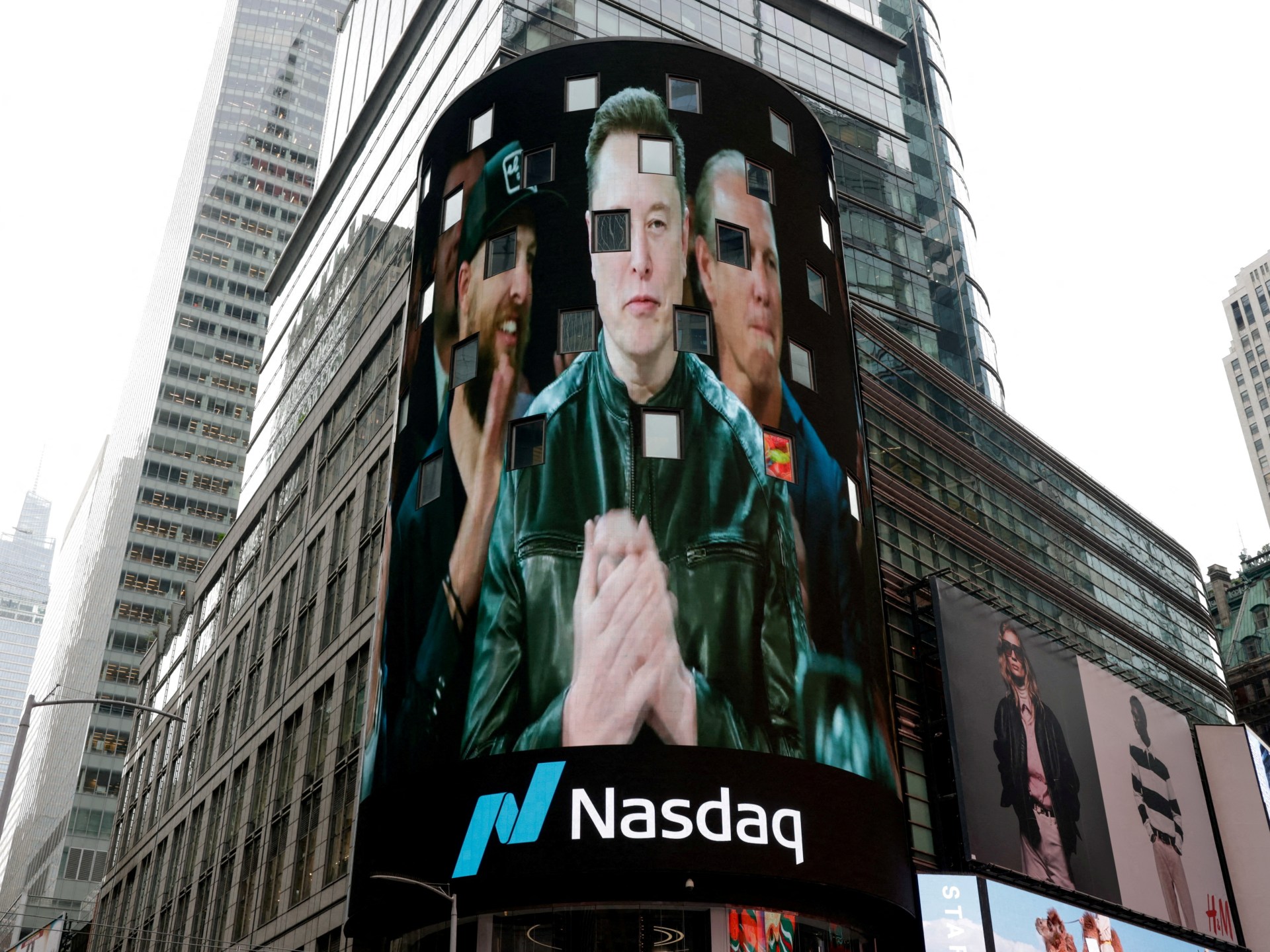
SpaceX entered the Nasdaq-100 on Tuesday in one of the quickest index additions after a market debut, a move Reuters said is expected to force billions of dollars in buying from funds that track the benchmark. The stock still fell 5.4 percent as investors sold high-momentum technology names amid doubts about how long the artificial intelligence boom can run.
The Elon Musk-led rocket and satellite company went public on June 12 and is valued at about $2 trillion, according to Reuters. Its rapid admission followed a Nasdaq rule change that opened a path for some newly listed large companies to enter the index after 15 trading days.
Index funds and exchange-traded funds tied to the Nasdaq-100 are expected to buy SpaceX shares so their portfolios match the new benchmark composition, Reuters reported. LSEG data put SpaceX’s Nasdaq-100 weight at 1.34 percent, below larger index members such as Nvidia and Apple because Nasdaq adjusts weights based on free-float shares available for public trading.
Mark Hackett, chief market strategist at Nationwide, told Reuters that investors are worried that expectations for some technology stocks have risen too far. “There’s nervousness about expectations being too high,” he said, adding that he expects that caution to remain until companies report earnings.
Rule change helped speed entry
Reuters reported that companies have historically faced a waiting period before joining the Nasdaq-100 or S&P 500. S&P 500 candidates must show four quarters of profitability, while Nasdaq-100 candidates previously had to trade for three calendar months, excluding the listing month.
SpaceX lobbied for a waiver for so-called megacap companies, according to Reuters. Nasdaq changed its rules in early May, while S&P Dow Jones Indices, which oversees the S&P 500, did not make a similar change.
FTSE Russell added SpaceX to its US indexes last month, Reuters reported, giving funds such as the iShares Russell 1000 ETF exposure to the company after what Reuters described as the largest IPO in US history. S&P Global declined in June to create a fast-track process for S&P 500 inclusion, and Reuters reported that SpaceX is expected to wait at least a year before entering that index.
Brokerages start mostly positive coverage
More than a dozen brokerages began covering SpaceX with mostly positive ratings, Reuters reported. The group included IPO underwriters Morgan Stanley, Goldman Sachs and JP Morgan, marking Wall Street’s early effort to value the company with conventional measures rather than investor confidence in Musk’s long-term plans.
Goldman Sachs analysts said they view SpaceX as positioned to expand its advantages across space, connectivity and AI, according to Reuters. Analysts cited by Reuters generally see Starship, the company’s fully reusable next-generation rocket, as central to SpaceX’s growth forecasts.
Wall Street launch estimates for Starship vary widely. Reuters reported that JP Morgan projects about 5,000 annual Starship launches by 2031, Wells Fargo expects 4,600, Bernstein forecasts 3,500 and UBS sees more than 1,500, depending on how much reusability SpaceX achieves.
Raymond James set a Wall Street-high price target of $800, according to Reuters, compared with SpaceX’s $135 IPO price. MoffettNathanson, KeyBanc and Argus Research issued neutral-equivalent ratings, while CFRA was the only firm cited by Reuters with a sell rating and a $115 target.
Reuters reported that investors also are betting SpaceX can become a hyperscale AI infrastructure provider, with its Grok model competing against OpenAI’s GPT models and Anthropic’s Claude. Deutsche Bank analysts said SpaceX has an advantage in deploying AI infrastructure on the ground and eventually in orbit, positioning it to provide computing power at low cost.
This story draws on original reporting from Al Jazeera.