
Descendants say slavery apologies must come with reparations
A UN-backed reparations push in Accra has sharpened calls for apologies to be paired with compensation, debt relief, restitution and education.
By Daniel Okafor · Business Editor
3 min read
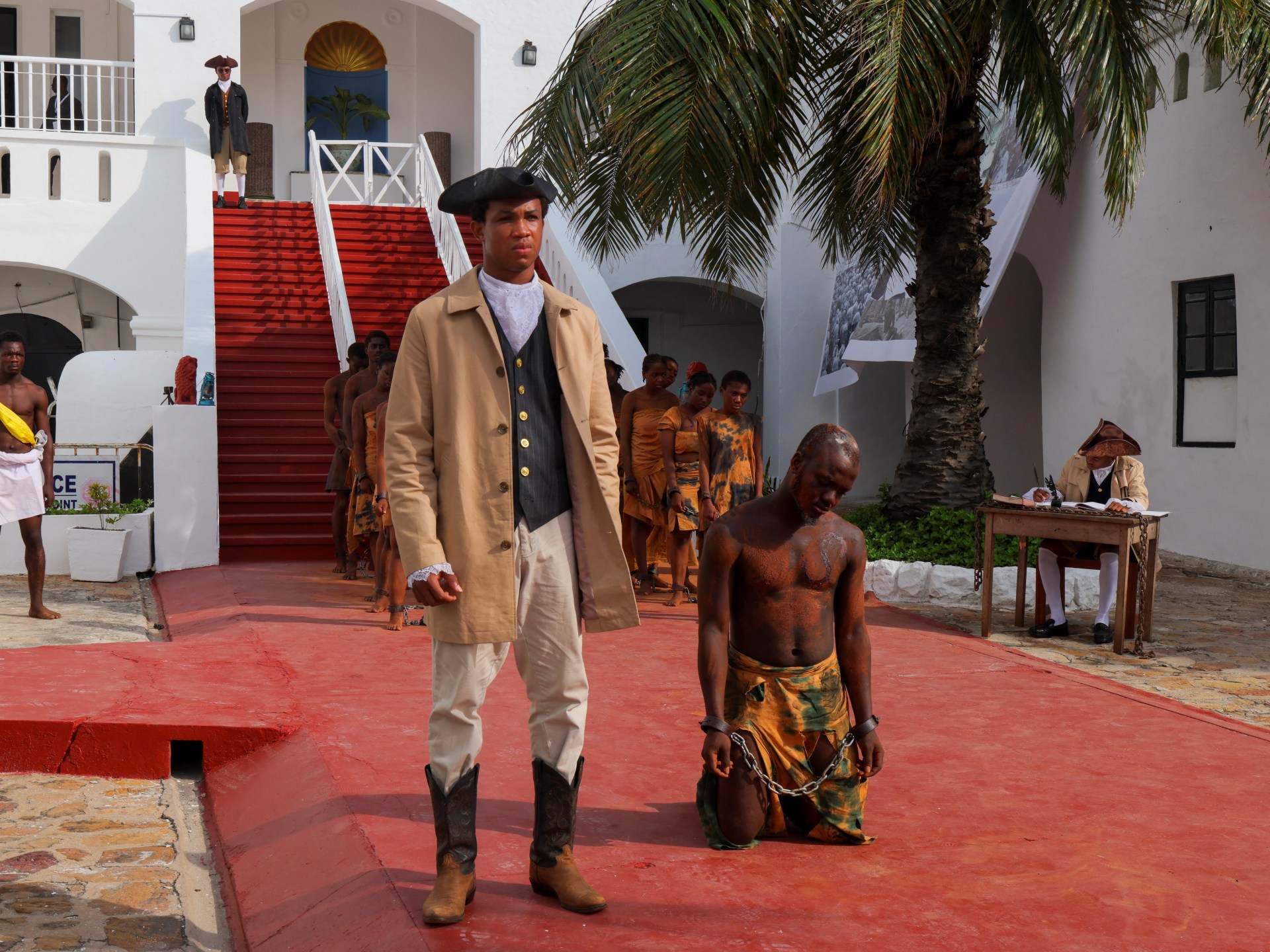
A three-day conference in Accra has renewed pressure on governments and institutions tied to the transatlantic slave trade to pair apologies with reparations. Al Jazeera reported that many descendants of enslaved Africans view formal regret as inadequate without material steps to address the damage left by slavery.
The “Next Steps” conference, held from June 17 to 19, brought heads of state, policymakers, legal specialists, civil society groups and African diaspora representatives to Ghana’s capital, according to Al Jazeera. The meeting followed a United Nations General Assembly resolution, supported by 123 countries, recognizing the transatlantic slave trade as one of the gravest crimes against humanity.
Participants approved a 19-point framework, Al Jazeera reported. It calls for formal apologies from countries and institutions that benefited from slavery, as well as reparations mechanisms, debt relief, the return of cultural objects and human remains, education programmes and wider international cooperation.
Yaw Owusu Akyeaw of African Diaspora 126+, a lobbying group that helps diaspora members seek Ghanaian residency and citizenship, told Al Jazeera that words alone do not satisfy the demand for justice. “A verbal apology is a symbolic way to acknowledge a wrong while doing nothing tangible for repairing the damage or compensating those affected by the wrong done,” Akyeaw said.
Akyeaw said he was “not too eager to accept apology for egregious crimes committed against humanity.” He also told Al Jazeera that some people see such statements as a public relations move to reduce responsibility rather than meet it.
Marvin Walker, a Guyanese entrepreneur who recently moved to Ghana to reconnect with ancestral roots and invest there, gave a similar assessment to Al Jazeera. Walker said an apology could appear shallow if it is not tied to evidence of remorse or change.
Losses beyond the Atlantic crossing
Al Jazeera reported that advocates at the conference argued the harm of the slave trade extended beyond those forced onto ships across the Atlantic. They said families, communities and African societies suffered lasting damage from the loss of people, labour and knowledge.
David Adofo of the African Chamber of Content Producers, a pan-African group with observer status at the African Union’s Economic, Social and Cultural Council, told Al Jazeera that the trauma also affected people who remained on the continent. “Slavery did not only affect those who were taken away, but those who were left behind, as they lost loved ones, they lost trust in humanity, passing that sentiment to generations,” Adofo said.
Adofo also pointed to colonial-era media projects as part of a longer legacy. He cited the Bantu Educational Kinema Experiment, a British colonial film programme carried out in East and Central Africa from 1935 to 1937, and told Al Jazeera that Western-funded educational content made by Africans could help address the effects of colonial indoctrination.
Al Jazeera reported that some descendants of enslaved people left behind after abolition still face stigma around servile ancestry. One person, who spoke anonymously because the subject remains sensitive in his community, said he did not know his origins and that no apology could provide closure.
Historical records cited by Al Jazeera show that captives from present-day Ghana and other parts of West Africa were moved through inland routes to the coast. They passed through centres including Salaga and Pikworo before being forced toward sites such as Cape Coast Castle and Elmina Castle, with Assin Manso remembered as a place where many took their “last bath” before shipment across the Atlantic.
Ghanaian President John Dramani Mahama, described by Al Jazeera as a key architect of the UN resolution, said the Accra meeting was meant to move the issue toward concrete action. He announced three international bodies focused on reparatory justice, cultural restitution and legal affairs.
This story draws on original reporting from Al Jazeera.