
Satellite comparisons track shrinking water bodies across continents
Al Jazeera imagery highlights lakes, rivers and wetlands losing water as drought, warming and water use reshape major basins.
By Daniel Okafor · Business Editor
3 min read
The world is losing freshwater at a scale large enough to supply hundreds of millions of people, according to a 2025 World Bank report. Satellite comparisons compiled by Al Jazeera show how that broader drying trend is visible in rivers, lakes, reservoirs and wetlands across several continents.
The World Bank estimated annual freshwater losses at 324 trillion litres, or 85.6 trillion gallons, enough to meet the yearly needs of 280 million people. The report described the long-term loss as continental drying and linked it to worsening droughts and unsustainable land and water practices.
The United Nations marks June 17 as the World Day to Combat Desertification and Drought, aimed at raising awareness and encouraging restoration of degraded land. Al Jazeera examined 10 sites where satellite images show major water loss or severe swings in water levels.
Water loss in the Americas
In Argentina, Al Jazeera compared 1990 and 2026 satellite images of the Parana River near Rosario. The river, South America’s second-longest after the Amazon, has seen water levels fall during multiyear droughts, affecting grain shipments, hydropower generation at Itaipu Dam and exposing riverbed flats and new islands.
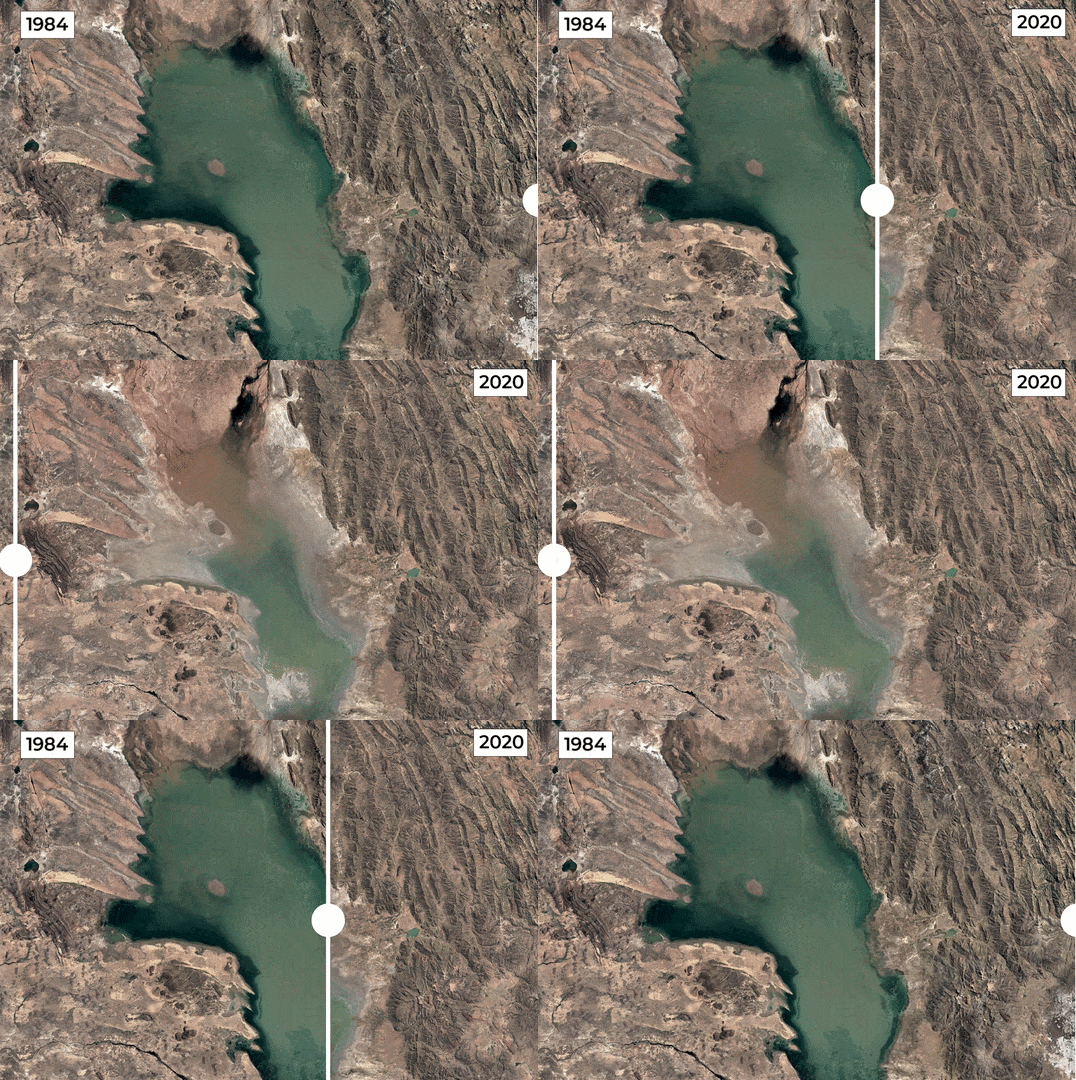
In Bolivia, images from 1984 and 2020 show the collapse of Lake Poope, once the country’s second-largest lake. Al Jazeera reported that water diversions, drought and warming left much of the high-altitude lake as a salt flat, damaging fisheries and the livelihoods of Indigenous Uru communities.
In Chile, Al Jazeera compared 2007 and 2026 imagery of Laguna de Aculeo, near Santiago. The lagoon, formerly a recreation area that supported nearby communities, has largely dried up after prolonged drought and water stress.
On the Nevada-Arizona border, Lake Mead has also receded sharply, according to Al Jazeera’s comparison of 1984 and 2020 images. The reservoir, created by Hoover Dam on the Colorado River, supplies water to millions in the US Southwest and parts of Mexico, and its falling levels have exposed broad areas of shoreline and formerly submerged land.
Drying lakes and wetlands elsewhere
In Botswana, Lake Ngami shows how variable some water systems have become. Al Jazeera said imagery from 1984 and 2020 captured its swings between wetland and near-dry basin as drought and changing inflows from the Okavango system affected fishing grounds and livestock pasture before a partial recovery.
In northwestern Iran, Lake Urmia has shrunk from nearly 6,000 square kilometres in the 1990s to about 581 square kilometres, according to Al Jazeera. The outlet linked the decline to repeated droughts, farm water use, river diversion and groundwater extraction, which have left wide salt flats exposed.
In southern Iraq, the al-Chibayish Marshes are part of the Mesopotamian Wetlands, a UNESCO World Heritage Site fed by the Tigris and Euphrates rivers. Al Jazeera said 1984 and 2020 imagery shows severe drying tied to drainage and drought in the 1990s, followed by partial recovery in some areas after heavier rainfall and restoration work.
In southern Madagascar, Al Jazeera said satellite images from 1985 and 2020 show worsening ecological stress around Ambovombe. Multiyear drought, higher temperatures, red sandstorms and rainfall shortages have degraded farmland and water sources, hurting subsistence farming and livestock and contributing to hardship and displacement.
In northern Mali, Lake Faguibine has largely vanished in recent decades, Al Jazeera reported. Images from 1984 to 2020 show a basin dried by reduced Niger River flooding, drought and sediment buildup, with desertification spreading across much of the former lake area.
In Uzbekistan, the South Aral Sea remains one of the clearest examples of human-driven water loss. Al Jazeera said 1984 and 2020 imagery shows decades of river diversions for irrigation shrinking the lake by more than 90 percent and exposing vast stretches of former lakebed.
This story draws on original reporting from Al Jazeera.