
Refugee journeys shape several squads at 2026 World Cup
UNHCR and Al Jazeera identified players at the 2026 World Cup whose families fled war, persecution or displacement.
By Daniel Okafor · Business Editor
3 min read
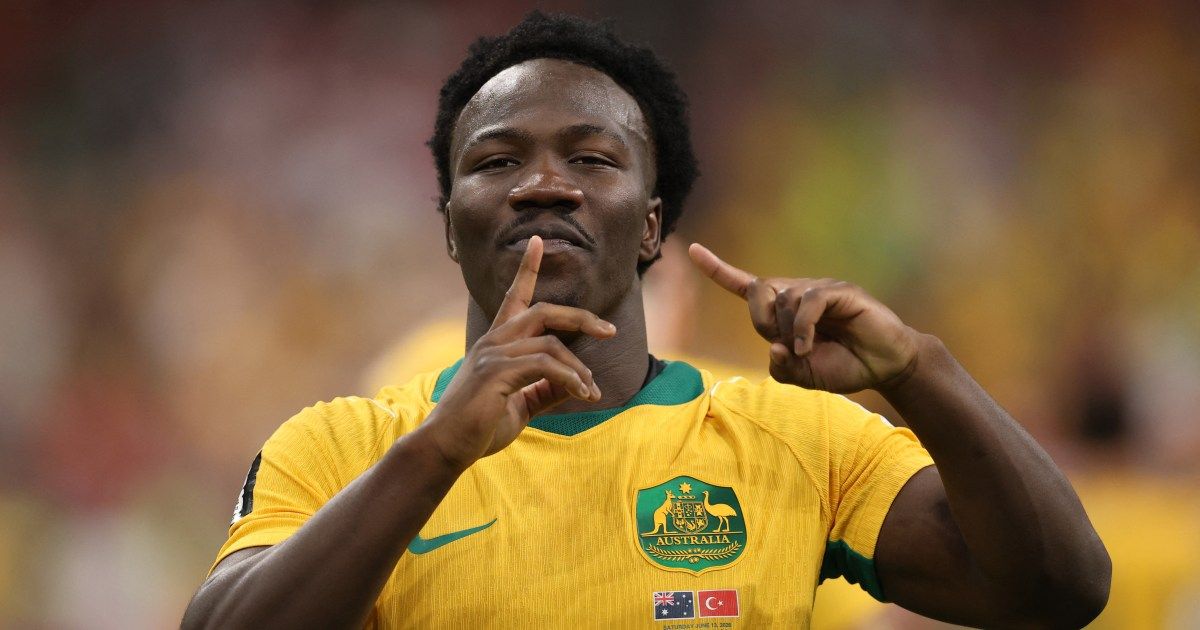
Several players at the 2026 FIFA World Cup arrived on football’s biggest stage after childhoods shaped by war, flight and resettlement. Their presence has given the expanded 48-team tournament another storyline as matches continue across Canada, Mexico and the United States.
Al Jazeera reported that at least nine players in the finals have refugee or displacement backgrounds. The UN refugee agency highlighted several of them in May through a campaign called the Gamechanging Team, launched as UNHCR says 117 million people are displaced worldwide, including almost 49 million children.
UN High Commissioner for Refugees Barham Salih said in the May statement that the World Cup offered “an ideal moment” to send “a message of hope to fans all over the world.”
Australia’s refugee-background trio
Australia has three players whose families fled conflicts before resettling. Nestory Irankunda, 20, was born in a camp in Kigoma, Tanzania, after his parents escaped Burundi’s civil war, according to Al Jazeera. In Vancouver, he became Australia’s youngest World Cup scorer when he netted in a 2-0 win over Türkiye, then celebrated by punching the corner flag in a nod to Tim Cahill.
Irankunda told beIN Sports this month that his family nearly left behind his sick older sister during their escape, but his father refused. After scoring against Türkiye, he called the goal “unreal and a dream come true.”
Mohamed Toure was born in a refugee camp in Conakry, Guinea, after his family fled violence in Liberia, according to ITV News Anglia’s reporting on comments his father made to Football Australia. The family later settled in Adelaide, where Awer Mabil also grew up after leaving Kakuma refugee camp in Kenya at age 10. Mabil, whose South Sudanese parents fled civil war, co-founded Barefoot to Boots, a charity that provides football equipment to children in Kakuma.
From camps and exile to national teams
Canada captain Alphonso Davies was born in Ghana’s Buduburam refugee camp after his parents fled Liberia’s civil war, UNHCR has said. His family moved to Edmonton when he was five, and in 2021 he became UNHCR’s first footballer appointed as a Global Goodwill Ambassador.
Bosnia and Herzegovina’s squad includes Ermedin Demirovic and Asmir Begovic. Al Jazeera reported that Demirovic was born in Germany after his father fled Bosnia during the Balkan war, while Begovic left Bosnia as a child, lived in Germany and later moved to Canada. Begovic played at Bosnia’s first World Cup in 2014 and is part of the squad for its second.
Germany defender Antonio Rudiger was born in Berlin to a mother who fled Sierra Leone’s civil war, according to UNHCR. Rudiger said in the agency’s May statement that his parents came to Germany seeking safety and a better future, and called representing Germany a “full circle moment.”
Iraq forward Ali Al-Hamadi was a baby when his family left Iraq in 2003 after his father was jailed for joining a peaceful protest against Saddam Hussein, according to Al Jazeera. Iraq qualified for its first World Cup in roughly four decades, and Al-Hamadi made the squad.
France midfielder Eduardo Camavinga was born in a refugee camp in Angola after his parents fled war in the Democratic Republic of Congo, according to UNHCR. Two other players cited by Al Jazeera did not reach this tournament: Bernard Kamungo was left off the United States roster, and Victor Moses is not involved because Nigeria did not qualify.
This story draws on original reporting from Al Jazeera.