
Police use tear gas as exam protest draws thousands in New Delhi
More than 10,000 Cockroach movement supporters marched toward India’s parliament, demanding the education minister quit over exam corruption allegations.
By Daniel Okafor · Business Editor
3 min read
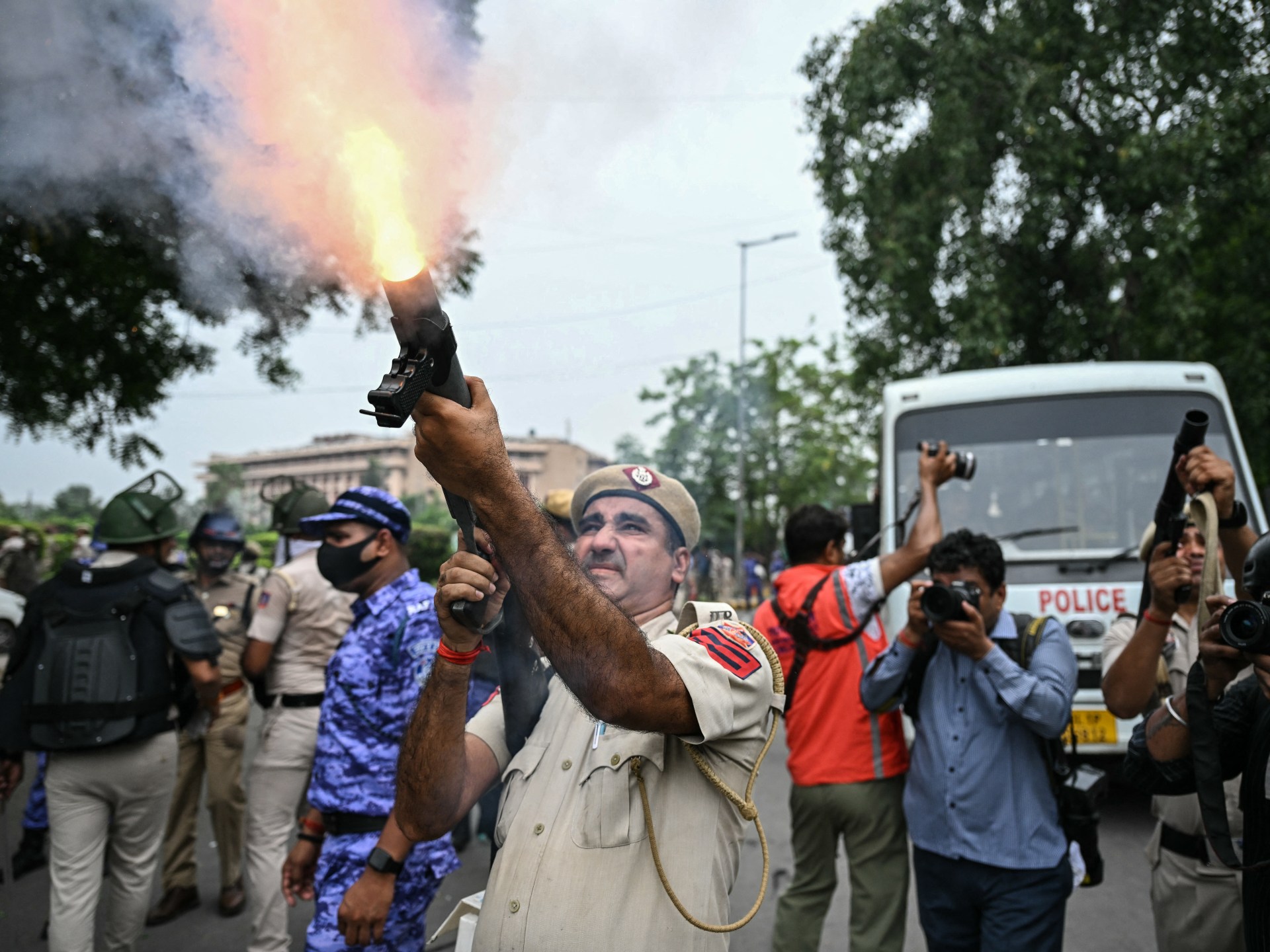
Police in New Delhi fired tear gas and used canes and baton charges on Monday as more than 10,000 supporters of the youth-led Cockroach movement marched toward India’s parliament, according to Al Jazeera, AP and Reuters. The protest, the movement’s largest reported street action so far, pressed for Education Minister Dharmendra Pradhan to resign and for tougher action on corruption in India’s exam system.
The march took place on the first day of parliament’s monsoon session, raising the political stakes for Prime Minister Narendra Modi’s government. Demonstrators chanted slogans calling for both Modi and Pradhan to step down, Al Jazeera reported.
The protesters call themselves the Cockroach Janta Party, a satirical name aimed at Modi’s ruling party. The movement grew after a chief justice on India’s Supreme Court compared some unemployed young people to “cockroaches,” a remark protesters turned into a symbol of defiance, according to Al Jazeera.
Al Jazeera reported that the crowd had been growing since activists gathered overnight at Jantar Mantar, the central New Delhi protest site known for its 18th-century astronomical instruments. Police moved to disperse the march after it began in the morning.
Delhi Deputy Commissioner of Police Sachin Sharma told protesters to leave the area, saying the site had no more room and could become unsafe. He said more than 10,000 people were at Jantar Mantar and in the march, according to Al Jazeera.
Al Jazeera’s Neha Poonia, reporting from New Delhi, said some metro station exits near Jantar Mantar had been sealed, but protesters got off at other stops and walked toward the area while carrying Indian flags. She said police denied reports of a scuffle, while videos circulating online appeared to show riot police using canes to push people back.
The turnout was fueled in part by anger over the forced hospitalization on Saturday of Sonam Wangchuk, a 59-year-old activist who had been on hunger strike for three weeks in support of the movement, Reuters reported through Al Jazeera.
Modi’s government made a limited outreach effort on Monday by inviting two activists to meet a senior cabinet minister, according to Al Jazeera. Saurav Das, the movement’s chief spokesperson, wrote on X that the government had contacted them for talks in the morning and said the movement’s demands remained clear. Later, the movement said its founder, Abhijeet Dipke, had been detained by police.
The campaign began amid public anger over alleged corruption and mismanagement in the education system. Al Jazeera reported that about 2.2 million aspiring doctors were required to retake India’s annual medical entrance exam last month under tight security after the May test was annulled because questions had leaked.
The government temporarily banned Telegram in an effort to prevent further leaks, according to Al Jazeera. Students who had spent months preparing were angered by the cancellation, and more than a dozen were reported to have died by suicide.
The movement first spread through satirical memes and online organizing, drawing millions of social media followers, Al Jazeera reported. Monday’s march showed that the campaign has also become a street movement able to bring thousands into central New Delhi.
This story draws on original reporting from Al Jazeera.