
Police removal of hunger striker raises stakes for youth protest
Sonam Wangchuk was taken from a New Delhi sit-in as the Cockroach Janta Party presses demands over exam leaks and accountability.
By Lucas Ferreira · Science & Environment Writer
3 min read
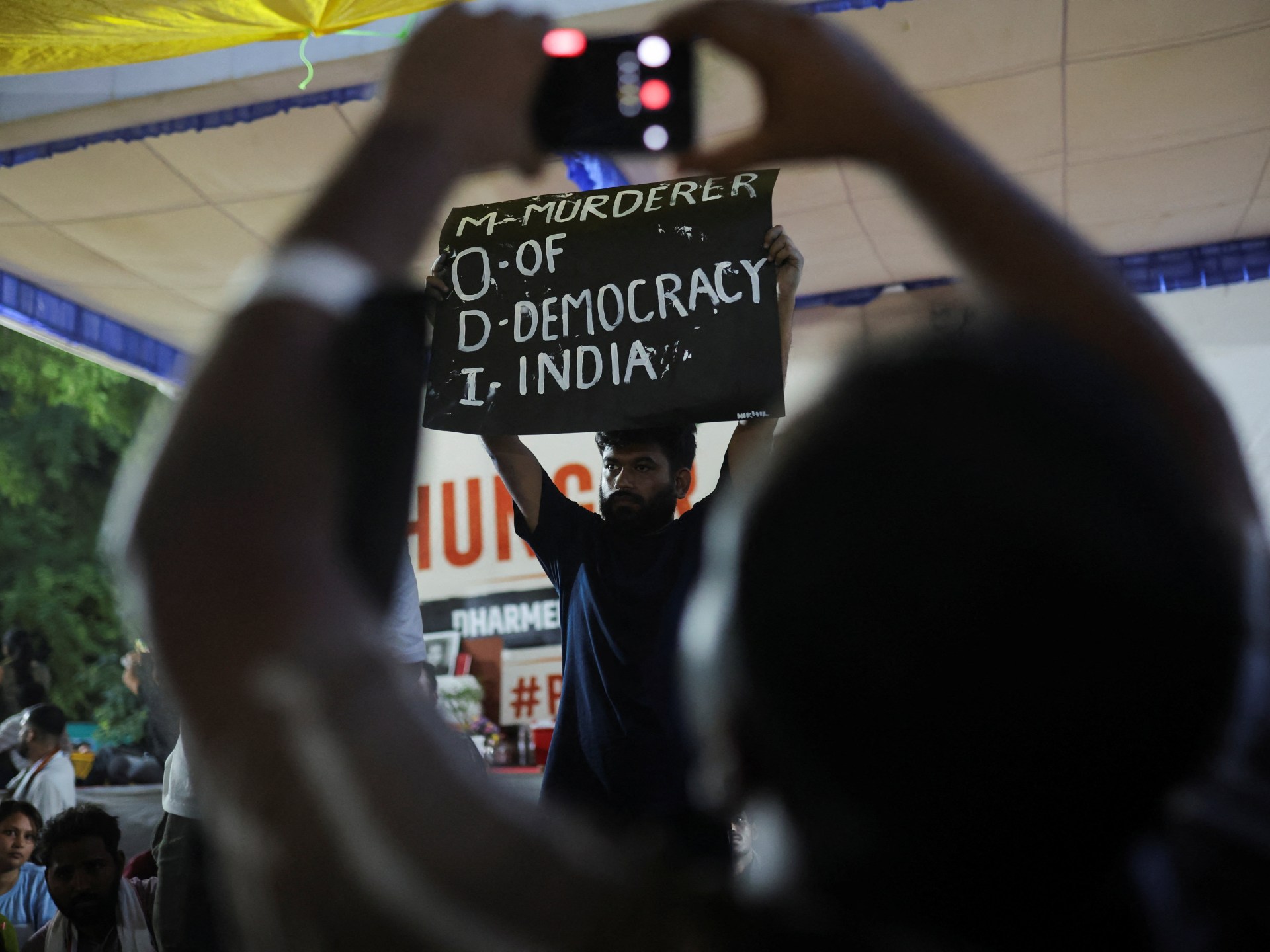
Indian police removed educator-activist Sonam Wangchuk from a Cockroach Janta Party sit-in at Jantar Mantar in New Delhi and took him to a hospital on the 21st day of his hunger strike, according to Uday Chandra, who teaches politics and history at Georgetown University in Qatar. Chandra wrote for Al Jazeera that the move has escalated a youth-led protest centered on exam leaks, unemployment and demands for accountability.
Wangchuk was taken against his will, Chandra reported. Protesters remained at the site, while Cockroach Janta Party founder Abhijeet Dipke began his own indefinite hunger strike.
According to Chandra, demonstrators planned to march toward India’s Parliament on Monday. Their stated demand is the resignation of Education Minister Dharmendra Pradhan over leaks in university entrance exams and broader failures in India’s competitive testing system. Chandra also cited calls for Prime Minister Narendra Modi to resign.
How the protest began
The Cockroach Janta Party, or CJP, emerged in mid-May after Chief Justice Surya Kant described unemployed youth as “cockroaches”, Chandra wrote. The remark triggered anger across India and helped turn the satirical group into an online rallying point for young people.
Chandra described the CJP as a movement that started on social media and then moved into street protest. He wrote that the government’s initial response appeared to be limited containment: allowing demonstrations within tight boundaries while restricting their reach and waiting for internal divisions to appear.
The removal of Wangchuk suggested a shift, in Chandra’s view. He argued that the CJP can no longer be dismissed as a brief internet-driven episode because its symbol has captured a wider feeling among young Indians who face joblessness, rising costs and repeated disruptions in high-stakes exams.
Exam anger and wider pressure
Chandra wrote that exam leaks have become politically explosive because competitive tests are tied to hopes of upward mobility. Families often spend heavily on coaching and preparation, he said, making a leaked paper feel like a betrayal of years of sacrifice.
He linked the protests to broader economic strain. Chandra wrote that, after the COVID-19 pandemic pushed India into recession, more than 800 million Indians came to rely on government food support. He also said wealth has become highly concentrated, with the richest 1 percent holding a share of income and wealth not seen in India for a century.
India has expanded schooling and higher education without creating enough stable, dignified work for many graduates, Chandra argued. In that setting, he wrote, students, unemployed graduates, gig workers and small business owners have found meaning in the cockroach label as a way to express contempt they believe they receive from those in power.
Chandra also placed the protests in the context of national politics. He wrote that Modi’s Bharatiya Janata Party remains a formidable electoral force, though it won a little more than one-third of the national vote in the 2024 general election. He argued that the party’s power depends on alliances, defections, opposition splits and the shrinking space outside India’s two main national political poles.
The CJP has not offered a detailed governing programme, Chandra wrote. Its significance, in his account, lies in the way satire has become a vehicle for public anger at a time when many young people see formal political channels as weak or distorted.
This story draws on original reporting from Al Jazeera.