
Moldovan parliament backs Vasile Tofan as prime minister
The financier takes office with a pro-EU programme after Alexandru Munteanu's abrupt resignation left Moldova without a settled government.
By Daniel Okafor · Business Editor
3 min read
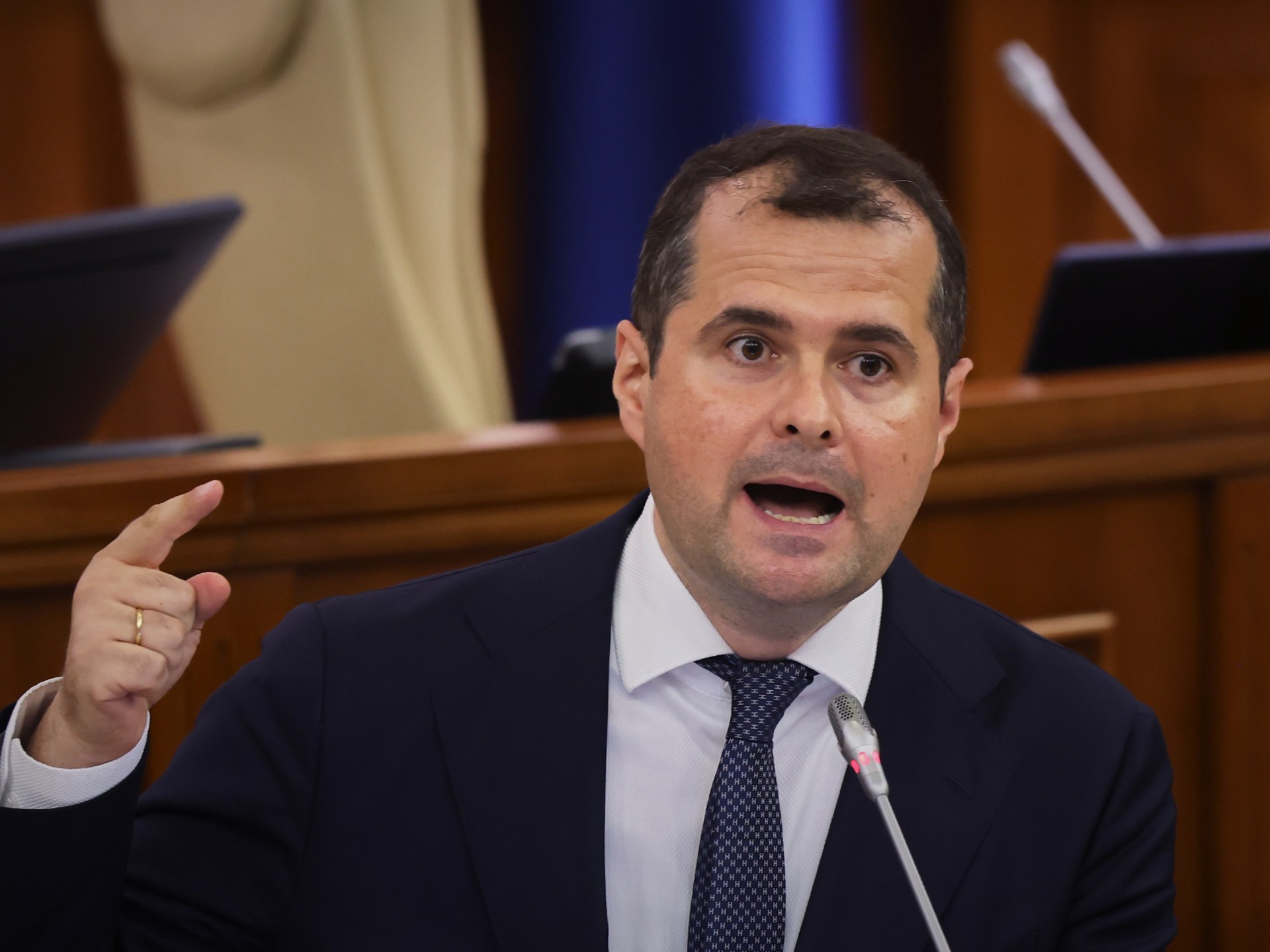
Moldova’s parliament approved financier Vasile Tofan as prime minister on Tuesday, giving the country a new government as it tries to keep its European Union bid on schedule. The vote restores political direction after the sudden departure of former Prime Minister Alexandru Munteanu forced his cabinet to resign.
Lawmakers backed Tofan by 53 votes to 21, with 21 abstentions, according to Al Jazeera, The Associated Press and Reuters. His approval ends three weeks of uncertainty in Chisinau and keeps in place the pro-EU course set by the previous government.
Tofan succeeds Munteanu, who resigned eight months into his term without giving a clear explanation, according to Al Jazeera. Under Moldova’s system, that move also brought down the cabinet, requiring a new government to be formed.
Tofan told parliament his administration would work under a programme titled “The European Economy, an Effective State.” He said, “This is the commitment we will work towards, and it is by this commitment that we ask to be judged.”
Although Tofan is not a member of a political party, he had the support of President Maia Sandu and her Party of Action and Solidarity, according to Al Jazeera, AP and Reuters. Sandu nominated him and said Moldova needed a unified government to achieve EU membership.
The new prime minister has promised to focus on the economy, budget policy and Moldova’s EU path. According to Al Jazeera, AP and Reuters, his agenda includes efforts to lift growth, reduce budget deficits, privatise state-owned companies and advance accession talks with Brussels.
Moldova remains one of Europe’s poorest countries, and its economy expanded 2.4 percent last year, according to the report. Tofan’s programme sets out a timetable that aims to move EU talks forward this year, secure an accession agreement by the end of 2028 and prepare Moldova to join the bloc by 2030.
Moldova became an EU candidate in 2022 at the same time as Ukraine. The two countries opened membership negotiations last month, according to Al Jazeera.
EU membership is still expected to take years. Moldova must carry out reforms it accepted as part of its candidacy, and accession requires approval from the bloc’s members.
The political stakes are high in a country that has alternated for decades between parties favouring closer EU ties and parties seeking stronger relations with Russia. The EU has accused Russia of interfering in Moldovan elections, according to Al Jazeera. Moldova has a Romanian-speaking majority, while a large minority of residents speak Russian.
Tofan’s confirmation gives Sandu’s pro-European camp a new head of government as it tries to maintain momentum in talks with Brussels. His first test will be turning the accession timetable and economic pledges into legislation that can pass through parliament.
This story draws on original reporting from Al Jazeera.