
Modi visit puts India-Australia defence ties in wider regional focus
Amitabh Mattoo says Modi’s Australia stop shows India seeking a larger role across the Asia Pacific without joining a bloc.
By Daniel Okafor · Business Editor
4 min read
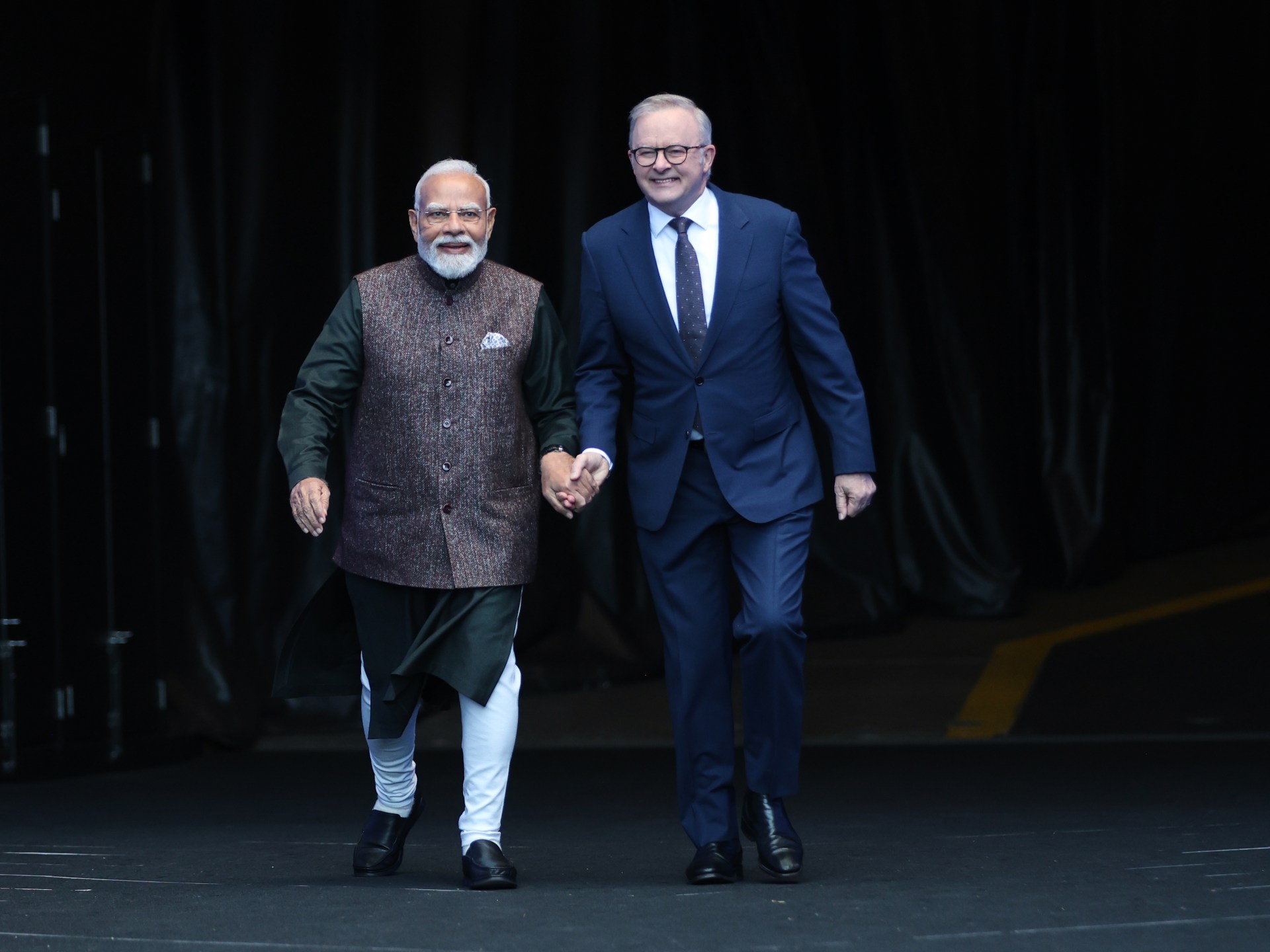
India and Australia used Prime Minister Narendra Modi’s visit to Canberra to mark a sharp turn in defence and strategic ties, 28 years after Australia cut military cooperation with New Delhi over India’s nuclear tests. Amitabh Mattoo, director of the Australia India Institute, wrote for Al Jazeera that the visit also points to India’s wider effort to influence the balance of power across the Asia Pacific.
Mattoo said Australia suspended defence links with India after the May 1998 tests at Pokhran, freezing military exchanges and sending Indian officers home from Australian defence colleges. During Modi’s visit this week, he wrote, Australia said it would invite an Indian military instructor to serve at the Australian Defence College.
That shift, Mattoo argued, reflects more than a recovery in bilateral relations. He cast it as part of a broader Indian push through Modi’s three-country tour of Indonesia, Australia and New Zealand.
A three-stop regional tour
According to Mattoo, the itinerary shows how New Delhi is extending its strategic reach across the Asia Pacific. He described Indonesia as central to India’s engagement with Southeast Asia because of its position between the Indian and Pacific Oceans.
Australia, he wrote, has become one of India’s most significant strategic partners in recent years. New Zealand, though smaller, gives India another diplomatic link into the Pacific, according to his analysis.
Mattoo said the visits come as China’s rise reshapes regional calculations and as the United States under Donald Trump is seen by some regional governments as less predictable. He wrote that economics, technology, energy and supply chains are increasingly treated as tools of strategic competition.
Uranium, defence and technology
The agreements reached during Modi’s Australia visit covered uranium exports for civilian nuclear energy, expanded defence cooperation, maritime security, cyber and critical technologies, clean energy, skills, investment and critical minerals, according to Mattoo.
He singled out uranium as a symbol of the change. Australia had refused to sell uranium to India because New Delhi was outside the Nuclear Non-Proliferation Treaty, and exports remained delayed even after the two countries signed a civil nuclear cooperation agreement about a decade ago, Mattoo wrote.
The latest step, he said, was the completion of an administrative arrangement that will allow Australia to help support India’s civilian nuclear energy programme. Mattoo described that as a former point of estrangement becoming a practical element of partnership.
Mattoo also pointed to long-standing barriers that had kept the two countries apart, including the Cold War, India’s closed economic model, the White Australia Policy and Canberra’s uranium stance. He wrote that those constraints have faded as the two countries found shared interests in regional balance, democratic governance and the rule of law.
He added that Indians are now Australia’s largest source of skilled migrants.
India’s position between major powers
Mattoo argued that concern about China explains the speed of closer ties among Asian partners, but not the full depth of trust. He cited India’s 2020 border clashes with China in Galwan, Australia’s experience with Chinese economic pressure, Japan’s tensions in the East China Sea and the concerns of Indonesia and New Zealand about vulnerable forms of interdependence.
At the same time, Mattoo said India is not trying to hand its China policy to Washington, Canberra or Tokyo. He wrote that New Delhi aims to compete with Beijing where required, cooperate where possible and steady relations where it sees value.
In Mattoo’s view, India wants an open, multipolar and rules-based Asia Pacific rather than a region dominated by either Washington or Beijing. He wrote that networks involving maritime cooperation, technology, supply chains, education, diaspora links and regular strategic consultation will help shape the region alongside military power and major-power diplomacy.
Mattoo concluded that Australia increasingly sees India as part of the answer to regional instability rather than as a problem, a reversal from the post-1998 period. He described Modi’s tour as evidence that India seeks to be a “shaping power” in the Asia Pacific rather than only a balancing force.
This story draws on original reporting from Al Jazeera.