
Khamenei's body taken to Qom as Iran holds funeral rites
Iranian state TV said Ayatollah Ali Khamenei’s body arrived in Qom after large funeral processions in Tehran drew crowds for a third day.
By Sofia Marchetti · World Affairs Correspondent
3 min read
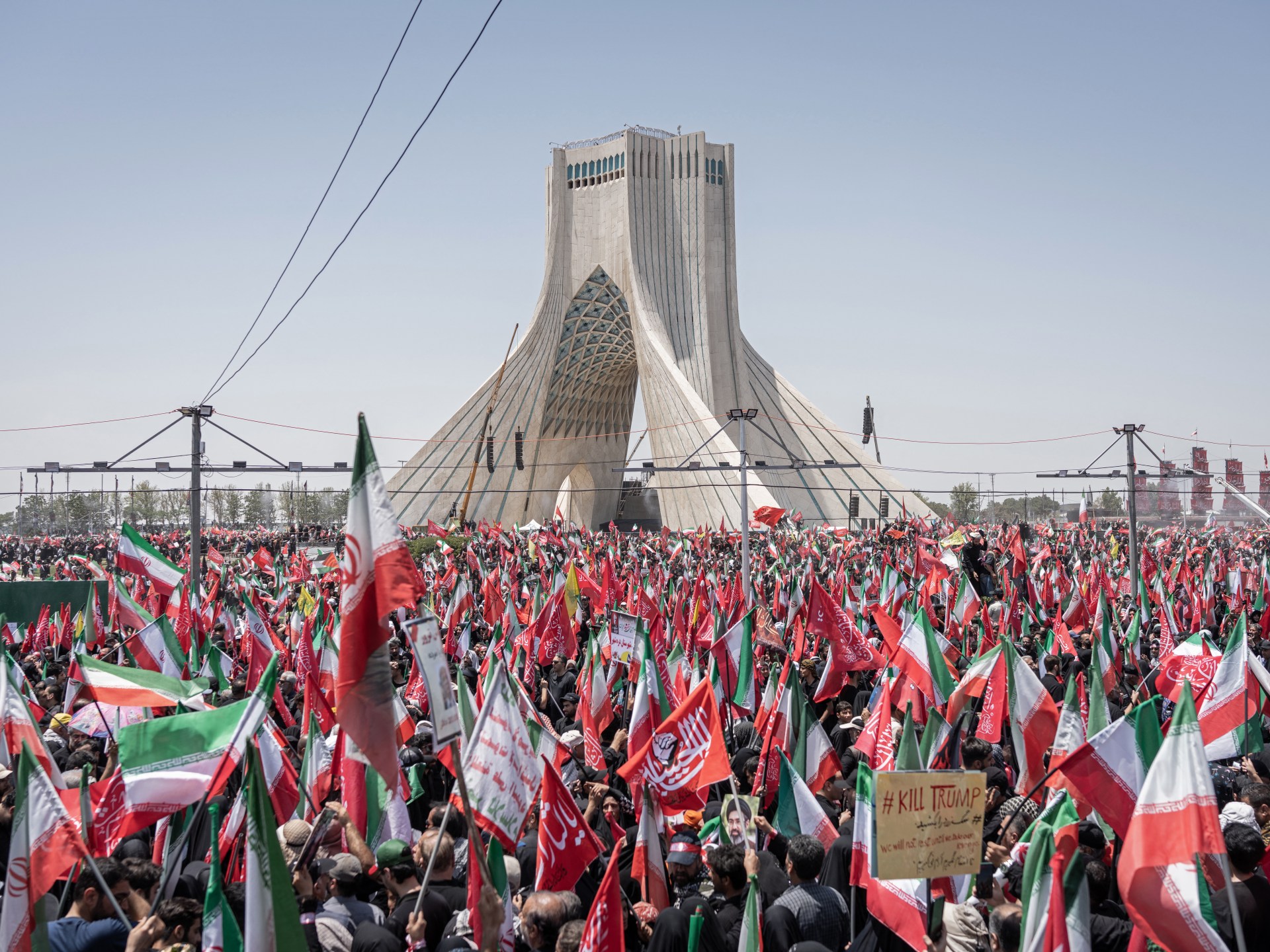
The body of Ayatollah Ali Khamenei was flown to Qom on Monday before another planned procession in the religious city, Iranian state television reported. The transfer followed a large funeral march in Tehran for the late supreme leader and relatives killed in a US-Israeli strike.
State TV broadcast footage it said showed a helicopter carrying Khamenei’s body landing in Qom, south of Tehran. The ceremonies are scheduled to end Thursday with his burial in Mashhad, his hometown in northeastern Iran.
Earlier Monday, large crowds filled Tehran’s streets for a third straight day of mourning. A truck carrying the coffins of Khamenei and four members of his family moved slowly toward Azadi Square in the west of the capital, according to state media coverage.
Iranian state television said millions attended and compared the turnout with the funeral of Ayatollah Ruhollah Khomeini, Khamenei’s predecessor, in 1989. Mourners dressed in black lined major roads and threw petals toward the coffins, including a small casket that state media identified as Khamenei’s granddaughter, who it said was 14 months old when she was killed.
A man who gave his name as Hamid told Al Jazeera that the United States and Israel had sought to split the country, but said Khamenei had stopped that from happening. “Iranians are here to appreciate what he has done for Iran,” he said.
Another mourner, Marzieh, told Al Jazeera she attended to honor a leader who ruled Iran for nearly four decades. “We came here to tell our martyred leader that his blood is not wasted. We came here to renew our allegiance to him,” she said.
Jafar Miadfar, the head of Iran’s emergency services, told the state news agency IRNA that more than 34,000 people at the events had received medical treatment or emergency assistance. He said no deaths had been recorded.
Several senior Iranian officials joined the procession. President Masoud Pezeshkian wrote on X that Iran would continue what he called “the path of Iran’s honour, progress and glory.”
Foreign Minister Abbas Araghchi, judiciary chief Gholamhossein Mohseni Ejei and Quds Force commander Esmail Qaani also attended. State television showed Mohammad Bagher Zolghadr, the head of the Supreme National Security Council, in what it said was his first public appearance since his predecessor, Ali Larijani, was killed in an air strike in March.
Iranian media quoted Zolghadr as saying that the sight of millions carrying red flags and chanting slogans was “a clear message from the Iranian nation to its enemies.” Former President Mahmoud Ahmadinejad, who led Iran from 2005 to 2013 and later fell out with Khamenei, was also seen at the event, according to the reports.
Khamenei’s son and successor, Supreme Leader Mojtaba Khamenei, was not seen at the procession. He has not appeared publicly since before his appointment a week after his father’s death, according to the reports.
Mohammad Eslami, a research fellow at Tehran University, told Al Jazeera that Mojtaba Khamenei could not attend because “the war is not over.” Eslami cited a fragile ceasefire between Iran and the United States and Israel and said ongoing security arrangements made a public appearance unlikely.
This story draws on original reporting from Al Jazeera.