
Kashmir court ruling on disappeared man revives calls for answers
A judge ordered a death certificate for Abdul Rashid Wani, nearly three decades after his family says he vanished in army custody.
By Lucas Ferreira · Science & Environment Writer
4 min read
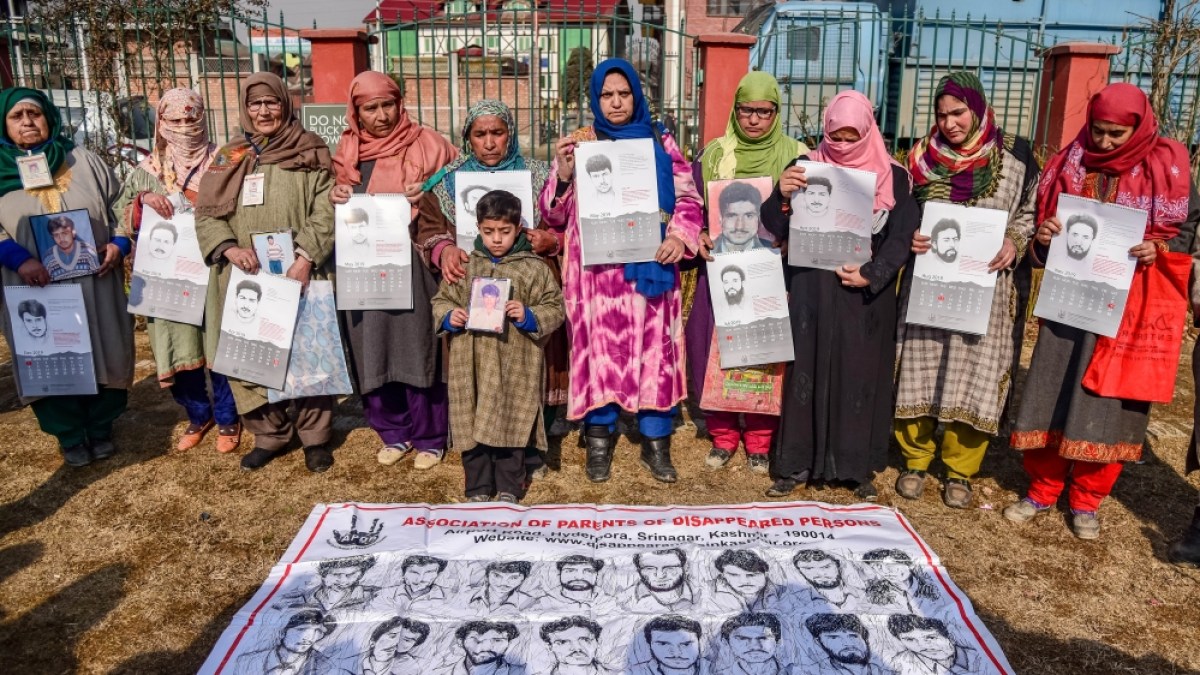
A court in India-administered Kashmir has ordered authorities to issue a death certificate for Abdul Rashid Wani, a timber trader who disappeared after being taken into military custody in 1997, AFP reported. For families of thousands of missing Kashmiris, the April ruling offers rare official recognition in a conflict where many relatives still do not know where their loved ones are buried.
Wani’s son, Junaid Rashid, was five when his father vanished. Now 34, Rashid told AFP his family had spent years searching, filing cases and pressing officials for answers before the court declared what they had long believed: Wani was dead.
The judgment cited a police inquiry that identified the army officer who took Wani into custody, according to AFP. It recorded Wani’s death as occurring on the day he disappeared and ordered a death certificate, but it did not say where his remains are.
A disappearance in Srinagar
Wani was stopped near his home in Srinagar while carrying cash to pay suppliers, his family and the police inquiry said, according to AFP. His wife and two children were waiting that evening for him to return and take them to a wedding reception.
The ruling, drawing on the investigation, said an army major killed Wani while he was in custody and disposed of the body, AFP reported. Rashid said the government had acknowledged the case in court after 29 years.
In Kashmir, women whose husbands disappeared during the conflict are often called “half-widows,” a term used for those left without proof of death or a body to bury. Rashid told AFP that earlier acknowledgment would have changed his family’s life, including his mother’s health.
Kashmir has been divided between India and Pakistan since 1947, and both countries claim it in full. AFP reported that armed groups began a rebellion in 1989 after political efforts for self-determination failed, seeking either independence or merger with Pakistan.
India sent large numbers of troops to the region and accused Pakistan of backing the rebels, an allegation Pakistan denies. Tens of thousands of people, most of them civilians, have been killed since the insurgency began, according to AFP, and at least 500,000 Indian soldiers remain deployed there even though the rebellion has largely been crushed.
Rights groups point to thousands missing
The People’s Union for Democratic Rights, a New Delhi-based civil liberties group, said Wani’s case reflects the wider human rights record in Kashmir since the violence escalated in 1989, AFP reported. The Association of Parents of Disappeared Persons says as many as 8,000 people may have disappeared, while noting that some may have been abducted by rebels.
In 2009, the APDP mapped what it said were 2,700 unmarked graves in remote areas near the de facto border with Pakistan. Residents in Kupwara told AFP that villagers had buried bodies left by police between 1990 and 2000, and that some relatives of missing people later opened graves and identified remains.
Indian authorities and security officials have maintained that the bodies were unidentified fighters killed in clashes and that missing men likely crossed into Pakistan, AFP reported. Kashmir’s State Human Rights Commission examined the grave sites and said in 2011 that the government had identities for only 464 of 2,730 bodies at 38 locations identified by the APDP.
The commission said many disappeared people could be among the bodies in unmarked graves and called for DNA testing, according to AFP. That testing has not been carried out, and the commission was closed in 2019 after India’s central government took direct control of Kashmir.
AFP also reported the case of Manzoor Ahmed Dar, whom his wife, Jana Begum, said soldiers took from their Srinagar home at midnight in 2002. Begum later identified an officer in an official lineup, but her family has not learned what happened to Dar despite years of legal efforts.
Dar’s daughter, Bilkees Manzoor, told AFP the family held symbolic funeral rites in 2016 after police privately said he had died during interrogation. She said the only justice left would be for authorities to tell the family what happened to him and where his body is.
This story draws on original reporting from Al Jazeera.