
Israeli buffer zone expands across Gaza, UN and residents say
OCHA says Gaza’s restricted zone has grown since the ceasefire, as residents report displacement, land loss and blocked services near the Yellow Line.
By Daniel Okafor · Business Editor
3 min read
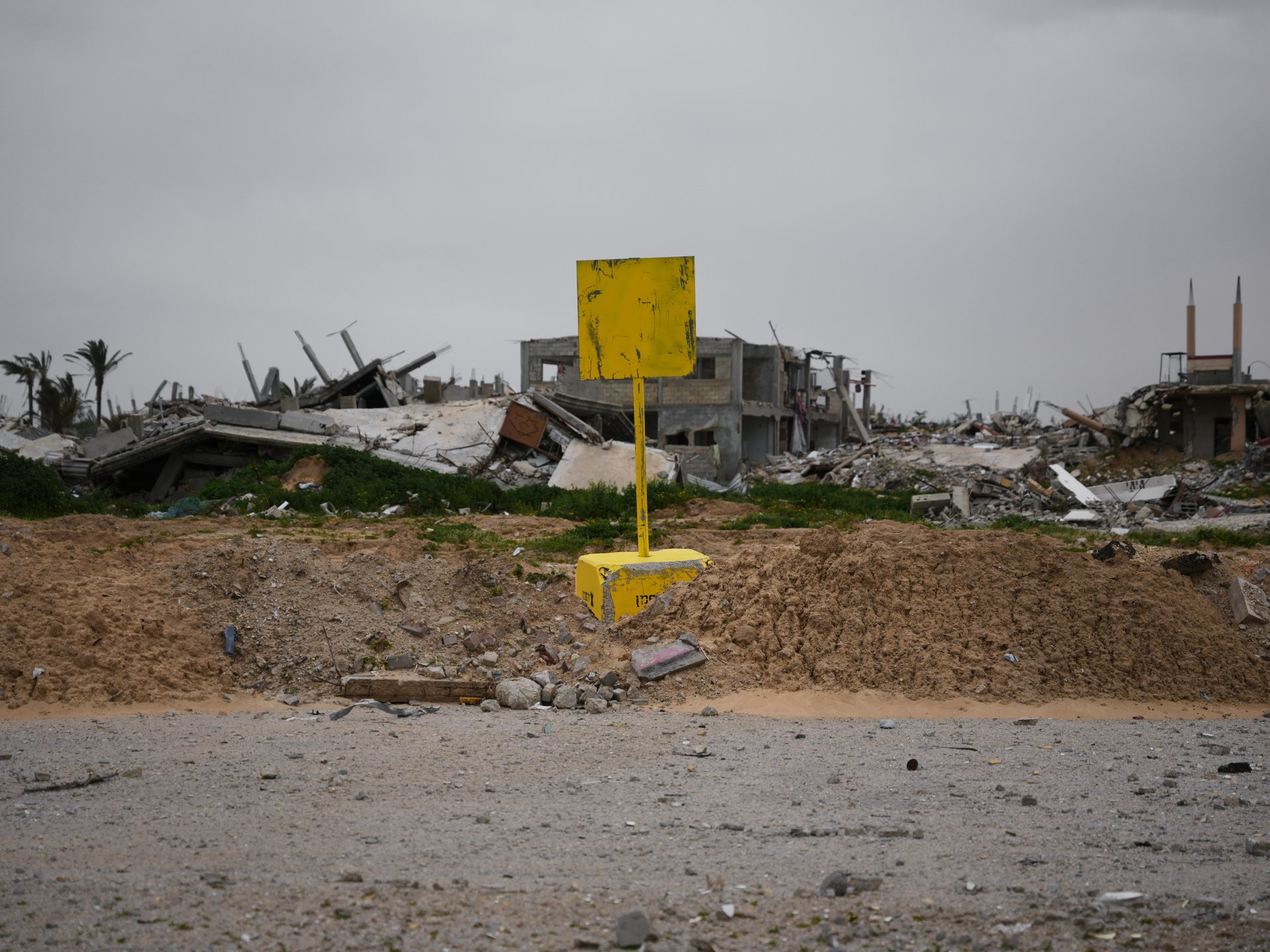
Israel’s restricted access zone in Gaza has widened since the October ceasefire, according to UN figures, reshaping where Palestinians can live, farm and receive basic services. Residents and local officials told Al Jazeera that the so-called Yellow Line is shifting west in several areas as Israeli forces move concrete markers and deepen military control.
The UN Office for the Coordination of Humanitarian Affairs said the zone covered 64.9 percent of the Gaza Strip by June 2026, compared with 53 percent earlier in the year. Israel refers to the boundary as the Yellow Line, a demarcation created after the ceasefire to separate Israeli-held areas from places where forces were expected to withdraw, according to Al Jazeera.
Gaza’s Government Media Office said it has recorded 3,795 Israeli violations of the ceasefire since October, with 1,168 Palestinians killed. UN data cited by Al Jazeera indicates that about one-third of those deaths occurred near the advancing line.
Residents describe sudden shifts
In eastern Deir el-Balah, resident Hazem Saeed told Al Jazeera that Israeli quadcopters broadcast evacuation orders on July 17 before military vehicles moved in after dark. Saeed said the yellow concrete blocks were pushed 300 to 350 metres west, placing them on Sultan Othman Street and cutting off agricultural and residential land belonging to several families.
Saeed said the markers now stand only two to four metres from some homes. He told Al Jazeera that families including Bin Saeed, al-Louh and Abu Ghraba lost farmland that had been their only source of income.
In Gaza City’s Zeitoun neighbourhood, 71 displaced families have built a camp called Ahl al-Sumud on Salah al-Din Street, about 70 metres from the line, camp supervisor Ramadan Abu Ammo told Al Jazeera. He said families remain there because they have no other place to go, despite regular shrapnel in the area.
Abu Ammo also said his parents are still buried under the rubble of his nearby home because rescue crews cannot enter the newly restricted area. Palestinian journalist Saed Hassaballah, who lives near the camp, told Al Jazeera that heavy gunfire and shelling usually come before the markers move, and described the process as “a creeping death.”
Municipal services blocked
In northern Gaza, resident Suhail Ouda told Al Jazeera that the line has moved as much as 1.5km in some places, from as-Sikka Street near Beit Hanoon toward Trans Street near the Sheikh Zayed roundabout. He said Israeli bulldozers level homes daily and quadcopters detonate remaining structures behind the line.
Ouda also said Israeli forces have built earthen barriers and watchtowers at the Tal az-Zaatar heights, turning the area into a military surveillance zone. He told Al Jazeera that armed local groups loyal to Israel have detained and assaulted youths near the line, including one young man near the Janzir roundabout in Beit Lahiya who was handed over to the army.
Mohammed al-Sarsawi, the Gaza municipality’s head of media, told Al Jazeera that municipal crews can no longer reach nearly half of Gaza City, including Shujayea, eastern Tuffah, Zeitoun and parts of Daraj. He said the line has cut off water wells, sewage facilities and main control rooms while more than half of the city’s 950,000 residents are packed into a reduced area.
Political analyst Ahmed al-Tanani told Al Jazeera that Israel is moving from phased withdrawal toward a larger territorial hold, increasing controlled areas from 195sq km to 235sq km. He compared the construction of posts along the line to measures used after Israel occupied the West Bank in 1967.
Al Jazeera’s Open Source Unit reported that satellite imagery showed 40 permanent Israeli military outposts across Gaza, with several built after the ceasefire. Israeli National Security Minister Itamar Ben-Gvir also praised the expansion at a recent rally, saying: “If someone had said three years ago that we would control 70 percent of the Gaza Strip, no one would have believed it … Gaza is ours.”
This story draws on original reporting from Al Jazeera.