
Iran stages mass mourning for Khamenei under vows of revenge
Tehran ceremonies mixed tight security, state messaging and calls for retaliation after the former supreme leader was killed in a February airstrike.
By Sofia Marchetti · World Affairs Correspondent
3 min read
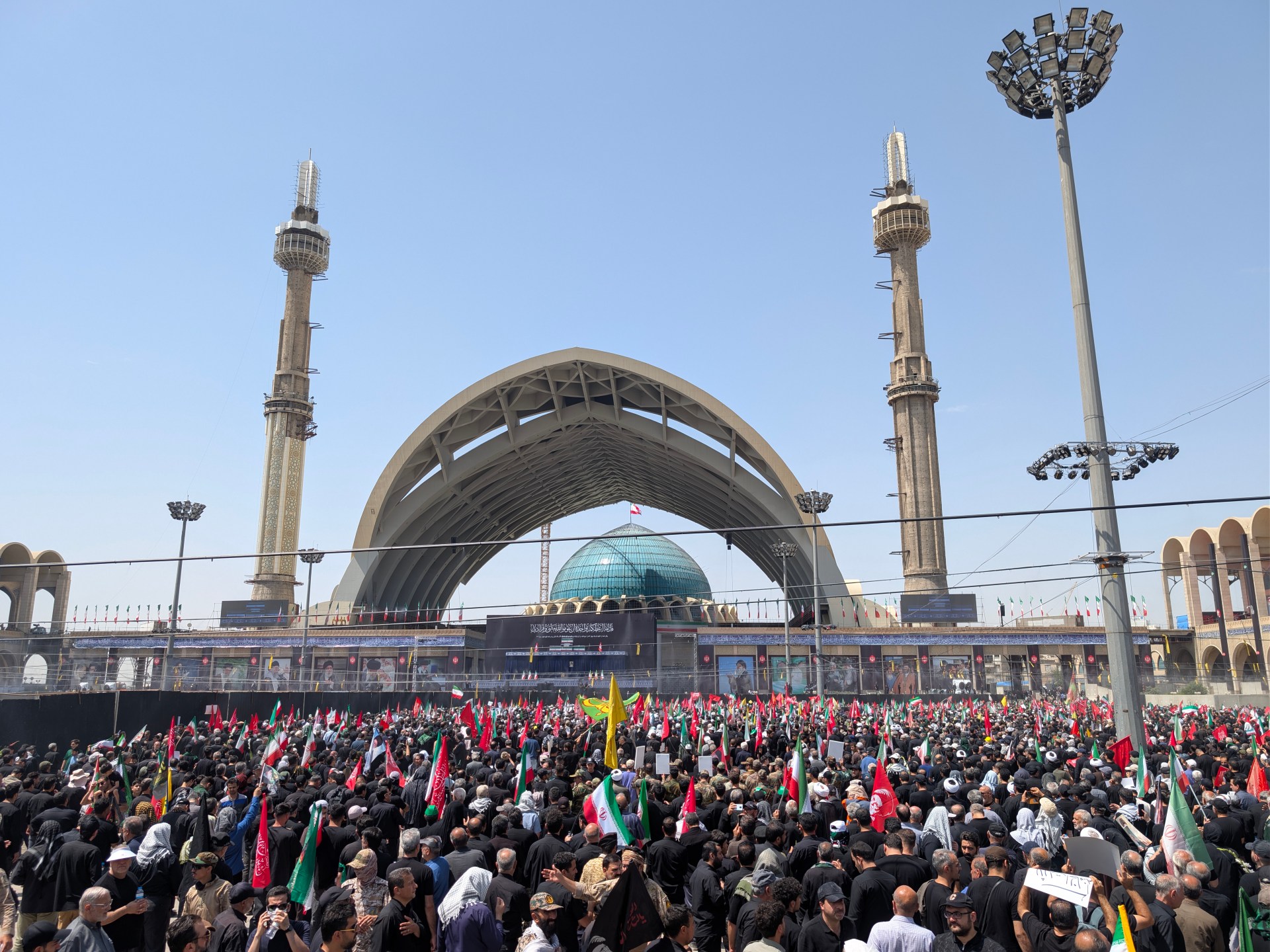
Iran opened large public commemorations in Tehran for former Supreme Leader Ayatollah Ali Khamenei, pairing mourning with a state message of political continuity and revenge. The ceremonies matter because they are the first major public test of the Islamic Republic’s display of unity after Khamenei’s killing and the rapid succession of his son, Mojtaba Khamenei.
Al Jazeera reported that thousands of mourners entered the Grand Mosalla religious complex from early Saturday, where Khamenei’s coffin was placed at the center of the venue. Khamenei, 86, was killed in an airstrike on February 28 at the start of the war involving the United States and Israel, after nearly 37 years as Iran’s highest authority, according to Al Jazeera.
The official slogan for the ceremonies was “We must rise,” shown with an image of Khamenei’s clenched fist against red and black. Red flags, associated in Shia Islam with martyrdom and also read as a sign of vengeance, appeared throughout the site and at other gatherings, Al Jazeera reported.
Security tight around Tehran ceremonies
The coffin arrived by lorry and was set on a raised platform behind glass, with Islamic Revolutionary Guard Corps personnel guarding the area. Al Jazeera reported that authorities appeared prepared to stop mourners from trying to reach it.
Men and women were separated by a barrier at the venue, and chants and slogans played over loudspeakers. State media video showed crowds at metro stations chanting “Death to America” and “Death to Israel,” according to Al Jazeera.
A 55-year-old mourner identified by Al Jazeera as Fatemeh said she had come with women wearing black chadors to seek “blood vengeance” for Khamenei. She also said mourners would follow Mojtaba Khamenei, who was chosen by a clerical body in March to succeed his father and has not appeared publicly since taking office.
Armoured vehicles, heavy machine guns and snipers were visible near the funeral areas, Al Jazeera reported. Men entering the Mosalla were searched, and security personnel confiscated some items including power banks, earphones and lighters. Mojtaba Khamenei is not expected to attend because of security concerns, according to Al Jazeera.
Procession planned through holy sites
Iran has been effectively closed through Monday, in what Al Jazeera described as an apparent push to increase public participation. Authorities expect 10 million people to join proceedings across the country, the outlet reported.
Temporary religious service stations, known as mokebs, were set up around Tehran, playing Shia chants and eulogies. Volunteers handed out flags, banners, images and drinks as temperatures reached 36 degrees Celsius, while emergency services were posted nearby. Authorities had reported no security incidents or medical emergencies, according to Al Jazeera.
Khamenei’s remains are expected to be carried through Tehran on Monday, then taken through Shia holy sites including Qom, Najaf and Karbala before burial in Mashhad on Thursday. Large sections of Tehran were blocked off, while some residents used the holiday to leave for cooler northern provinces, causing long traffic jams on the Tehran-Shomal Freeway, Al Jazeera reported.
IRGC commander-in-chief Ahmad Vahidi appeared on state television Friday, his first appearance since the war began, and said Iran’s enemies would take “their wish for our surrender to the grave.” IRGC aerospace chief Majid Mousavi also appeared publicly, according to Al Jazeera.
Iran’s armed forces headquarters warned against any military action during the ceremonies after Israeli Defence Minister Israel Katz said Mojtaba Khamenei was “marked for death,” Al Jazeera reported. Representatives from dozens of countries attended Friday events in Tehran, including Pakistan’s Prime Minister Shehbaz Sharif, while European countries were reportedly not invited.
Delegations linked to the IRGC-backed “Axis of Resistance” also attended, including representatives of Hamas, Yemen’s Houthis and Lebanon’s Hezbollah. Al Jazeera reported that the Hezbollah delegation included relatives of Hassan Nasrallah, who was killed by Israel in 2024, and relatives of Imad Mughniyeh, who was killed in Syria in 2008.
This story draws on original reporting from Al Jazeera.