
Iran keeps judiciary chief in place as Khamenei funeral begins
Gholam-Hossein Mohseni-Ejei was given another five-year term as Iran stresses continuity after Ali Khamenei’s killing.
By Sofia Marchetti · World Affairs Correspondent
4 min read
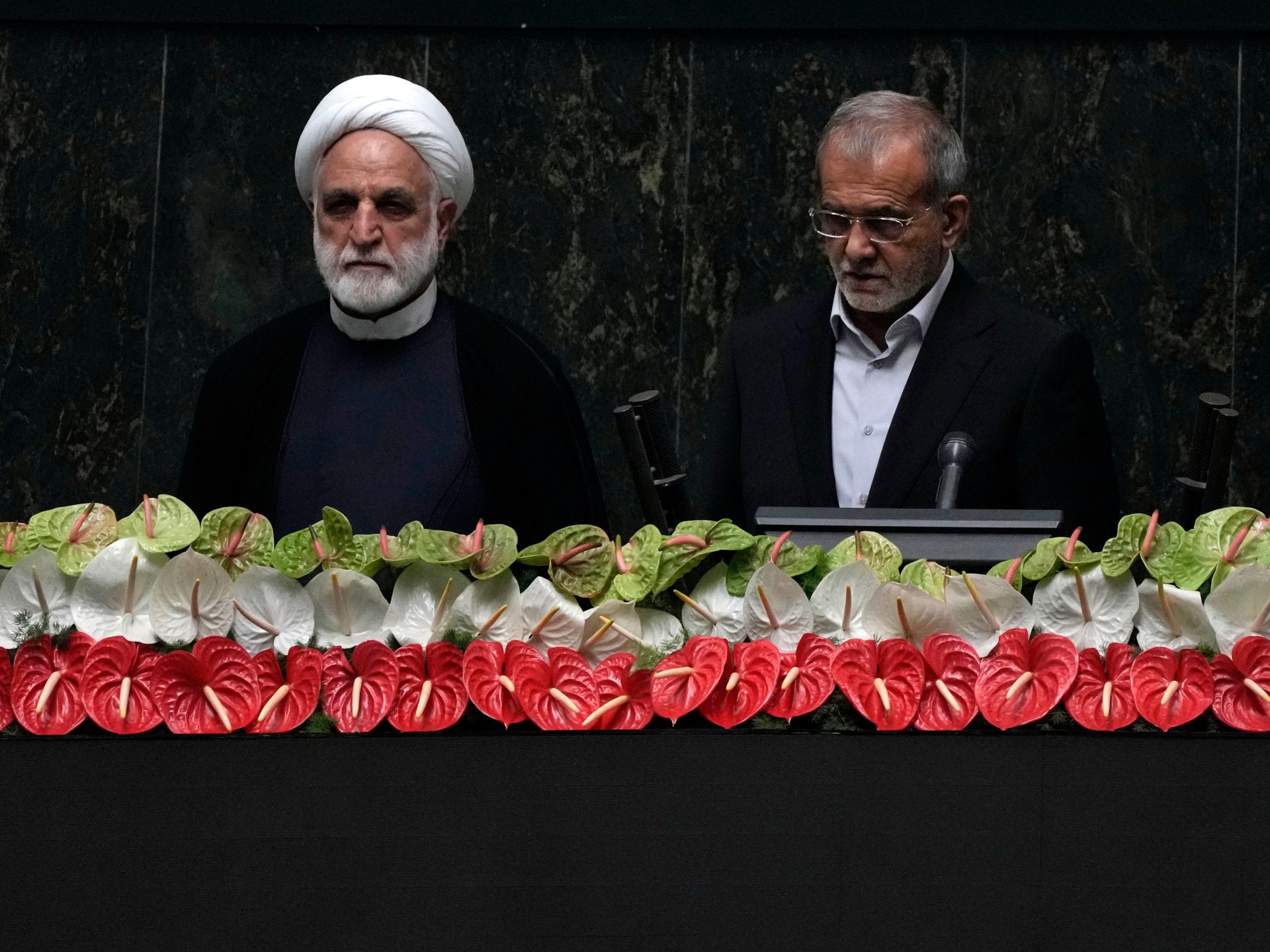
Iran has reappointed Gholam-Hossein Mohseni-Ejei as chief justice for another five years, Al Jazeera reported, keeping a central power broker in place as the country holds funeral rites for former Supreme Leader Ayatollah Ali Khamenei. The move signals continuity at a tense moment following Khamenei’s killing and the succession of his son, Mojtaba Khamenei.
Al Jazeera reported that Mojtaba Khamenei, who has not appeared publicly since becoming supreme leader in March, confirmed the reappointment in a text message attributed to Iran’s new head of state. Mohseni-Ejei, a 69-year-old cleric, had just completed his previous five-year term.
The announcement came as crowds were expected to line a route in Tehran for the funeral procession of Ali Khamenei and four relatives, Al Jazeera reported. They were killed in a February 28 air strike on the first day of the US-Israel war on Iran, according to the report.
Al Jazeera said the procession, guarded by members of the Islamic Revolutionary Guard Corps, was due to continue to Qom and then neighbouring Iraq before burial in Mashhad, a holy Shia city in northeastern Iran. Mohseni-Ejei was among senior figures seen at the procession, along with President Masoud Pezeshkian, former President Mahmoud Ahmadinejad and IRGC commander-in-chief Ahmad Vahidi.
Mandate and pressure
In the confirmation message, Mojtaba Khamenei asked Mohseni-Ejei to continue fighting corruption and to pursue unspecified steps toward what was described as a judicial transformation, Al Jazeera reported. The message also called on him to pursue crimes by “arrogant powers” and “global aggressors.”
Mohseni-Ejei told state television on Monday that he remained committed to goals set by the Islamic Republic’s leaders and addressed public calls for revenge over Khamenei’s assassination. He said people wanted punishment severe enough to deter enemies from repeating “war and non-war crimes,” according to Al Jazeera.
Al Jazeera reported that Mohseni-Ejei also renewed his support this week for the “axis of resistance,” Iran’s network of allied regional armed groups. He also promised firm action against hoarding, price gouging and other conduct that harms livelihoods as Iran faces economic strain, the outlet reported.
Iranian authorities have expanded prosecutions tied to espionage and national security offences under a law passed after last year’s 12-day war with Israel and the United States, Al Jazeera reported. Under Mohseni-Ejei’s tenure during the war, the judiciary carried out near-daily executions of dissidents arrested on security charges, including protesters from nationwide anti-government demonstrations in January, when thousands were killed, according to the report.
International human rights organisations have warned that executions in Iran have risen to their highest level since the late 1980s, Al Jazeera reported. Tens of thousands have been arrested since the protests began, and businessmen, celebrities and others have had assets confiscated in cases linked to security charges, according to the outlet.
Why the post matters
Article 158 of Iran’s constitution gives the judiciary chief authority over the judicial branch’s structure, judicial bills and the appointment, dismissal, transfer and promotion of judges. Al Jazeera reported that Mohseni-Ejei can also appoint the head of the Supreme Court and the prosecutor general after consultation with Supreme Court judges.
The post also carries political weight. Al Jazeera reported that the judiciary chief nominates six legal jurists to the 12-member Guardian Council, subject to parliamentary approval; the council vets election candidates and must approve legislation before it takes effect.
After Ali Khamenei’s killing and before the Assembly of Experts selected Mojtaba Khamenei as his replacement, Mohseni-Ejei served on a three-man council temporarily in charge of the country with the president and a Guardian Council member, Al Jazeera reported. He also sits on the Supreme National Security Council, which is overseeing mediated talks with Washington.
Officials and local media said Mohseni-Ejei voted for a US-Iran memorandum of understanding signed last month to halt the conflict, Al Jazeera reported. US President Donald Trump has said talks on a longer-term peace deal are paused until the commemorations end, according to the report.
Mojtaba Khamenei has not attended family commemoration events, apparently to avoid detection and assassination, Al Jazeera reported. Israel’s defence minister, Israel Katz, repeated a threat on Monday to eliminate top Iranian officials, while state-linked Rouydad24 said the new supreme leader’s absence was creating public and international ambiguity.
This story draws on original reporting from Al Jazeera.