
Indian student protests put Modi government on defensive online
Youth-led demonstrations over exam paper leaks have spread through India, driven by phone videos, memes and anger over a police crackdown.
By Daniel Okafor · Business Editor
3 min read
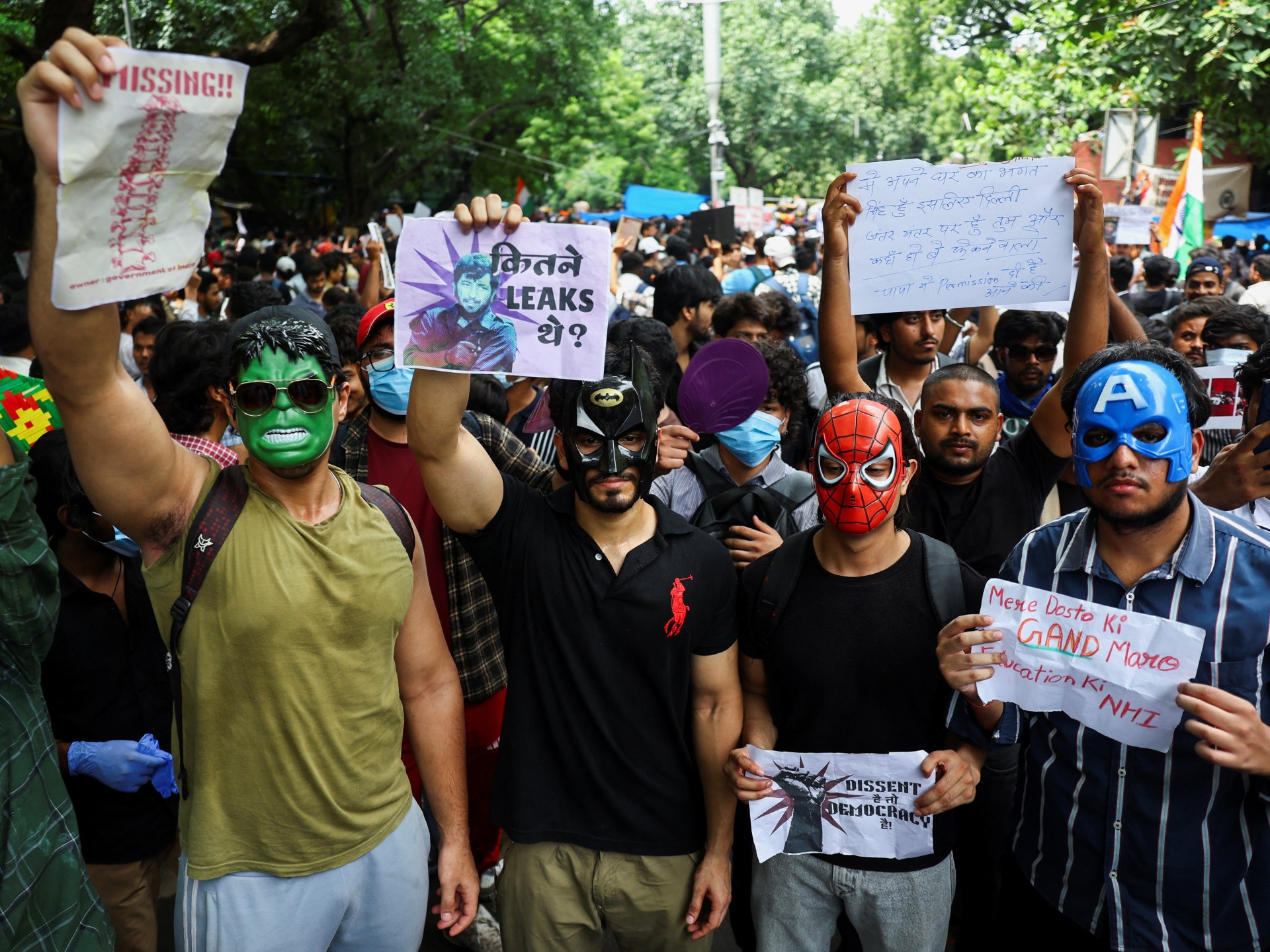
Student protests over examination paper leaks have put Prime Minister Narendra Modi’s government under pressure in New Delhi and online. Al Jazeera reported that young demonstrators are using phone footage, memes and short videos to challenge a political machine long known for its strength on social media.
The protests intensified after a July 20 march toward India’s parliament, where Al Jazeera reported that tens of thousands of people blocked key roads in the capital. More than 100 students were injured during a police crackdown, according to the outlet.
New Delhi police denied allegations from protesters and media reports that officers used excessive force, Al Jazeera reported. Protesters, however, circulated videos they said showed officers beating and chasing students, using tear gas, and striking women demonstrators.
Videos drive a wider backlash
Avanshika Singh, an 18-year-old protester, told Al Jazeera she filmed while fleeing tear gas and later posted an edited video to Instagram. She said students were documenting the crackdown because, in her words, they were “televising our revolution.”
Al Jazeera reported that footage from Jantar Mantar and nearby protest areas showed incidents including a police baton blow to a woman’s back, an officer slapping and pursuing unarmed students, and an officer tripping people running from tear gas. The report also said protesters alleged pellet guns were used, possibly by paramilitary personnel deployed with police.
The images helped spur solidarity demonstrations in Mumbai, Bengaluru, Patna, Lucknow and Aizawl, according to Al Jazeera. Reuters photographs showed Cockroach Janta Party supporters protesting in New Delhi and Kolkata while demanding Education Minister Dharmendra Pradhan’s resignation.
The Cockroach Janta Party, a political pressure group leading the student agitation, says the protests will remain peaceful until its demands are met. According to Al Jazeera, the group wants Pradhan to quit, the government to guarantee that protesters will not face criminal cases, and compensation of about $105,000 for families of students who died by suicide after exam leaks and cancellations.
A protest built for feeds
Al Jazeera described the protest site as filled with posters, graffiti, costumes and jokes aimed at the government and police. Some protesters wore superhero outfits, while others used symbols associated with youth protest movements abroad, including imagery from the Japanese manga One Piece.
Niharika Soni, 19, told Al Jazeera she had not cared much about the July 20 march until videos of the police response appeared on her feed. She said she and her mother, whom she described as a strong Modi supporter, cried while watching the clips and then joined the demonstrations.
Protesters told Al Jazeera that humor has helped them organize and spread their message. Ipshita Gulyari, 20, said her generation grew up online and was using that familiarity against the government’s messaging operation. Yashvi Kumar, 18, said memes were helping unite students amid the unrest.
Modi responds on X
Modi first addressed the protests on X on Thursday, according to Al Jazeera. He wrote that “nothing is more important than the welfare and future of our youth” and said his government had created fast-track courts to punish those responsible for paper leaks.
Cockroach Janta Party leader Abhijeet Dipke replied on X with a post aimed at Pradhan, Al Jazeera reported. The response played on Modi’s wording by placing the line “Hi, my name is Nothing” over a photo of the education minister.
Anurag Minus Verma, a cultural critic and author, told Al Jazeera that the movement grew from online irony after India’s chief justice reportedly compared young people to “cockroaches” and “parasites.” Verma said protesters turned that insult into a shared identity, helping the movement gain visibility and reduce fear around open criticism of Modi.
This story draws on original reporting from Al Jazeera.