
Houthis threaten Bab al-Mandeb blockade as U.S.-Iran fighting widens
The Iran-aligned Yemeni group said it would block a vital Red Sea route, raising pressure on oil shipping during the U.S.-Iran war.
By Daniel Okafor · Business Editor
3 min read
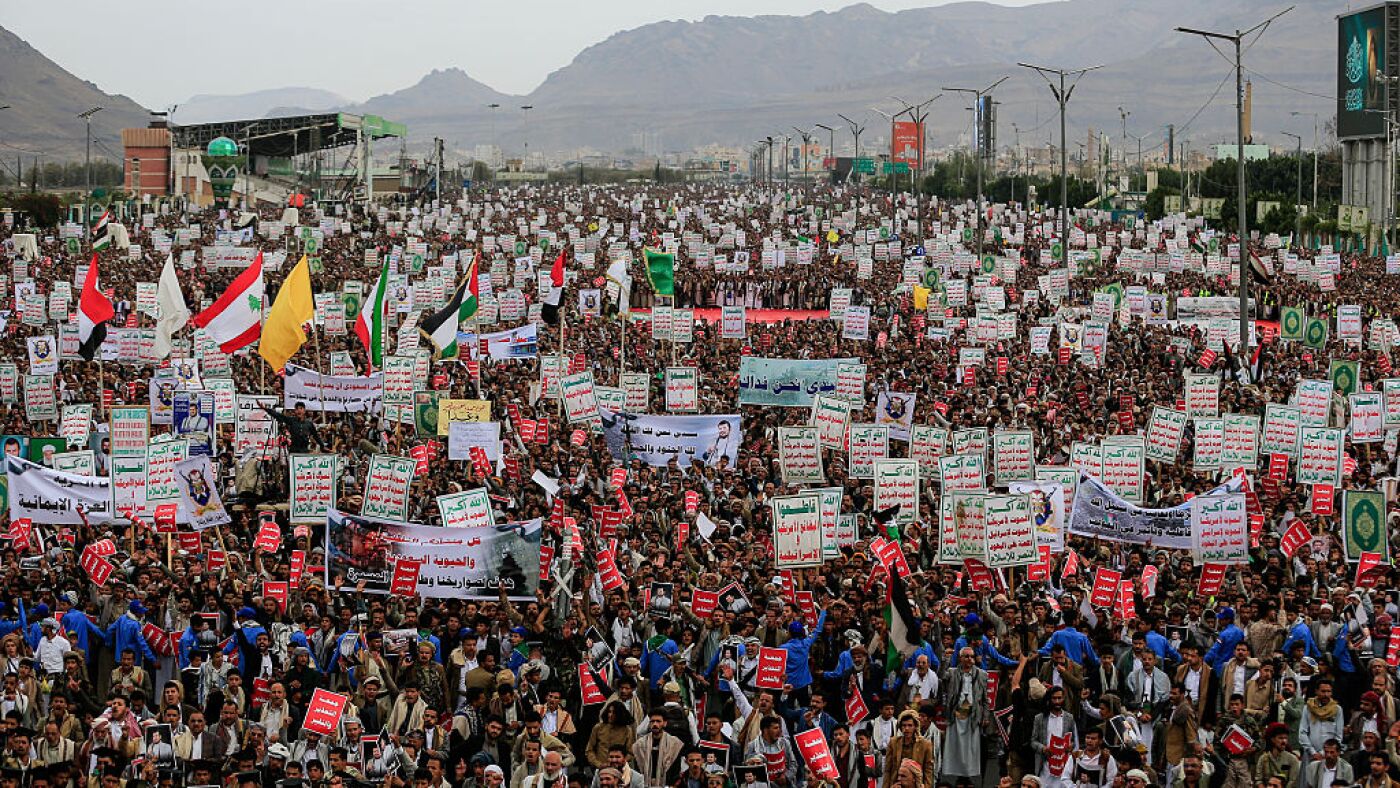
The Iran-aligned Houthi movement in Yemen has announced a naval blockade of the Bab al-Mandeb Strait, NPR reported, threatening another major shipping route during the U.S.-Iran war. The move could increase pressure on energy markets because the waterway links the Red Sea with the Gulf of Aden and the Indian Ocean.
According to NPR, a Houthi spokesperson said in a video statement that the blockade was a response to Saudi strikes on a major airport in Sanaa, Yemen’s capital. The Houthis have accused Saudi Arabia of hitting the airport while an Iranian official was passing through it earlier this month, NPR reported.
The Bab al-Mandeb Strait is important to Saudi Arabia’s oil exports, NPR reported, because it gives the kingdom access to open ocean routes for millions of barrels a day. NPR reported that the strait has taken on greater importance for Saudi Arabia because the Strait of Hormuz has been effectively closed by the U.S.-Iran war.
A Houthi attempt to block the passage would likely unsettle energy markets already affected by the conflict in Iran and could push energy prices higher, NPR reported. NPR also reported that any blockade would test how Gulf states respond to Iran and groups aligned with it across the region.
Saudi Arabia condemned the Houthi announcement in a statement, according to NPR. The Houthis responded by calling the Saudi government a “criminal” regime, NPR reported. The U.S. State Department designates the Houthi rebels as a terrorist group.
Saudi Arabia, Iraq and the United Arab Emirates have looked at building new oil pipelines or enlarging existing ones so more crude can move overland instead of by sea, NPR reported. Those projects could take years to complete, according to NPR.
U.S. and Iran exchange more strikes
The blockade threat came as the United States and Iran traded fire for a 10th consecutive round of strikes overnight, NPR reported. U.S. Central Command said late Monday that it hit Iranian military command centers, maritime capabilities, missile and drone launch sites, and air defense systems.
Iran’s state news agency IRNA said Iran targeted three U.S. bases in Kuwait that host American personnel and equipment, according to NPR. NPR reported that the fighting has reached its most intense level since the war began in February.
The Pentagon on Monday identified two service members killed by Iranian attacks in northern Jordan last Friday and said another remained missing, NPR reported. The Pentagon later said a third service member was killed in Iraq, according to NPR.
NPR reported that at least 17 U.S. service members have been killed in the war in Iran. The Pentagon says 427 people have been injured to date, while Iran’s government says about 3,000 people in Iran have been killed, according to NPR.
The New York Times reported this week that questions remain about whether the Pentagon has fully disclosed casualties and the circumstances surrounding them in real time, NPR reported. The Defense Department called the report’s allegations baseless and malicious and told journalists to stop smearing the U.S. military, according to NPR.
Lebanon diplomacy continues
NPR reported that a separate ceasefire between Israel and Hezbollah in Lebanon is still in place, despite continuing Israeli strikes on people and sites Israel says are linked to Hezbollah. Hezbollah, like the Houthis, is backed by Iran, NPR reported.
Lebanese President Joseph Aoun is scheduled to meet President Trump in Washington on Tuesday, NPR reported, in Lebanon’s first state visit to the United States since 2009. NPR reported that a June peace roadmap between Lebanon’s government and Israel calls for the Lebanese army to disarm Hezbollah, with Israel’s withdrawal from Lebanese territory set as a precondition.
The timing of any Israeli withdrawal remains unclear, according to NPR. About 400,000 Lebanese people remain displaced inside the country because of Israeli occupation or the destruction of their homes, NPR reported, citing ReliefWeb.
This story draws on original reporting from NPR.