
Germany exit prompts renewed scrutiny of blame culture
After Germany’s latest World Cup failure, criticism of Deniz Undav has revived debate over how the national team handles setbacks.
By Sofia Marchetti · World Affairs Correspondent
3 min read
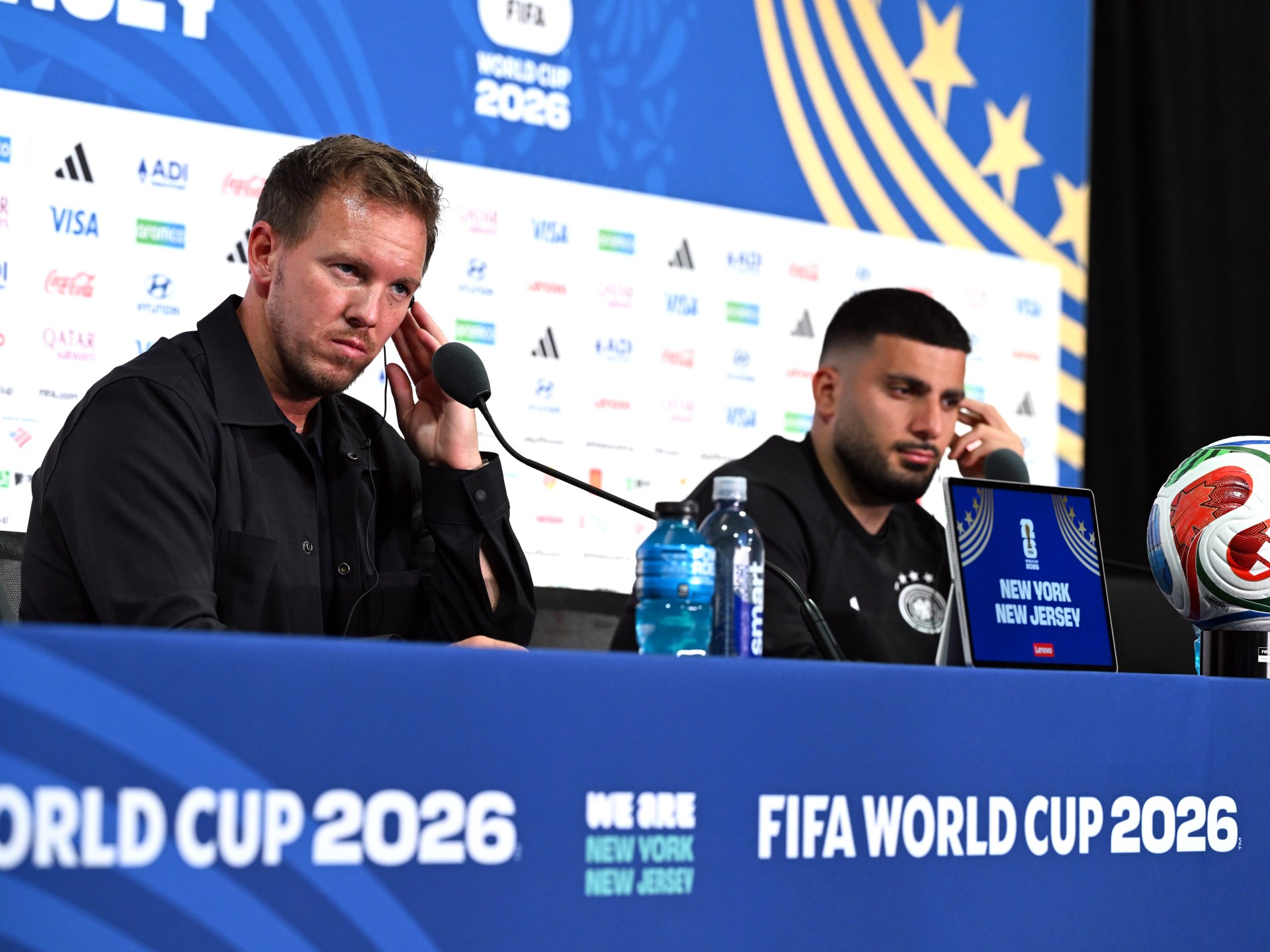
Germany’s latest World Cup exit has reopened debate over whether the national team looks for individual blame rather than addressing wider problems. Al Jazeera reported that the four-time champions failed to reach the round of 16 for a third straight tournament after losing to Paraguay this week.
Much of the immediate attention fell on coach Julian Nagelsmann, who singled out striker Deniz Undav in a post-match interview with Magenta TV. Nagelsmann said Germany should have scored in the first minute and criticized Undav’s decision-making in front of goal.
“We are four alone in front of the goal, and we just have to play the ball sideways, then you put it in an empty goal,” Nagelsmann said, according to Al Jazeera. “Deniz [Undav] somehow puts it to the far post.”
Echoes of 2018
Al Jazeera columnist Bassil Mikdadi compared the reaction to Undav with the criticism directed at Mesut Ozil and Ilkay Gundogan after Germany’s 2018 World Cup failure. Ozil and Gundogan, both of Turkish origin, had met Turkish President Recep Tayyip Erdogan before that tournament, drawing criticism from media figures and politicians from the far-right Alternative for Germany party.
After Germany went out in the group stage in Russia, Ozil retired from international football at age 29. In a public letter, he accused then-German Football Federation president Reinhard Grindel of using him as a scapegoat and said Grindel wanted him out of the team after the Erdogan meeting. Grindel resigned in 2019 amid corruption allegations, Al Jazeera reported.
Undav, who is of Kurdish and Yazidi origin, has had a strained public relationship with Nagelsmann. In March, after Undav scored the winner in a friendly against Ghana, Nagelsmann criticized his fitness and link-up play before later apologizing, according to Al Jazeera.
Undav had also been important earlier in the tournament. Al Jazeera reported that he came off the bench to score an equalizer against Ivory Coast in Toronto within seven minutes, then scored a late winner. The outlet said his five goal involvements in Germany’s first two World Cup matches helped prevent an earlier exit.
Questions for the federation
The loss to Paraguay also carried historical weight. Al Jazeera reported that Germany had won all four previous World Cup penalty shootouts and had missed only one of 18 shootout attempts before missing three times against Paraguay.
The setback has intensified scrutiny of Nagelsmann’s choices and of the German Football Federation’s player development model. Al Jazeera noted that Germany’s 2014 World Cup win followed major reforms, including investment in youth academies and a stronger focus on technical skill after concerns that the country was falling behind tactically and in talent production.
Undav’s path did not fit that academy pipeline. According to Al Jazeera, he worked as a machine operator, produced 104 goal involvements in 163 matches in Germany’s third and fourth tiers, moved to Belgium when Bundesliga clubs did not sign him, and later earned a 7-million-euro transfer to Brighton & Hove Albion.
Mikdadi argued that Germany should examine why a player such as Undav emerged outside the system designed to find and develop elite talent. Undav, who turns 30 this year, may not be part of Germany’s next World Cup squad, but his treatment has become part of a wider argument over accountability in German football.
This story draws on original reporting from Al Jazeera.