
Germany courts Algeria as gas ties widen into hydrogen and industry
Berlin hosted President Abdelmadjid Tebboune as German and Algerian firms signed deals spanning energy, manufacturing and technology.
By Sofia Marchetti · World Affairs Correspondent
4 min read
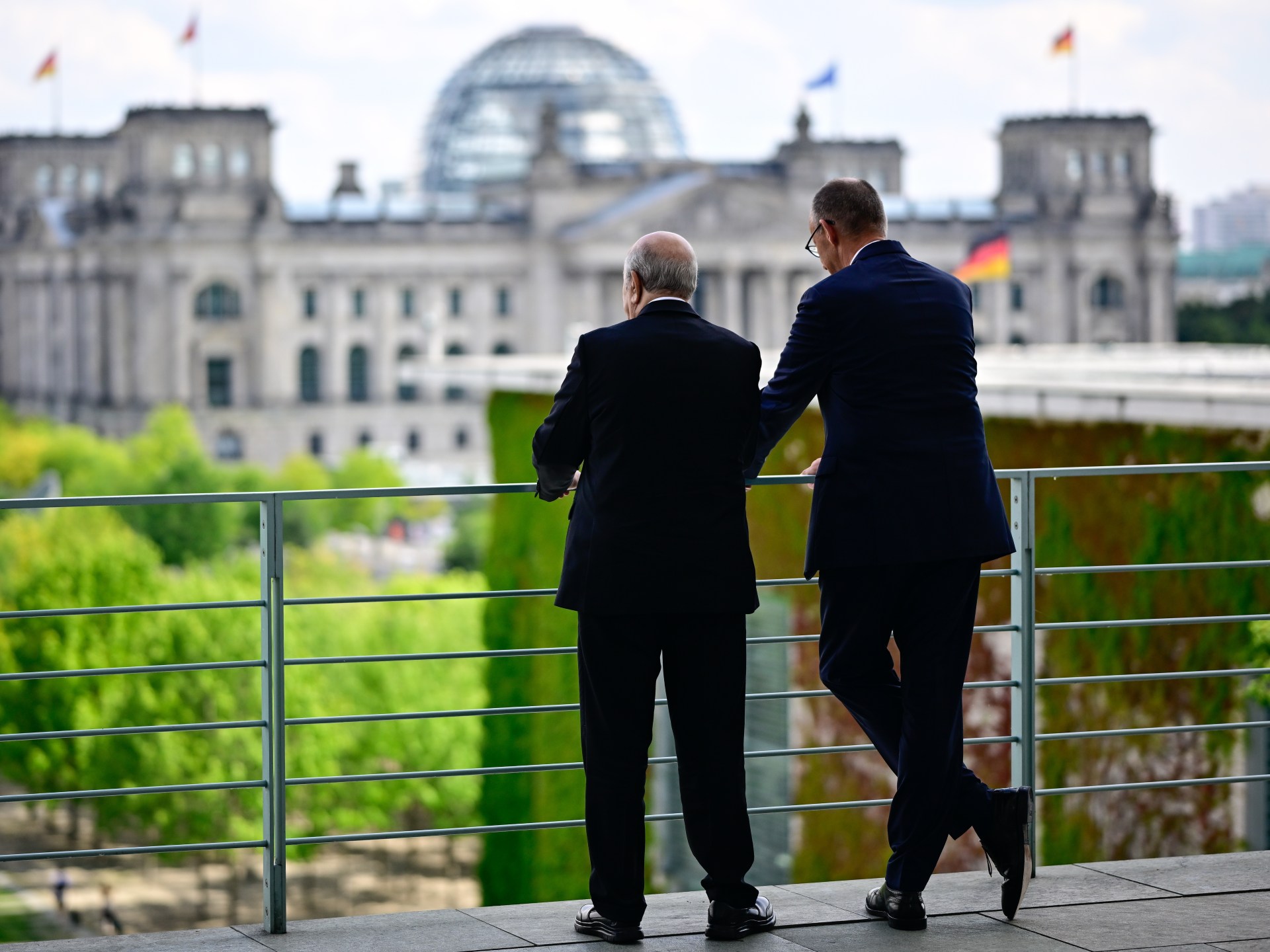
Germany gave Algerian President Abdelmadjid Tebboune a high-profile welcome in Berlin as both governments sought closer energy and business ties. The visit matters for Europe’s gas supply plans, with Algeria taking a larger role after the sharp fall in Russian deliveries, according to Al Jazeera.
Tebboune was received with military honors at Villa Borsig near Lake Tegel before meeting Chancellor Friedrich Merz at the Chancellery on Thursday, Al Jazeera reported. President Frank-Walter Steinmeier had invited Tebboune as part of a broader political and commercial push between the two countries.
At a bilateral economic forum in Berlin, German and Algerian companies signed 30 agreements, Al Jazeera reported. The deals covered hydrocarbons, renewable energy, the energy transition, pharmaceuticals, manufacturing and advanced technology.
Merz said the visit produced “a whole series of agreements,” including arrangements tied to legal issues, investment and transparency, according to Al Jazeera. Tebboune told members of the Algerian community at Berlin’s Hotel Adlon that Germany was a great friend and said the two sides had agreed to cooperate on green hydrogen, gas, helium and car manufacturing.
Energy security drives the talks
Algeria’s state energy company, Sonatrach, recently sent its first liquefied natural gas cargo to Germany, Al Jazeera reported. The tanker Tessala carried gas from the GL2Z liquefaction complex near Oran to a floating terminal off Wilhelmshaven on Germany’s North Sea coast.
Europe has been seeking replacements for Russian energy since Moscow’s 2022 invasion of Ukraine. Al Jazeera cited figures showing Russia’s share of EU pipeline gas imports fell from about 40 percent in 2021 to roughly 6 percent last year.
The European Council adopted a regulation in January banning Russian LNG and pipeline gas from March 18, 2026, with transition periods for existing contracts, according to Al Jazeera. Norway supplied 54.4 percent of the EU’s gaseous natural gas imports in 2025, while Algeria ranked second at 18.5 percent; Algeria’s share rose to 20 percent of EU pipeline imports in the first quarter of 2026, the outlet reported.
Merz said Algeria was making “a very important contribution to Europe’s security of energy supply” and pointed to Algerian deposits of natural gas, oil and rare earths, according to Al Jazeera. Tebboune said Algeria is careful to act as a reliable supplier and meets contractual delivery obligations, adding that supplies would be meant for Europe as well as Germany.
The Institute for Energy Economics and Financial Analysis expects the United States to pass Norway as the EU’s top gas supplier in 2026, Al Jazeera reported. Michael Ayari, an Algeria analyst at the International Crisis Group, told Frankfurter Rundschau that Algeria could raise gas deliveries and help replace lost Russian volumes.
Al Jazeera also reported that Sonatrach began welding its 1,210km section of the planned Trans-Saharan pipeline in June. The roughly 4,000km line is intended to carry up to 30 billion cubic metres of Nigerian gas a year through Niger and Algeria to Europe.
Hydrogen plan advances, but buyers are still needed
Merz and Tebboune also discussed the Southern Hydrogen Corridor, a planned 3,300km pipeline linking North Africa to Italy, Austria and Germany, according to Al Jazeera. The project is recognized under the EU’s TEN-E regulation as a Project of Common Interest, which can speed permits and access to Connecting Europe Facility funding.
Project promoters say the corridor is designed to carry 4 million tonnes of green hydrogen a year, Al Jazeera reported. Algeria, Tunisia, Italy, Austria and Germany signed a Joint Declaration of Political Intent in Rome on January 21, 2025, and the EU lists the corridor as a Team Europe initiative under its Global Gateway strategy.
Oliver Blank, managing director of the German-Algerian Chamber of Industry and Commerce in Algiers, told ARD that Algeria expects clearer signs that German buyers will purchase Algerian green hydrogen. No German company has signed an offtake agreement for Algerian hydrogen, according to ARD as cited by Al Jazeera.
The visit also touched on press freedom. Asked by a German reporter about appeals for clemency for Christophe Gleizes, a French freelance sports journalist imprisoned in Algeria, Tebboune said he would answer only on Algerian soil out of respect for Algeria’s judiciary, Al Jazeera reported.
Reporters Without Borders describes Gleizes as the only French journalist currently imprisoned anywhere in the world, according to Al Jazeera. Merz ended the news conference by offering condolences after children were killed in an orphanage fire in Dar El Beida, outside Algiers.
This story draws on original reporting from Al Jazeera.