
FIFA criticized over Israel stance and World Cup controversies
Political scientist Xavier Abu Eid says FIFA’s handling of Palestinian football shows the body has become entangled in politics.
By Daniel Okafor · Business Editor
3 min read
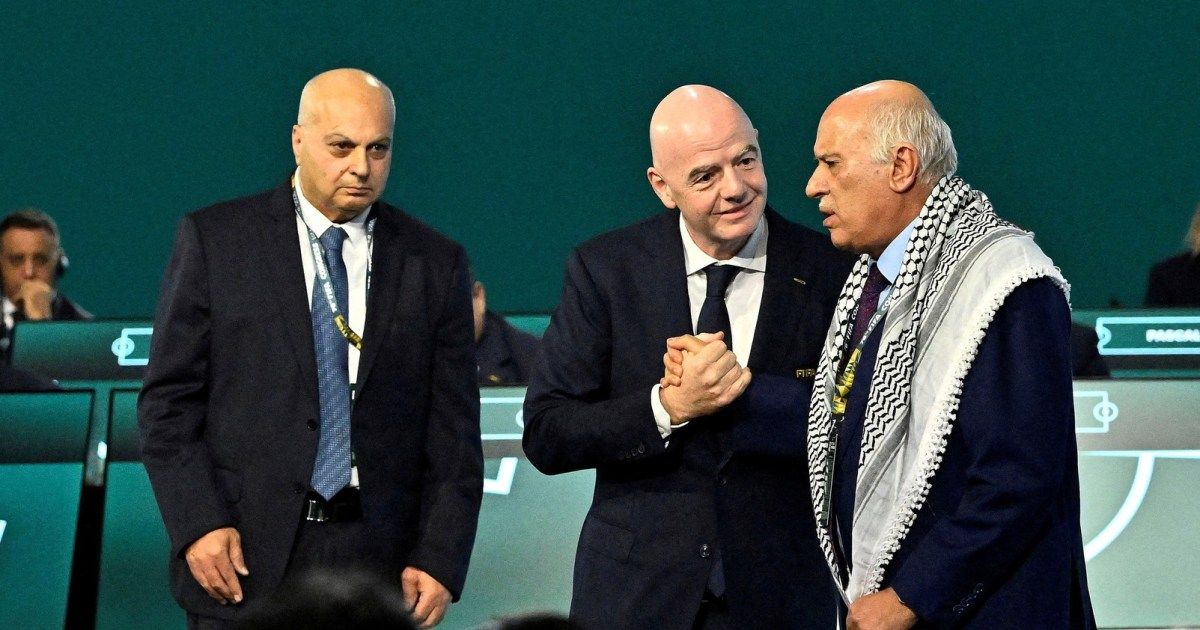
FIFA is facing renewed criticism over its response to Palestinian football grievances and several disputes tied to the 2026 World Cup. In an Al Jazeera opinion essay published July 11, political scientist Xavier Abu Eid argued that the governing body’s conduct shows it has become a political instrument rather than an independent sports organization.
Abu Eid pointed to recent World Cup controversies, including FIFA’s decision to reverse the suspension of an American player after an intervention by US President Donald Trump. He also cited accusations that referees favored Argentina in matches against Egypt and Cape Verde.
The central focus of Abu Eid’s argument was FIFA’s long-running handling of Palestinian complaints. He wrote that FIFA’s own statutes require respect for human rights, but said the organization has failed to apply that standard to Palestinian football.
According to Abu Eid, the Palestinian Football Association has repeatedly called on FIFA to suspend the Israeli Football Association. The PFA’s complaint, as described by Abu Eid, centers on Israeli league matches involving teams based in settlements on occupied Palestinian land.
Abu Eid also accused FIFA of failing to speak out over the killing and maiming of Palestinian footballers, the detention of players and the destruction of Palestinian stadiums. He named Rand Halawani and Natalie Abu Dayyeh, members of the Palestinian women’s national team, as recent detained players whose cases FIFA has not publicly challenged.
He said FIFA has not acted to stop Israeli restrictions that affect Palestinian football, including travel-permit denials for Palestinian teams. Abu Eid further alleged that the Israeli Football Association has tolerated racism and occupation and has supported public praise for Israeli footballers involved in military actions in Gaza or Lebanon.
FIFA has described the Palestinian request for action over Israeli clubs in the West Bank as “a highly complex matter under public international law,” according to Reuters, and has said the West Bank’s final legal status remains unresolved. Abu Eid argued that position aligns FIFA with Israeli and Trump administration arguments over Palestinian land.
Abu Eid also criticized FIFA President Gianni Infantino personally. He wrote that human rights organizations have referred Infantino’s conduct to the International Criminal Court, accusing him of acting with knowledge of alleged human rights abuses, apartheid and war crimes while ignoring reports and letters on the issue.
The essay cited two recent episodes involving FIFA leadership and Israeli-Palestinian football. Abu Eid said FIFA proposed that Palestine play Israel in the opening match of a U-15 tournament as a peace gesture, and that Infantino tried to pressure the PFA president to shake hands with his Israeli counterpart.
Abu Eid linked those episodes to Infantino’s public appearances outside football. He wrote that Infantino attended the 2018 signing of the Abraham Accords in Washington, took part in a 2021 Jerusalem Post conference held at a site Abu Eid described as built on the desecrated Muslim cemetery of Mamillah in Jerusalem, and attended the February launch of a “Board of Peace.”
According to Abu Eid, Infantino announced a football partnership with that board, which Abu Eid said seeks to end UN involvement in the Palestinian question and halt international legal action over Israel’s occupation and conduct in Gaza. Abu Eid said those actions damage public trust in FIFA and harm football’s claim to be inclusive.
Al Jazeera identified the essay as opinion and said the views were the author’s own. Abu Eid concluded that Palestinian football would endure, tracing its roots to the St George’s School team in Jerusalem in 1904.
This story draws on original reporting from Al Jazeera.