
FIFA faces scrutiny after Balogun ban is put on hold
A disputed World Cup ruling has renewed attention on earlier FIFA decisions involving politics, discipline and match integrity.
By Sofia Marchetti · World Affairs Correspondent
3 min read
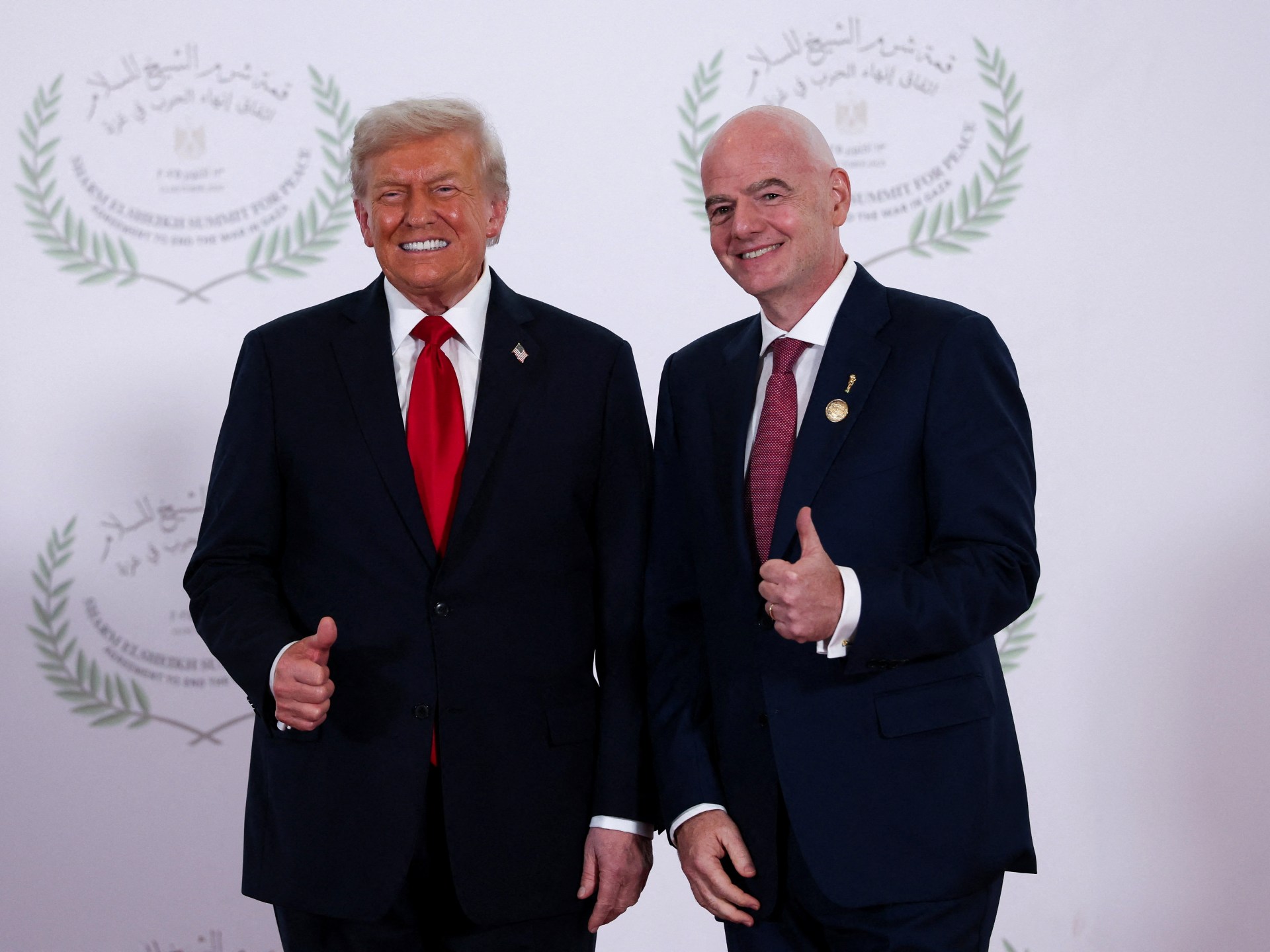
FIFA is under pressure after allowing United States striker Folarin Balogun to face Belgium despite a red card in the previous round, Al Jazeera reported. The decision matters because Belgium’s federation and UEFA said political intervention in a disciplinary case threatens the credibility of the World Cup.
According to Al Jazeera, FIFA suspended Balogun’s automatic one-match ban after US President Donald Trump called FIFA president Gianni Infantino and asked him to review the case. Balogun, who plays for Monaco, had been sent off during the United States’ Round of 32 win over Bosnia and Herzegovina and had scored three goals at the tournament, making him the team’s top scorer, Al Jazeera reported.
Al Jazeera reported that UEFA and Belgium’s football association criticised the ruling, saying it created a dangerous precedent. The report also said Infantino had previously bypassed FIFA’s 37-member council to create and give Trump the first FIFA Peace Prize during the World Cup draw.
Earlier World Cup flashpoints
Al Jazeera placed the Balogun case alongside several earlier World Cup controversies, beginning with the first tournament in 1930. In a group match in Montevideo, referee Gilberto de Almeida Rego ended Argentina’s game against France six minutes early while French winger Marcel Langiller was through on goal, according to Al Jazeera.
After protests from France and a consultation with a linesman, the players were brought back to finish the match, Al Jazeera reported. France did not score, and Argentina’s 1-0 victory remained in place.
In 1962, Brazil winger Garrincha was sent off late in a semifinal win over Chile after retaliating against an opponent, Al Jazeera reported. FIFA’s disciplinary committee did not impose an automatic ban at the time, and the report said Chilean President Jorge Alessandri supported a petition for Garrincha to play while Peru’s President Manuel Prado reportedly contacted the referee.
Garrincha received only a warning, played in the final and helped Brazil beat Czechoslovakia 3-1, according to Al Jazeera. The report said that case had stood as the only example of a player appearing in his team’s next World Cup match after a red card until the Balogun decision.
Politics and scheduling disputes
Al Jazeera also cited Chile’s 1973 World Cup qualifying playoff against the Soviet Union after General Augusto Pinochet’s coup. The Soviet Union refused to play at Santiago’s Estadio Nacional, which Al Jazeera said the military government was using as a detention centre where political prisoners were held, tortured and killed.
FIFA inspectors approved the venue, and Chile later kicked off without an opponent, scoring into an empty net before the referee abandoned the match, according to Al Jazeera. FIFA recorded the result as a 2-0 win for Chile, sending the team to the 1974 World Cup.
At the 1978 World Cup, Argentina’s military government sought a home triumph, Al Jazeera reported. Argentina beat Peru 6-0 after knowing it needed a four-goal win to reach the final, following Brazil’s earlier result; allegations of collusion have persisted, but Al Jazeera said nothing has been proven and players from both teams deny wrongdoing.
Al Jazeera also pointed to the 1982 match between West Germany and Austria in Gijon. Because Algeria had played the previous day, both European teams knew a narrow West German win would eliminate Algeria and send them through; West Germany scored early, and FIFA later rejected Algeria’s complaint on the grounds that no rule had been broken, according to Al Jazeera.
FIFA changed the format from 1986 so final group matches would start at the same time, Al Jazeera reported. Another disciplinary failure came in 2006, when referee Graham Poll gave Croatia’s Josip Simunic three yellow cards before showing a red against Australia; FIFA acknowledged the mistake, and Poll was sent home before the knockout rounds, according to Al Jazeera.
This story draws on original reporting from Al Jazeera.