
EU opens membership talks with Ukraine and Moldova
The formal start of negotiations sets Kyiv and Chisinau on a years-long reform path toward joining the European Union.
By Lucas Ferreira · Science & Environment Writer
3 min read
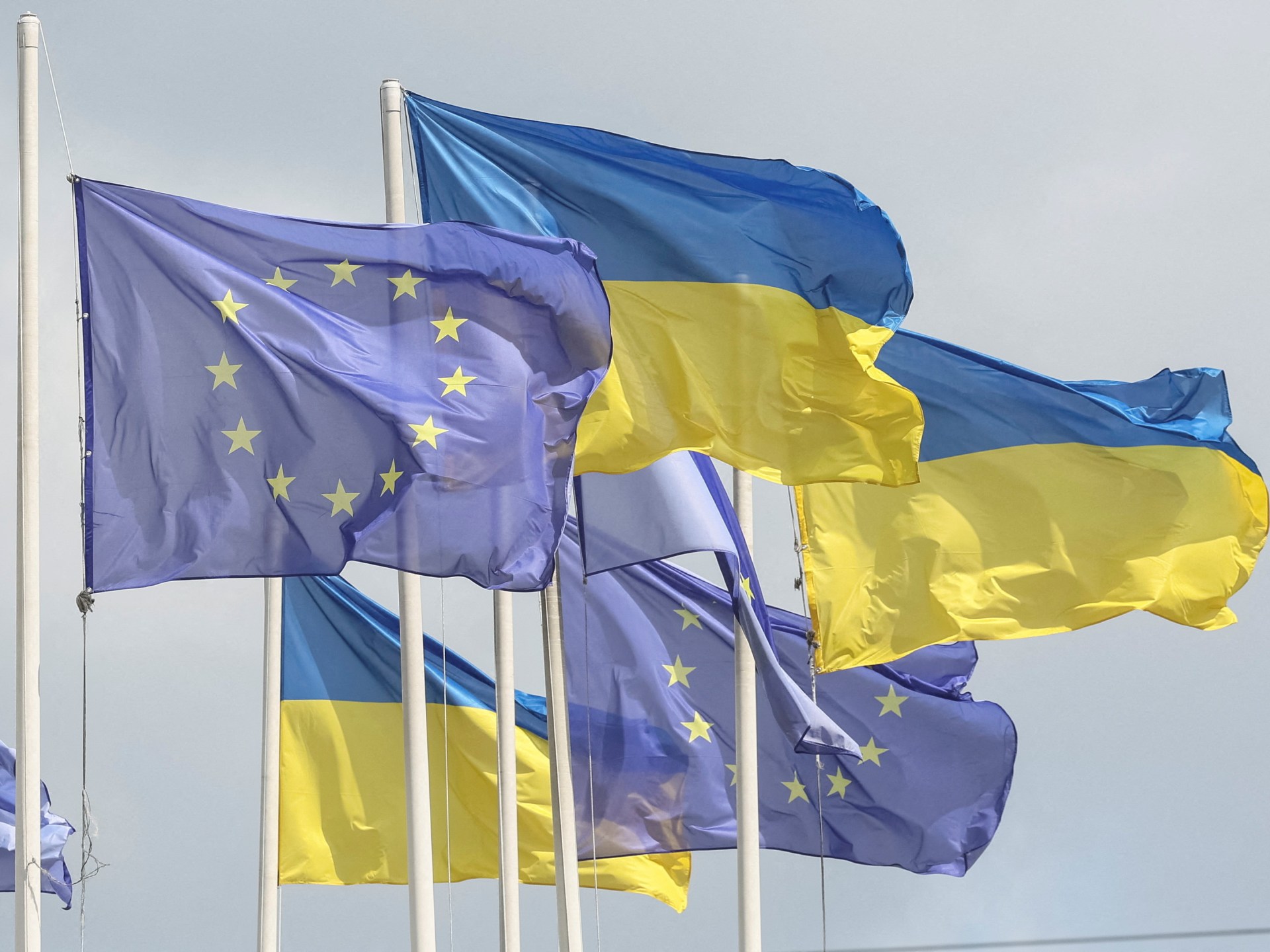
The European Union has formally begun membership negotiations with Ukraine and Moldova, according to Al Jazeera and The Associated Press. The step matters because it starts a demanding legal and political process that Kyiv sees as part of its long-term alignment with Western institutions while it fights Russia’s invasion.
Ukraine’s Deputy Prime Minister Taras Kachka attended an intergovernmental conference in Luxembourg on Monday to open talks on bringing Ukraine closer to the EU’s laws, standards and political principles, Al Jazeera and AP reported. Moldova’s accession process was launched at the same time.
Kachka told journalists that Russia’s aggression against Ukraine and threats to Europe were a continuing policy, and said European unity was needed. He called for a faster and broad accession process for Ukraine.
The negotiations are expected to take years. Countries seeking EU entry must complete talks across 35 policy areas, covering subjects such as agriculture, taxation, energy and trade, according to Al Jazeera and AP.
Monday’s meeting opened five core chapters grouped in a cluster tied to the EU’s founding principles, the outlets reported. Those areas include judiciary and fundamental rights, justice, freedom and security, public procurement, statistics and financial control.
The cluster is closely watched by EU governments concerned about Ukraine’s capacity and political will to tackle corruption, according to Al Jazeera and AP. The wider accession process also requires political reforms in both Ukraine and Moldova.
EU foreign policy chief Kaja Kallas called the start of talks a “major milestone” in a post on X. She said both countries had carried out difficult reforms under exceptional conditions and argued that their membership would strengthen Europe.
Ukraine’s path to talks had been blocked for a long period by Hungary under former Prime Minister Viktor Orban, whose government was described by Al Jazeera and AP as Russia’s strongest ally in Europe and a possible challenge to the EU project. Orban lost an election in April, according to the outlets.
His successor, Péter Magyar, has sought to bring Hungary back toward the EU mainstream and agreed last week to remove Hungary’s veto on Ukraine’s bid, Al Jazeera and AP reported. The decision came soon after Brussels agreed to release more than €16bn, or about $18bn, in frozen EU funds for Budapest.
The opening of talks does not settle Ukraine’s security position. Al Jazeera and AP reported that Kyiv’s strongest security guarantee would be NATO membership, but the Trump administration in the United States said that cannot happen, while other NATO members remain cautious during the war with Russia.
EU governments also have concerns about Ukraine’s readiness and the security implications of admitting a country at war, the outlets reported. Russia has announced the annexation of five Ukrainian regions.
Moldova faces its own pressure from Moscow. Al Jazeera and AP reported that Russia has tried to keep Moldova within its sphere of influence, and that Moscow was accused last year of using an artificial intelligence-driven disinformation campaign to influence elections, though the pro-Western incumbent won.
Some European governments want to bring Ukraine closer to the bloc quickly because they see it as important to Europe’s security and have supported its armed forces, according to Al Jazeera and AP. German Chancellor Friedrich Merz last month urged EU partners to consider “associate membership” for Ukraine as part of efforts to revive talks aimed at ending more than four years of war.
France and the Netherlands have also suggested arrangements that could draw Ukraine nearer to the EU before full membership, the outlets reported. EU officials and other candidate countries say the process should remain based on merit and lead to full membership.
This story draws on original reporting from Al Jazeera.