
DeWine says Ohio should end the death penalty
The Republican governor, who once helped restore capital punishment in Ohio, said deterrence arguments no longer persuade him.
By Sofia Marchetti · World Affairs Correspondent
3 min read
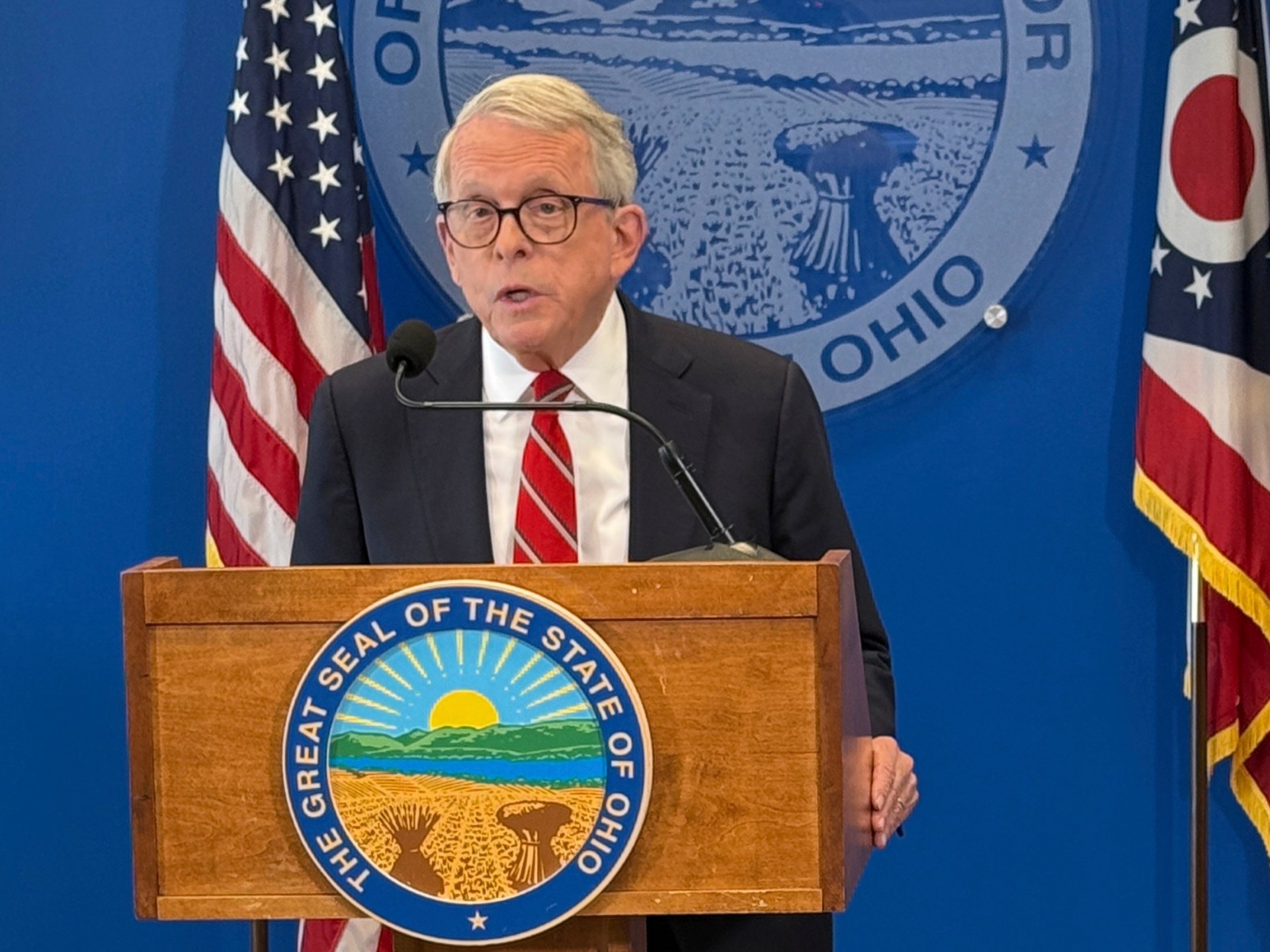
Ohio Gov. Mike DeWine said Tuesday that the state should abolish the death penalty, reversing a position he held for decades and challenging a law he helped put on the books. The Republican governor’s shift matters because Ohio still authorizes capital punishment, even as executions there have been on hold in practice during his administration.
DeWine made the announcement at a news conference in Columbus, according to Al Jazeera and The Associated Press. He said he once believed, as a young prosecutor and elected official, that the death penalty could deter crime, but no longer thinks the evidence supports that argument.
“I do not believe that argument today can be successfully made,” DeWine said, according to Al Jazeera and AP. “Therefore, I believe Ohio should abolish the death penalty.”
The statement marks a notable turn for DeWine, 79, who cosponsored Ohio’s current death penalty statute when it took effect in 1981, according to Al Jazeera and AP. He is nearing the end of his second term and cannot run for a third term under Ohio’s term limits.
Governor cites delays and uncertainty
DeWine argued Tuesday that death sentences in Ohio have become less likely to be carried out and take longer to resolve, according to Al Jazeera and AP. He questioned whether capital punishment delivers the “certainty and swiftness” that supporters often cite as part of justice.
“In summary, each decade that the death penalty has been in effect, the chances of a murderer getting executed get more and more and more remote,” DeWine said, according to Al Jazeera and AP.
Ohio last carried out an execution in 2018, before DeWine became governor, according to Al Jazeera and AP. Since taking office, he has postponed scheduled executions, creating a de facto moratorium. In 2021, he also signed a law prohibiting the death penalty for defendants with serious mental illness.
DeWine urged state lawmakers to repeal the 1981 statute or send the issue to voters. He said the legislature should act, but could “leave it up to a vote of the people of the state of Ohio” if lawmakers do not want to make the decision, according to Al Jazeera and AP.
Opposition from Ohio Republicans
The governor’s position puts him at odds with some leaders in his own party. Ohio House Speaker Matt Huffman, a Republican, said in February that he would “vigorously oppose” any move to abolish the death penalty, according to Al Jazeera and AP.
DeWine said he has discussed the issue with Huffman and that they remain on opposite sides. “Reasonable people, for centuries, have come down on both sides of this issue,” DeWine said, according to Al Jazeera and AP.
The governor’s announcement also contrasts with President Donald Trump’s approach at the federal level. Al Jazeera reported that Trump announced plans in April to expand use of the federal death penalty, including possible use of firing squads, and to reverse a moratorium imposed under former President Joe Biden.
Public support for capital punishment has fallen over several decades, though a majority of Americans still support it, according to Gallup data cited by Al Jazeera and AP. Gallup found support peaked at 80 percent in 1994 and declined to 52 percent in 2025.
Gallup also found that belief in the death penalty as a deterrent has weakened. According to Al Jazeera and AP, 62 percent of poll respondents in 1985 said capital punishment deterred murder, while 32 percent said the same in 2011.
Critics point to racial disparities, wrongful convictions and botched executions in arguing against capital punishment, according to Al Jazeera and AP. The Death Penalty Information Center says 202 people sentenced to death have been exonerated since 1973.
Twenty-three states have abolished the death penalty, while it remains legal in most states, according to Al Jazeera and AP. Several states that retain capital punishment, including California and Oregon, have paused executions in practice.
This story draws on original reporting from Al Jazeera.