
Cockroach protesters stay in New Delhi after police disperse march
The youth-led movement is demanding India’s education minister resign over alleged failures in the national examination system.
By Daniel Okafor · Business Editor
3 min read
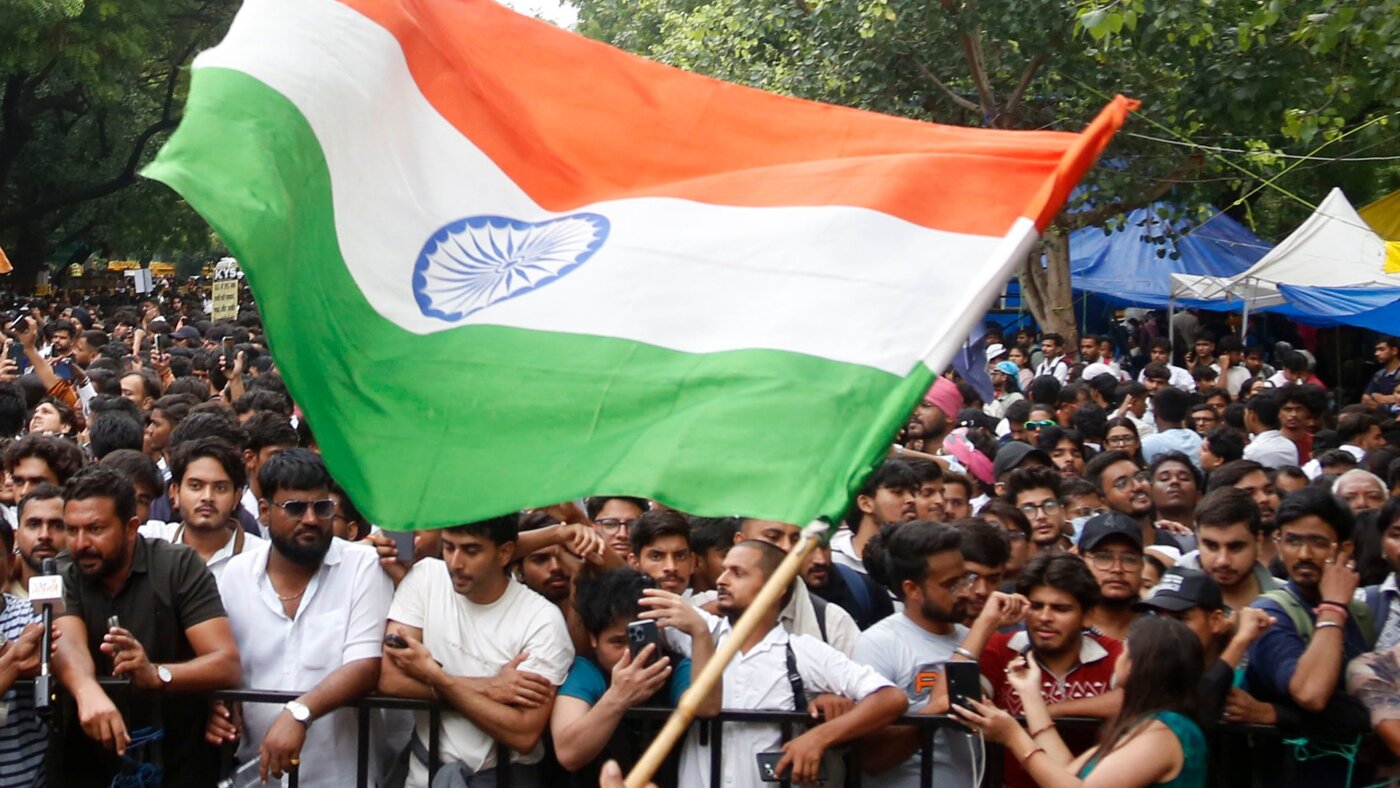
Supporters of India’s youth-led Cockroach movement remained at a protest camp in New Delhi on Tuesday after police used tear gas and batons to break up a march toward Parliament, The Associated Press reported. The standoff has widened pressure on Prime Minister Narendra Modi’s government over alleged exam failures, unemployment and the handling of dissent.
Hundreds of protesters stayed at Jantar Mantar, a designated demonstration site in the capital, under a large police presence, according to AP. The demonstrators said they would not leave until Education Minister Dharmendra Pradhan steps down over alleged problems in India’s examination system.
Abhijeet Dipke, founder of the Cockroach Janta Party, told AP the protest would continue. The party emerged two months ago, according to AP, and has drawn students, professionals and families into a movement that began as satire before growing into a national campaign for education reforms and government accountability.
Delhi Police said nearly 180 people were injured in Monday’s confrontation, AP reported. The police count included 118 security personnel and 60 protesters.
AP reported that videos circulating on social media showed officers hitting protesters and dragging some away. The footage showed young demonstrators crying, asking police not to strike them and, in other cases, remaining in place as officers used force, according to AP.
The unrest grew after activist Sonam Wangchuk, whose three-week hunger strike has become a symbol for the movement, was taken to a hospital by police over the weekend, AP reported. That episode helped draw wider attention to the campaign before Monday’s attempted march toward Parliament.
Opposition leader Rahul Gandhi and dozens of Congress party lawmakers held a sit-in outside Modi’s residence on Tuesday, according to AP. Gandhi wrote on X that the lawmakers were seeking answers from Modi over what he described as brutality against young students, and AP reported that several participants were seen fastening zip ties around their wrists.
The government made its first apparent outreach to the protesters on Monday after nearly a month without public engagement, AP reported. A senior minister met movement representatives, but the talks did not calm the dispute.
Movement leaders told AP they want more than assurances. Their demands include Pradhan’s resignation, changes to the examination system and compensation for families of students who died by suicide after alleged exam irregularities.
Dipke accused authorities of going back on an understanding with protesters, telling AP that police used batons after demonstrators had been called for talks. Police have not been quoted by AP responding to that allegation beyond providing the injury figures.
Amnesty International said late Monday that the police action showed peaceful dissent was being suppressed in India, AP reported. The rights group also cited the Indian constitution’s protection for peaceful assembly.
Some people joined the New Delhi camp after seeing the confrontation, according to AP. Rabina Kashyap, a 26-year-old working professional, told AP she came to the protest Tuesday because she felt the demonstrators were her fellow citizens and she wanted to stand with them.
This story draws on original reporting from NPR.