
CDC ends hantavirus response after cruise ship-linked outbreak wanes
US officials said no cases were reported in the country and all exposed Americans completed monitoring after the MV Hondius outbreak.
By Sofia Marchetti · World Affairs Correspondent
3 min read
The US Centers for Disease Control and Prevention has closed its response to a hantavirus outbreak tied to the MV Hondius cruise ship after exposed Americans completed monitoring and no US cases were reported. The decision matters because the outbreak had killed three people nearly two months earlier, while US officials said the virus did not spread inside the country.
The Wall Street Journal first reported the end of the response on Wednesday, and the Department of Health and Human Services later said the effort had reached a “successful conclusion.” Health Secretary Robert F Kennedy Jr said in an HHS statement that no sustained hantavirus transmission occurred in the United States and that no one remained under observation.
The outbreak involved the Andes virus, a rare hantavirus strain usually found in Argentina and Chile, according to Al Jazeera and Reuters. The MV Hondius left Argentina on April 1, and 18 US residents were aboard the ship in the Atlantic when the outbreak began.
All US citizens who may have been exposed on the ship completed a 42-day monitoring period on Sunday, according to HHS. The University of Nebraska Medical Center said those residents had returned to their home states after finishing monitoring at the National Quarantine Unit.
The CDC has said the risk to the US public remains extremely low, according to Al Jazeera and Reuters. No hantavirus cases were recorded in the United States in connection with the outbreak.
US and international response
HHS said the response brought together the CDC and the Administration for Strategic Preparedness and Response, which worked with foreign governments, monitoring services and the healthcare system. CDC acting director Jay Bhattacharya said in the HHS statement that the outcome showed the value of a coordinated response to infectious disease threats that occur outside US borders.
CDC scientists also traveled to Argentina as part of the investigation, according to Brendan Jackson, acting director of the CDC’s Division of High-Consequence Pathogens and Pathology. Jackson told reporters that the team worked with local public health officials to investigate how the outbreak started.
Jackson said CDC scientists trapped and tested rodents in areas connected to the ship’s route as they sought to trace the source of exposure. Preliminary results from those rodent samples were negative, he said, and the likely source remained under investigation.
How hantavirus spreads
Hantavirus spreads mainly through rodents, according to public health officials cited by Al Jazeera and Reuters. People can be infected through contact with rats, mice or their urine, droppings and saliva, and the virus can become airborne when people clean areas with rodent infestation.
The Andes virus differs from other hantaviruses because it is the only known strain that can spread through close, prolonged contact between people, according to the same reporting. US officials said the monitoring period ended without evidence that such spread took hold in the United States.
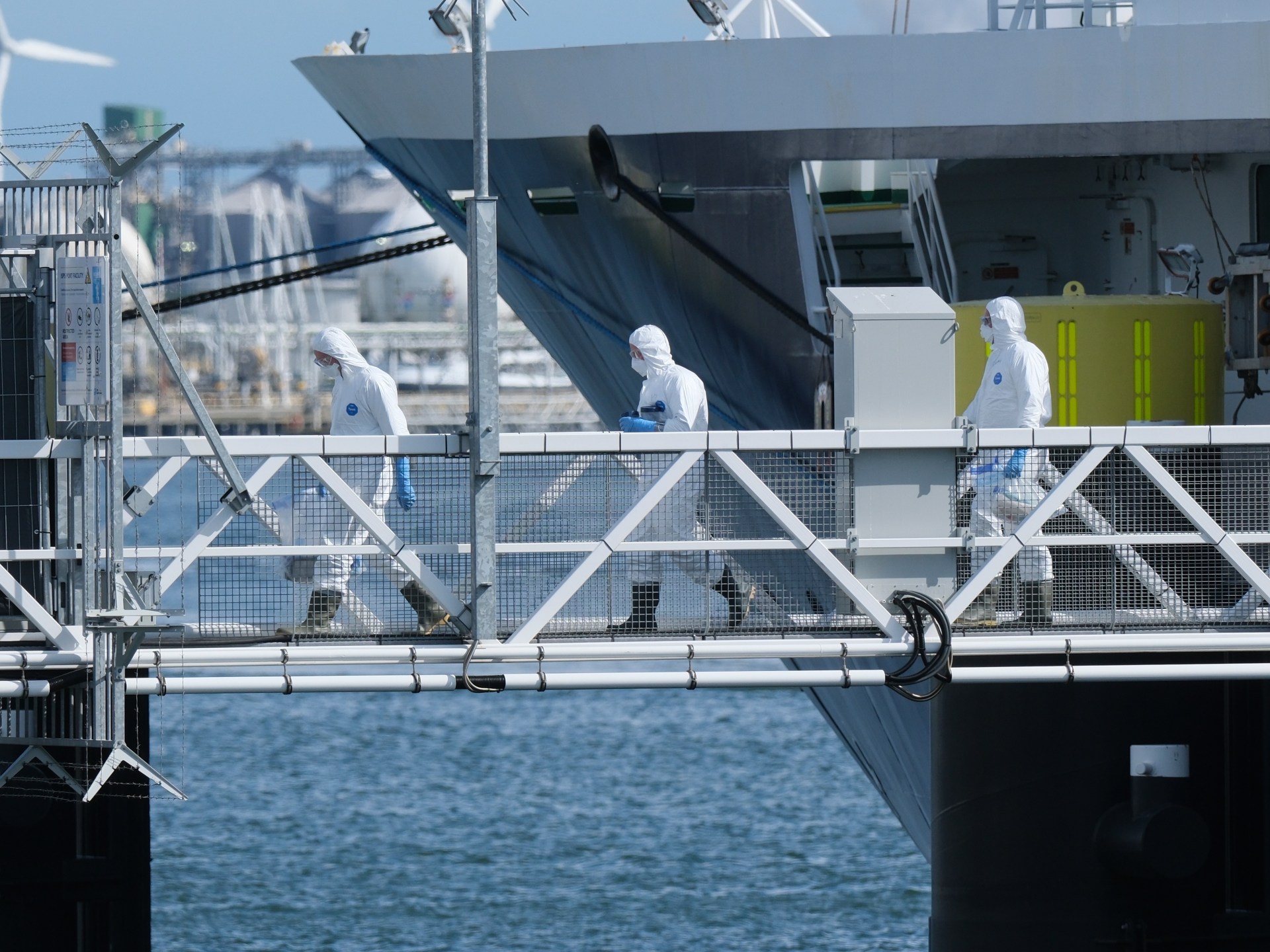
The MV Hondius arrived at the Port of Rotterdam in the Netherlands on May 18, according to Al Jazeera and Reuters. Images from the port showed people in protective gear leaving the cruise ship after it docked.
This story draws on original reporting from Al Jazeera.