
Burnham lays out regional power plan as leadership race begins
Andy Burnham promised more power for UK regions and tighter fiscal control as he seeks to replace Keir Starmer.
By Lucas Ferreira · Science & Environment Writer
3 min read
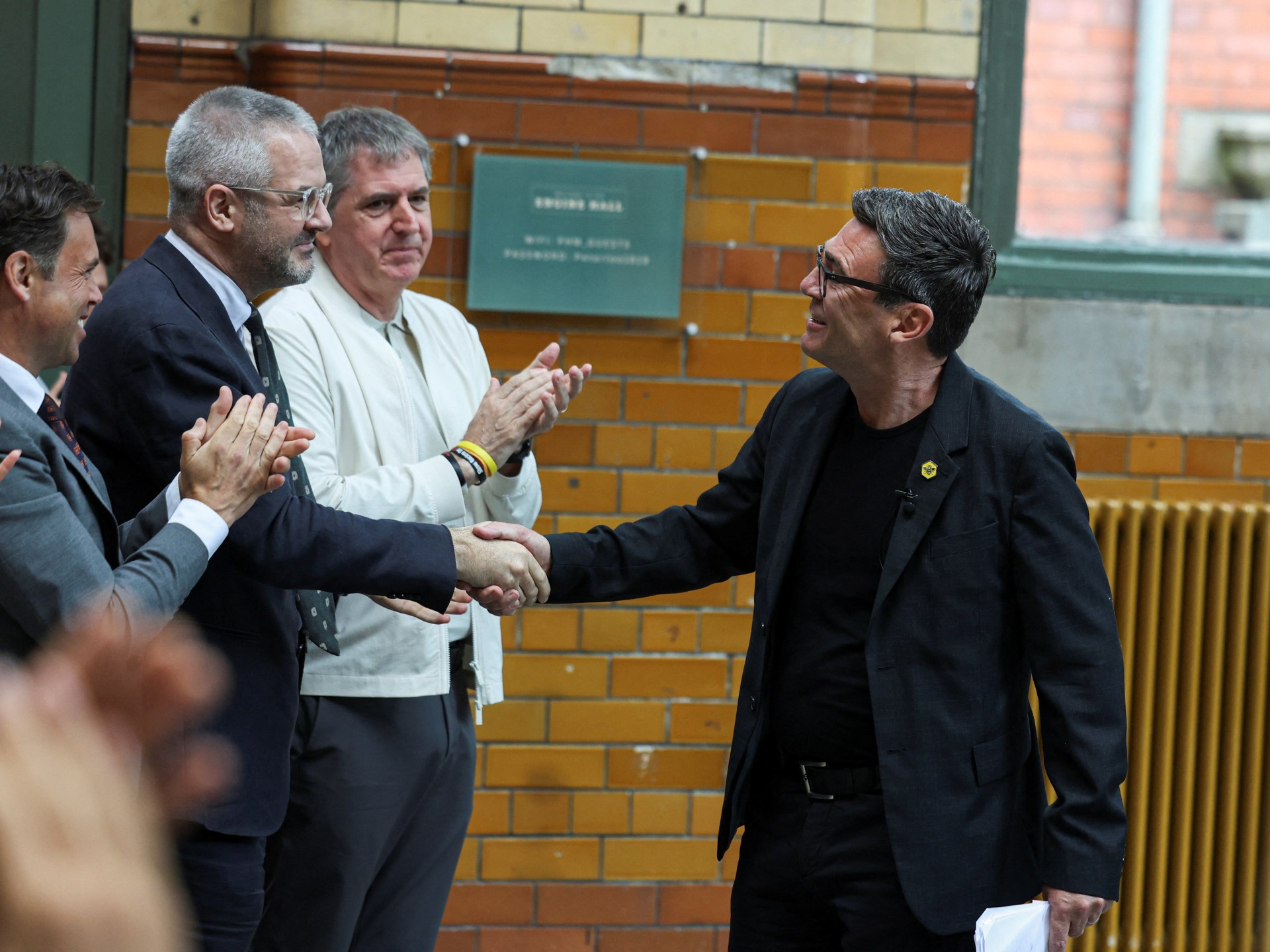
Andy Burnham said he would shift power away from Westminster and give UK regions more control if he becomes prime minister, according to AP and Reuters. The pledge matters because Burnham is currently the only declared candidate to succeed Keir Starmer as Labour leader, putting him on course for Downing Street if no rival enters the race.
Speaking on Monday at the People’s History Museum in Manchester, where he previously served nine years as mayor, Burnham set out a programme centred on regional autonomy, economic growth and budget restraint, AP and Reuters reported. He said he wanted to deliver what he called “the biggest rebalancing of power our country has seen.”
Burnham argued that growth should be built locally rather than directed from central government. “Growth cannot be ordered from the top down. Instead, it can only be nurtured from the bottom up,” he said, according to AP and Reuters.
He also linked local government capacity to wider economic renewal. “If councils can’t fix potholes, what chance do they have of bringing forward major regeneration schemes to get growth going?” Burnham said.
AP and Reuters reported that Burnham described a 10-year plan aimed at producing “good growth in every postcode.” The proposal comes against a long-running divide in Britain, where wealth and political authority are concentrated in London and the south of England, according to AP and Reuters.
Burnham also sought to reassure investors and party figures on public finances. AP and Reuters reported that he promised fiscal discipline, said he would reduce Britain’s rising welfare bill and has already committed to the government’s existing borrowing limits.
The leadership contest follows a fast return to Westminster for Burnham. AP and Reuters reported that he won a June 18 by-election to become the member of parliament for Makerfield and was sworn in on June 22, the same day Starmer said he would resign once Labour chooses a successor.
If no other Labour candidate challenges him, Burnham will become prime minister by July 20, according to AP and Reuters. He is seen as more charismatic than Starmer, but AP and Reuters reported that he would inherit many of the same problems: weak economic growth, strained public services and pressure on household finances.
He would also have to work within Labour’s 2024 election promise not to raise taxes on working people, AP and Reuters reported. At the same time, Britain faces pressure, along with other NATO members, to raise defence spending in response to a more aggressive Russia and concern about the reliability of the United States, according to AP and Reuters.
The government’s defence investment plan is expected before a NATO summit in Turkey on July 7 and 8, AP and Reuters reported. Starmer’s successor is expected to uphold the commitments in that plan.
Burnham faced criticism after the speech because he did not take questions, AP and Reuters reported. Conservative Party leader Kemi Badenoch said Burnham had failed to show how he would govern.
“He doesn’t have a plan beyond telling the mayors to go and sort it out,” Badenoch said, according to AP and Reuters. “If he wants to be the leader of our country, it’s time to start acting like it.”
This story draws on original reporting from Al Jazeera.