
Bangladesh’s Argentina fandom stretches from Maradona to Messi
Argentina’s World Cup run is drawing large crowds in Bangladesh, where decades of loyalty now reach into diplomacy and debates over local football.
By Sofia Marchetti · World Affairs Correspondent
3 min read
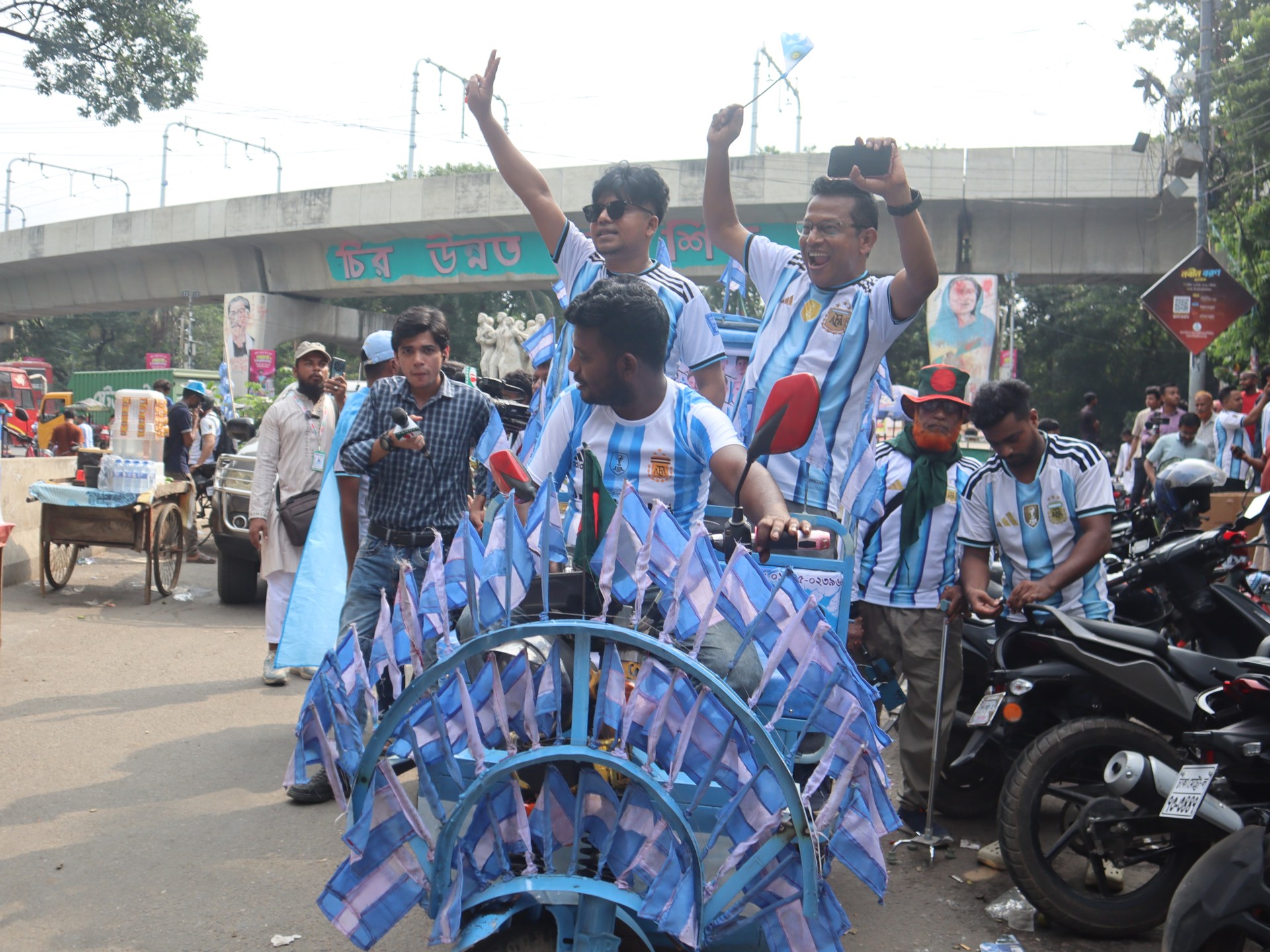
Argentina’s World Cup campaign is again filling streets and public squares in Bangladesh, where supporters gather in the team’s blue and white despite living thousands of kilometres from Buenos Aires. Al Jazeera reported that the devotion, rooted in Diego Maradona’s 1986 triumph and renewed by Lionel Messi, has become a cultural force in a country that has never reached a FIFA World Cup.
In Dhaka on June 17, thousands watched Argentina face Algeria on a giant screen near Dhaka University, according to Al Jazeera. After Messi scored three times, fans kept chanting for Argentina and Messi, blowing vuvuzelas and celebrating after the screen went dark.
The scenes are familiar during World Cup years in Bangladesh. Al Jazeera reported that neighbourhoods, apartment blocks and university campuses set up screenings, while streets fill with Argentina flags and shirts whenever the team plays.
Maradona built the base
Abdul Hai, a 50-year-old supporter in Dhaka, told Al Jazeera that his attachment to Argentina began with Maradona at the 1986 World Cup. He said Maradona’s flair, emotion and fame made a lasting impression on Bangladeshi fans, including those who were children at the time.
Former Bangladesh national team coach and player Shafiqul Islam Manik told Al Jazeera that Argentina’s support in Bangladesh began to grow sharply in 1986. He linked it to Argentina’s victory over England after the Falklands War and to Maradona leading the team to the title.
Manik said Brazil already had a large following in Bangladesh because of its World Cup history and star players. Argentina, he told Al Jazeera, became the main rival allegiance, and Maradona’s tears after Argentina lost the 1990 final deepened sympathy among many fans.
Messi generation keeps it alive
Younger supporters are more likely to trace their loyalty to Messi than to Maradona. Dwin Islam, a private-sector employee, told Al Jazeera at a supporters’ rally in Dhaka that he had followed Argentina since childhood because of Messi.
Others described family loyalties. Mohammad Jahir told Al Jazeera that he inherited support for Argentina from his father before developing his own attachment to the team’s style of play. He said late-night kickoff times in Bangladesh had not stopped him from watching.
Al Jazeera also reported that Argentina’s popularity has entered public diplomacy. Marcelo Carlos Cesa, Argentina’s ambassador to Bangladesh, has attended public screenings in Dhaka. After Bangladeshi celebrations for Argentina drew international attention during the 2022 World Cup, Buenos Aires reopened its embassy in Dhaka in 2023 after a 45-year closure, a move Al Jazeera said also reflected wider diplomatic and commercial aims.
Passion without a pathway
Sports journalist and commentator Shahanoor Rabbani told Al Jazeera that Bangladesh’s attraction to Argentina and Brazil is tied to football heroes, from Maradona to Messi and from Ronaldo and Rivaldo to Neymar. He said Bangladeshi fans often rally around a central star, even in a team sport.
The rivalry can split households. Al Jazeera reported that one student at the Dhaka rally supported Brazil while his brother and father backed Argentina and his mother supported Brazil. Another supporter, Zubaida Islam Jerin, brought a pet cat named Messi wearing an Argentina jersey.
Rabbani said the enthusiasm also raises a harder question about Bangladesh’s own football. He told Al Jazeera that the country, ranked 181st in the FIFA men’s rankings, lacks enough fields, facilities, academies and clear routes for young athletes.
Manik told Al Jazeera that Bangladesh once had strong football foundations but failed to build a system for future players. Rabbani pointed to Bangladesh’s cricket milestones in 1997 and 1999 as evidence that sporting success can lift national mood, and argued for greater investment in sport.
This story draws on original reporting from Al Jazeera.