
Aoun seeks Trump’s support for Israeli pullback from southern Lebanon
Lebanon’s president is in Washington as Beirut pushes for Israeli withdrawal, army funding and a plan to curb Hezbollah’s armed role.
By Daniel Okafor · Business Editor
3 min read
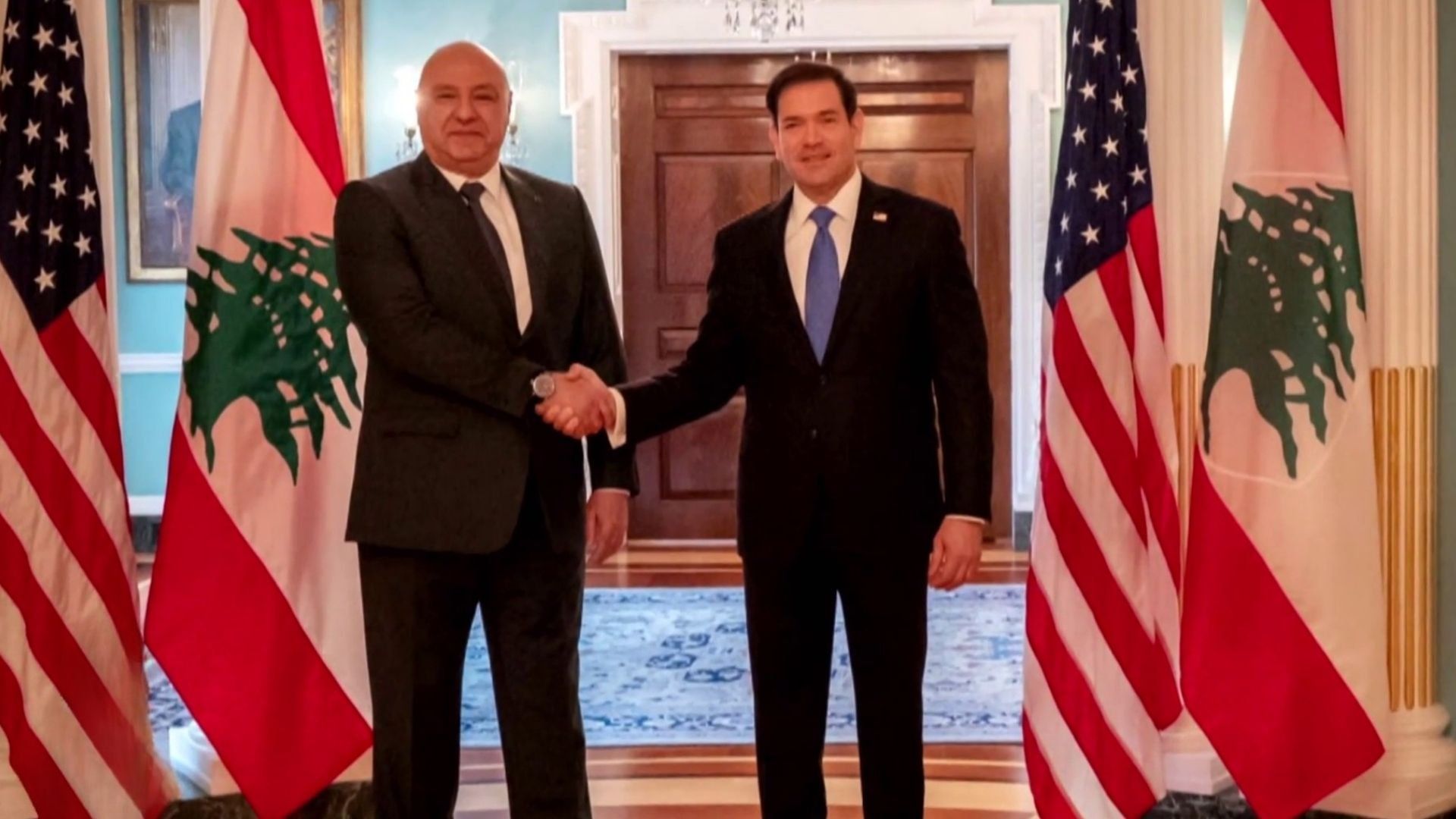
Lebanese President Joseph Aoun is scheduled to meet US President Donald Trump in Washington on Tuesday as Beirut seeks US backing for Israel to leave parts of southern Lebanon. Al Jazeera and The Associated Press reported that Aoun is also asking for support for Lebanon’s army as it tries to extend state authority in areas where Hezbollah has long held power.
The meeting comes after US-mediated discussions between Lebanese and Israeli officials in Rome last week. According to Al Jazeera and AP, those talks focused on carrying out an agreement the two sides signed on June 26.
The Lebanese presidency said Aoun and his wife arrived at Joint Base Andrews on Saturday for a four-day official visit. Al Jazeera and AP reported that it is the first Washington visit by a Lebanese president since Michel Sleiman met then-President Barack Obama in 2009.
US links support to Hezbollah issue
US Secretary of State Marco Rubio met Aoun on Sunday and said Washington would support full implementation of the agreement, according to Al Jazeera and AP. Rubio warned that Lebanon would “never be fully at peace” while Hezbollah’s status remained unresolved.
“How do you replace Hezbollah? You defeat and replace them with a government that is strong enough to be the sole force of arms in the country,” Rubio said after the meeting, according to Al Jazeera and AP.
Some Lebanese critics fear a direct military clash with Hezbollah could push the country toward civil conflict, Al Jazeera and AP reported. Lebanese officials have also called for investment in damaged infrastructure to strengthen the state, a point Rubio also raised when he said the issue was not limited to security and included attracting US and international investment.
Withdrawal plan begins in the south
The Israeli military said Monday that a phased pullback known as the “pilot zone programme” had started, according to Al Jazeera and AP. Under the plan, Israeli forces would leave a limited number of areas in southern Lebanon while remaining in other places they entered after the war with Hezbollah escalated in March.
Al Jazeera and AP reported that the escalation has killed more than 4,300 people and displaced 1.2 million. The plan also calls for Lebanese troops to seize Hezbollah weapons in parts of southern Lebanon.
Reuters reported Tuesday, citing a senior Lebanese security official, that Lebanese soldiers had begun deploying in Zawtar al-Gharbiyeh after Israeli forces withdrew from the southern town.
The recent Rome talks suggested implementation could begin soon, but Al Jazeera and AP reported that the process faces major political and security barriers. Hezbollah has opposed Lebanon’s direct talks with Israel and efforts to remove its weapons, while Israel has said it will not complete a withdrawal unless Hezbollah is disarmed and demilitarised.
Lebanon’s government, which took office in early 2025 on a reform platform, pledged to disarm non-state groups, including Hezbollah, according to Al Jazeera and AP. Lebanese troops later moved into parts of the south to collect Hezbollah weapons under a ceasefire arrangement after the 2024 war.
Those efforts were disrupted when fighting resumed in March, after Hezbollah attacked Israel in support of Iran while Iran was under attack by Israel and the US, Al Jazeera and AP reported. Beirut blames Hezbollah for pulling Lebanon into another war with Israel, while also criticizing Israel’s ground invasion and extensive air campaign.
Lebanon’s leaders say Israeli withdrawal and outside funding for the country’s strained army are needed for a durable security arrangement, according to Al Jazeera and AP. They face opposition from Hezbollah and its allies inside Lebanon’s divided political system.
This story draws on original reporting from Al Jazeera.