
Analyst says US is widening pressure campaign against Iran
Farhad Pashavand argues Washington is tying NATO, Turkiye and regional conflicts into a broader effort to strain Tehran and its allies.
By Daniel Okafor · Business Editor
3 min read
The United States is trying to broaden pressure on Iran by linking domestic strain, border insecurity, regional conflicts and Western coalition-building, according to an analysis by Farhad Pashavand for Al Jazeera. The argument matters because it casts President Donald Trump’s appearance at a NATO summit in Turkiye as part of a wider Iran strategy rather than a stand-alone European security visit.
Pashavand, identified by Al Jazeera as an international affairs analyst, wrote that Washington has concluded direct military, political and economic pressure has not forced Iran to change its conduct, power structure or strategic direction. He argued that the US is shifting toward a layered approach meant to stretch Iran across several fronts at the same time.
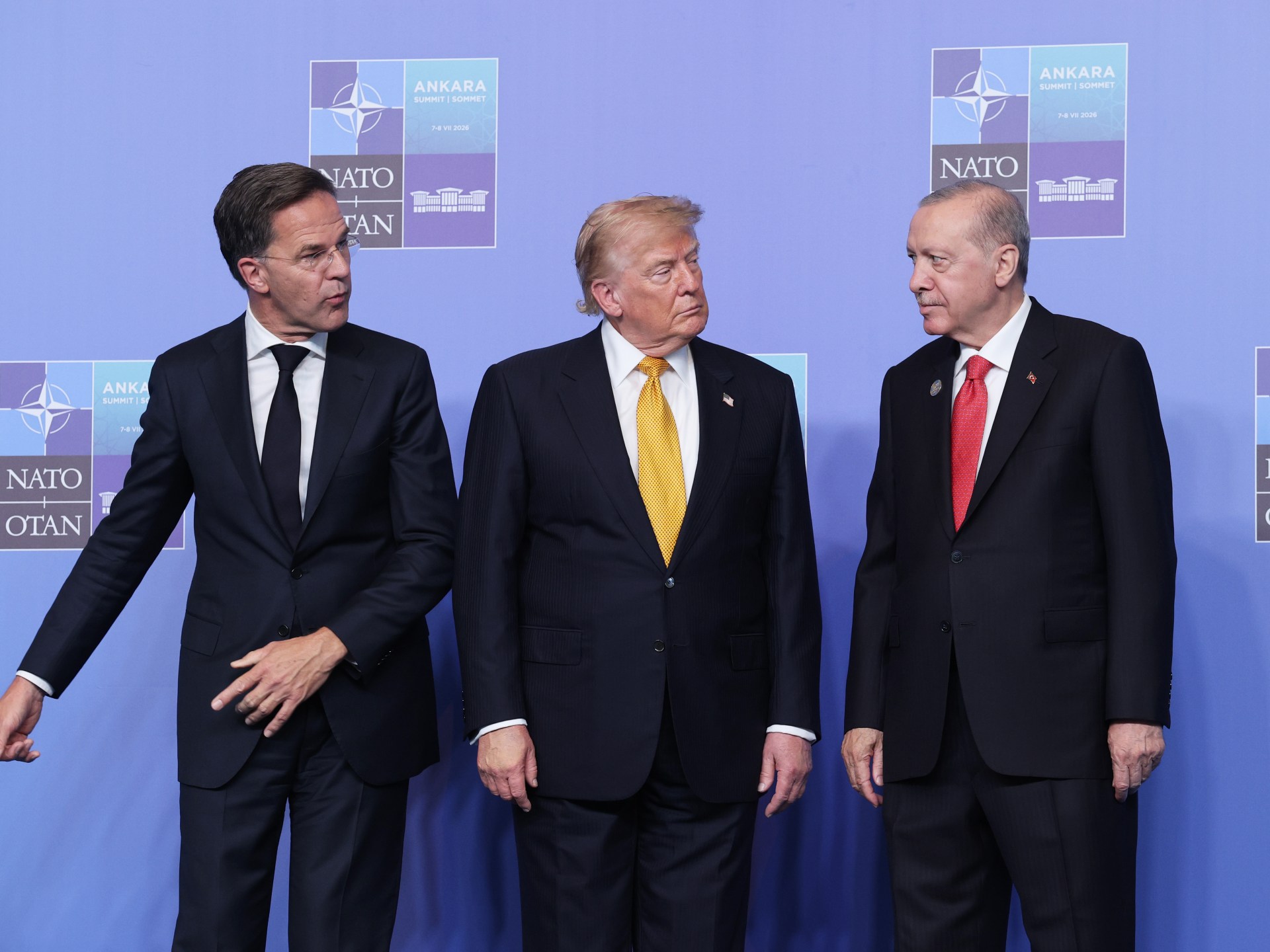
Trump attended the NATO gathering in Ankara alongside NATO Secretary General Mark Rutte and Turkish President Recep Tayyip Erdoğan, according to Al Jazeera’s photo caption. Leaders from NATO’s 32 member states, as well as partners including Ukraine, met to discuss issues including defence spending targets, defence industrial production and support for Ukraine, the caption said.
Pashavand argued that the summit also gave Washington a venue to connect Iran to wider Western security concerns. In his view, the US is trying to turn Iran from a bilateral dispute into a shared issue for Western allies, using matters such as Ukraine, energy security and trade routes to seek more European alignment.
He wrote that this effort has limits, saying some European positions show Washington has not yet secured full European backing for a maximum-pressure approach toward Tehran. He also argued that coalition-building would help the US present any later action against Iran as more collective and legally defensible.
Pressure points around Iran
Pashavand said the strategy he sees has three regional tracks: raising insecurity around Iran’s borders, increasing pressure on Tehran-aligned forces in Lebanon, Palestine, Iraq and Yemen, and securing limited battlefield or operational gains that can be portrayed as reducing Iranian influence.
He argued that the US and Israel view Hezbollah, Palestinian armed groups, Yemen’s Ansar Allah movement and Iran-aligned Iraqi forces as still politically or militarily relevant despite years of pressure. That assessment, he wrote, has pushed Washington toward efforts to reshape Iran’s surrounding environment rather than rely on one decisive blow.
Turkiye’s role is central in that reading. Pashavand argued that US consultations with Ankara should be seen partly through the lens of border, ethnic and security dynamics near Iran, especially to Iran’s west and northwest.
He also linked Syria, Lebanon and Hezbollah, arguing that Syria could be used to affect Lebanon’s balance and increase pressure on Hezbollah. Pashavand described these files as connected parts of a single effort to raise political, security and on-the-ground pressure on Iran and the groups it supports.
Gaza, Yemen and Iraq
In Gaza, Pashavand argued that Israel is seeking to entrench new demographic and territorial conditions while limiting reconstruction outside security buffer areas. He wrote that this would let Israel shift more attention to the West Bank, where he said its goals include constraining Palestinian resistance activity.
On Yemen, Pashavand wrote that Israel established a “Yemen Desk” inside Mossad about eight months ago, a move he said reflected the growing importance of Ansar Allah in Israeli intelligence planning. He argued that targeted US and Israeli action against the group could become more likely.
Pashavand said Iraq remains another part of the same approach, with the US seeking to contain or weaken Iran-aligned forces there. He concluded that Washington’s broader effort is designed to reshape the balance of power in West Asia in favor of the US and Israel, though he argued it would fail because of local conditions and support for resistance groups.
Al Jazeera noted that the views in Pashavand’s piece were his own and did not necessarily reflect the outlet’s editorial policy.
This story draws on original reporting from Al Jazeera.