
UK plans AI face age checks for asylum seekers despite accuracy concerns
An internal Home Office report found facial age estimation tools made larger errors for some groups, according to WIRED and Lighthouse Reports.
By Maya Lindqvist · Senior Technology Correspondent
4 min read
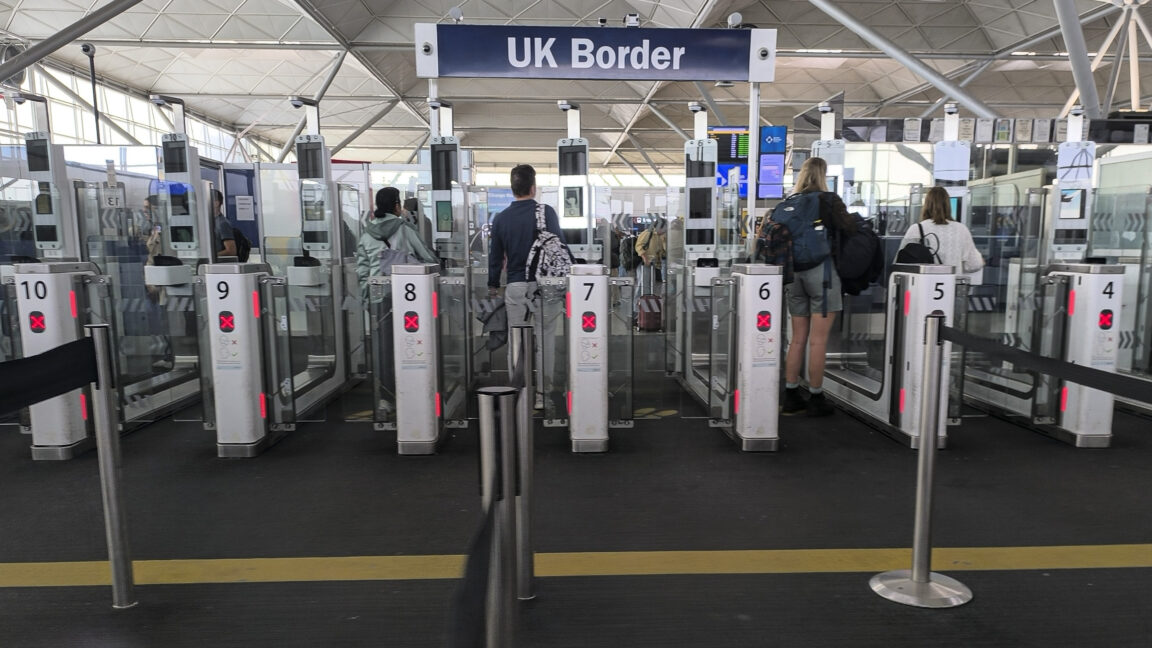
The UK plans to use AI facial age estimation at the border to help assess whether asylum seekers are children, a decision that could affect detention, safeguards and legal treatment. An investigation by WIRED and Lighthouse Reports, working with The Independent, found that internal Home Office testing raised serious concerns about accuracy and bias before the planned rollout.
The technology scans a person’s face and estimates age. The Home Office has said it would be used as an additional aid for immigration officers, not as a replacement for human judgment, and that people would be treated as children when there is uncertainty until a fuller assessment is completed.
The government announced the plan in July 2025 and has delayed implementation until 2027, according to WIRED and Lighthouse Reports. The Home Office has described the tool as a way to support age decisions and target adults it says falsely claim to be under 18.
Internal testing found uneven performance
WIRED and Lighthouse Reports said they obtained an April 2025 Home Office report describing tests of seven facial age estimation algorithms on more than 2.5 million images. The report did not name the companies behind the systems and focused largely on the best-performing algorithm, according to the investigation.
That system performed worse on images of Sub-Saharan Africans than on other groups, the investigation found. For female Sub-Saharan Africans, the average error was 4.6 years, meaning a 13.5-year-old girl could be estimated to be 18, according to the internal report cited by WIRED and Lighthouse Reports.
The report also found that the system tended, on average, to estimate a 17-year-old as older than 18 and performed worse on females, according to the investigation. Home Office data cited by WIRED and Lighthouse Reports showed Sub-Saharan Africans have been the largest group among migrants crossing the English Channel in small boats in recent years and had more age assessments raised in 2025 than groups from other regions.
Many asylum seekers arrive without documents proving their age. If a child is wrongly assessed as an adult, they can lose protections available to minors and may be placed in adult-only detention settings, according to WIRED and Lighthouse Reports.
Photo quality and stress raised further questions
The internal Home Office report said its tests relied mainly on high-quality images of documented people, which may not reflect conditions at the border, WIRED and Lighthouse Reports reported. The few images taken during initial encounters with asylum seekers were routinely worse than later photographs of the same people, according to the report.
The report also said it was difficult to separate the effect of poor image quality from the physical condition of people arriving after difficult journeys, according to the investigation. It concluded that more study was needed on how stress and trauma before arrival may affect the systems’ estimates.
Testing by the US National Institute of Standards and Technology has found that facial age estimation accuracy can vary by race, image quality and other factors, according to WIRED and Lighthouse Reports. NIST tests have shown the best systems can estimate age within about 2.5 years in controlled laboratory settings, but performance varies by algorithm and conditions.
Committee closed as AI plans advanced
WIRED and Lighthouse Reports reported that the Home Office disbanded a scientific committee that had advised on broader age estimation methods while the department was exploring AI tools. Tim Cole, an emeritus professor of medical statistics at University College London’s Institute of Child Health and a former committee member, told the outlets that the committee was not given the chance to highlight problems with facial age estimation and called the scans “hideously inaccurate.”
A Home Office spokesperson told WIRED and Lighthouse Reports that the department has rigorous age-verification processes and is testing fast and effective facial age estimation technology to modernize them. The spokesperson said the committee was closed because different expertise was needed.
The Home Office did not directly answer detailed questions from the outlets about officer training, photo standards, use in real border settings or steps to reduce demographic disparities. It said the UK’s National Physical Laboratory has been asked to conduct an independent review of testing and trial results.
The UK spent more than $400,000 in May on face-scanning technology from German company Cognitec, according to public contract data cited by WIRED and Lighthouse Reports. Cognitec told the outlets it could not comment on its Home Office work, but said demographic differences affect all facial scanning algorithms and that it is working to reduce bias.
Rights group Foxglove and 61 other organizations sent an open letter asking the Home Office to drop the plan, according to WIRED and Lighthouse Reports. Martha Dark, Foxglove’s co-executive director, said asylum-seeking children should not be used to test technology she described as inaccurate and racially biased.
This story draws on original reporting from Ars Technica.