
SpaceX delays Starship test after booster engines fail to ignite
An automatic abort stopped the Starship Flight 13 countdown at Starbase, with Elon Musk saying two Raptor engines will be replaced.
By James Whitfield · Staff Writer
3 min read
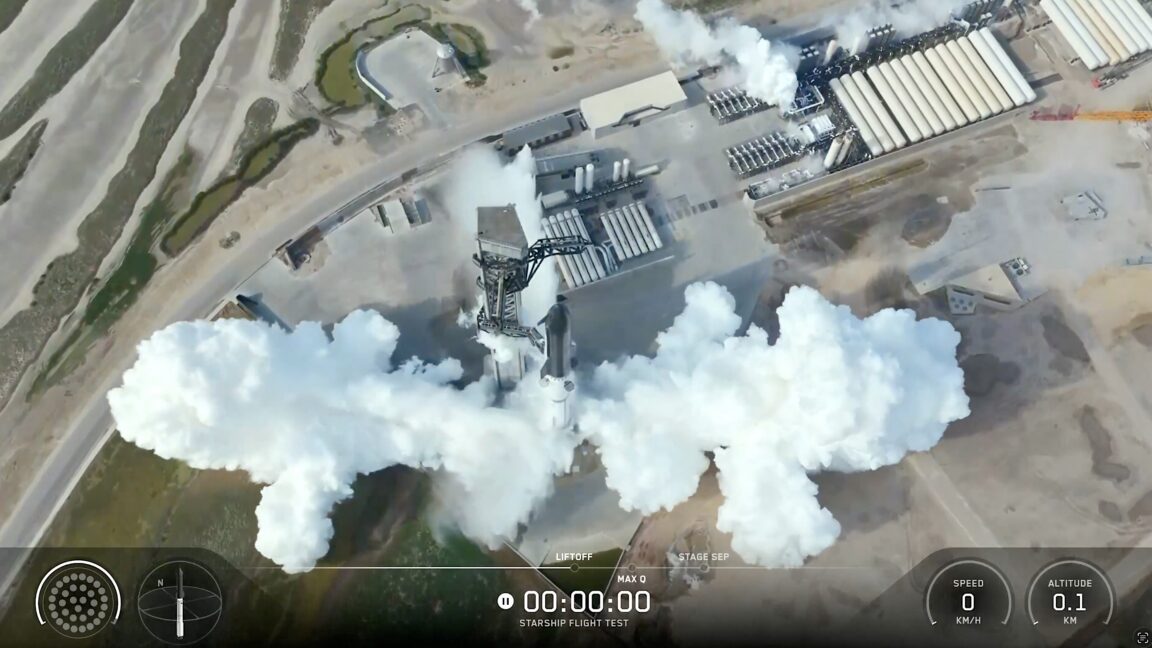
SpaceX called off a Starship test flight Thursday at its South Texas launch site after the Super Heavy booster ran into trouble during engine startup. The delay affects Flight 13, a test SpaceX is using to check fixes tied to engine problems seen on the previous Starship launch.
The company had targeted a 5:45 p.m. local liftoff from Starbase, Texas, near the U.S.-Mexico border. According to SpaceX, the countdown reached zero after teams loaded more than 11.5 million pounds of liquid methane and liquid oxygen into the two-stage rocket, which stands more than 400 feet tall.
SpaceX said the launch system automatically stopped the attempt during the Super Heavy ignition sequence. After the abort, the company began removing propellant from the vehicle.
Elon Musk, SpaceX’s founder and chief executive, wrote on X that “some of the engines didn’t start,” which caused the automatic abort. Musk later said teams would replace two Raptor engines on the booster and that the most likely timing for another try was early next week.
Engine startup draws attention
The Super Heavy booster uses 33 methane-burning Raptor engines. SpaceX has said each engine can produce more than 500,000 pounds of thrust, and the engines are intended to start in sequence after activation of the launch pad’s water-cooled flame diverter.
SpaceX did not immediately say how many engines failed to ignite. A status display on the company’s live video stream appeared to show that four of the booster’s 33 engines did not light.
The vehicle assigned to Flight 13 uses SpaceX’s third-generation Raptor engines on its upgraded Starship Version 3 design. SpaceX first flew that combination on Flight 12 in May, a test the company described as mostly successful, though the Raptor 3 engines had problems after liftoff.
According to SpaceX, the pad startup sequence on the May flight did not cause trouble. The issues appeared later, including during the booster’s post-separation maneuver and landing sequence.
Flight 13 carries unfinished test goals
SpaceX has said Flight 13 is meant to test changes made after Flight 12. In a recap of the May mission, the company said slight timing differences in Starship engine startup at stage separation caused the booster’s flip maneuver to miss the intended orientation by about 90 degrees.
SpaceX said it adjusted the startup sequence to make that maneuver more tolerant of timing differences and to improve the booster’s performance. The company is also trying again to complete a controlled splashdown of the Super Heavy booster in the Gulf of Mexico after some engines failed to restart during the May landing burn.
The Starship upper stage also had an engine issue on Flight 12, according to SpaceX. One of its six Raptor engines shut down early, but the vehicle continued toward a targeted water landing in the Indian Ocean. SpaceX skipped a planned in-space Raptor relight on that mission.
A successful Flight 13 would support SpaceX’s next steps for Starship, including a move toward orbital flight. SpaceX plans to use Starship for Starlink launches and orbital refueling tests, and NASA has selected a Starship-derived lander for the Artemis program’s planned Moon missions.
This story draws on original reporting from Ars Technica.