
Rock erosion may have amplified ancient Jurassic warming
A Nature Communications study finds organic carbon weathering likely added CO2 during a major Jurassic climate event, with uncertain lessons for today.
By Hana Yoshida · Markets Reporter
4 min read
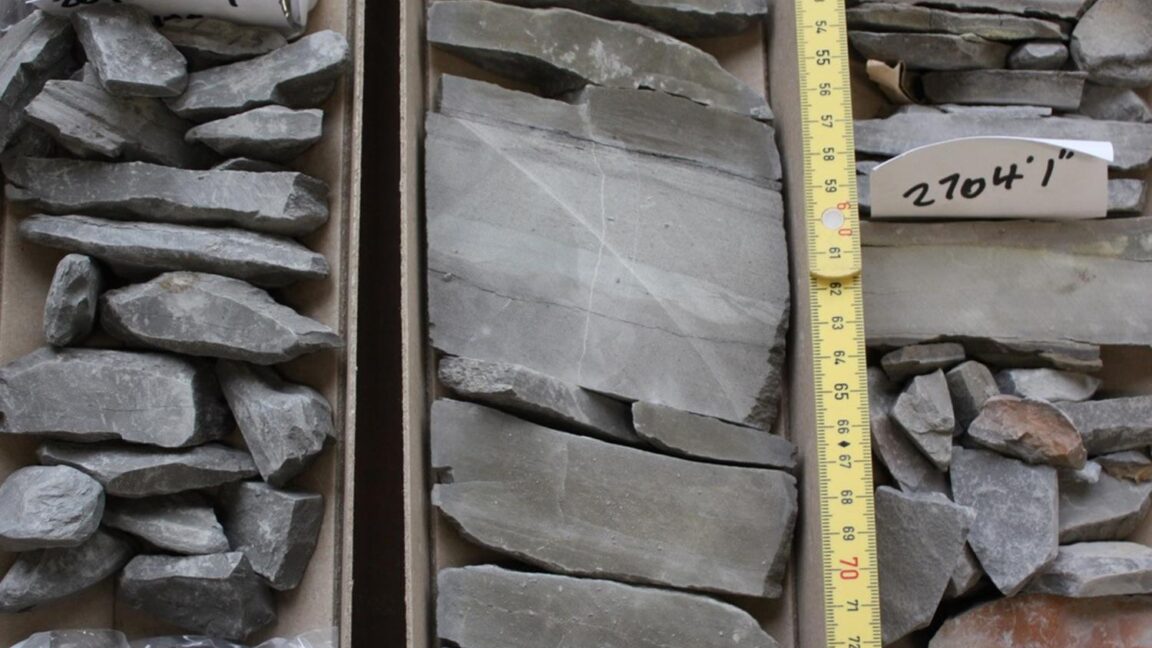
Rock erosion appears to have added carbon dioxide to the air during a major Jurassic warming episode, according to a new study in Nature Communications. The finding matters because weathering is best known as Earth’s long-term carbon drawdown system, yet some forms of erosion can also feed warming.
Madeleine Stow of the University of Oxford and colleagues in the UK and France studied the Toarcian Ocean Anoxic Event, a climate disruption about 183 million years ago. The event followed large volcanic eruptions across what are now South Africa and Antarctica, which were joined at the time, and has been linked by earlier research to 6 to 7 degrees Celsius of global warming, changes in land species and marine extinctions.
How the team traced ancient carbon
Scientists have understood since the early 1980s that the breakdown of rocks can remove CO2 from the atmosphere over geological timescales, according to prior Earth science research. More recent studies have shown another side of the process: erosion can expose organic carbon in sediments, which can oxidize and release CO2.
Stow’s team tested that competition by measuring rhenium isotopes in ancient seabed sediments. Rhenium binds with organic matter in sediments, and when older organic-rich rocks erode on land, the carbon can enter the air as CO2 while rhenium is carried by rivers to the sea and locked into new sediments.
The researchers used a 1,300-meter drill core from Wales that spans the late Triassic to early Jurassic and is held by the British Geological Survey. The core was drilled in the 1960s, according to the study account.
The measurements required highly sensitive mass spectrometry because rhenium concentrations in the rock can be as low as one billionth of a gram per gram of rock. The team sampled shale from different levels of the core, dissolved the material in acids and measured isotope ratios using inductively coupled plasma mass spectrometry.
According to the study, the rhenium isotope record shifted as the Toarcian warming developed, indicating that organic carbon weathering grew stronger as the climate warmed. Oxford professor Bob Hilton, a co-author and principal investigator, said modern measurements suggest a warmer planet should weather this material more intensely, and the core shows the same pattern during the ancient event.
A possible missing source of CO2
A 2024 study led by Penn State professor Isabel Fendley used the same core and mercury as a volcanic tracer to estimate volcanic CO2 during the Toarcian event. That work concluded volcanic emissions alone did not fully explain the warming, implying another greenhouse-gas source.
Hilton said the rhenium results help account for that gap. In the researchers’ interpretation, CO2 from organic carbon weathering added to the volcanic warming rather than replacing volcanism as the trigger.
Other scientists urged caution on the size of the effect. Colorado State University professor Jeremy Caves Rugenstein, who was not involved in the work, said the study’s estimated carbon release from the feedback is very large and that he finds it difficult to accept fluxes as high as the authors propose.
Lawrence Livermore National Laboratory researcher Katherine Grant, also not involved, said the use of rhenium isotopes in an ancient geological setting opens a way to examine other past climate disruptions. Rugenstein said earlier work by Hilton’s group has changed how scientists think about interactions between geologic organic carbon and climate.
Lessons for the present remain limited
The results do not overturn the role of silicate weathering, which removes atmospheric CO2 and acts as a long-term climate stabilizer. Hilton said the study means that silicate weathering has to counter a positive feedback from organic carbon oxidation.
Rugenstein said the organic carbon feedback has a hard limit because it depends on how much organic-rich sediment is exposed and available to oxidize. Silicate minerals are far more abundant, he said, giving that CO2-removal feedback a larger long-term buffer.
Hilton said the same process could add some CO2 over the next few centuries and slightly amplify human-driven warming, while stressing that the effect is not catastrophic. He said it could still reduce the remaining carbon budget if carbon is released faster than it is today.
The size and timing of any modern effect remain uncertain, according to Grant and Rugenstein. Rugenstein pointed to changing storms, landslides, erosion, sediment burial and human alteration of sediment movement as unresolved factors, and said CO2 from permafrost and soils is a larger and more immediate positive feedback for people.
The study was published in Nature Communications. DOI: 10.1038/s41467-026-71533-6.
This story draws on original reporting from Ars Technica.