
Polymarket used fake-bet videos in creator campaign, Journal reports
The Wall Street Journal said paid creators staged Polymarket wins on replica sites as the company seeks broader U.S. access.
By James Whitfield · Staff Writer
3 min read
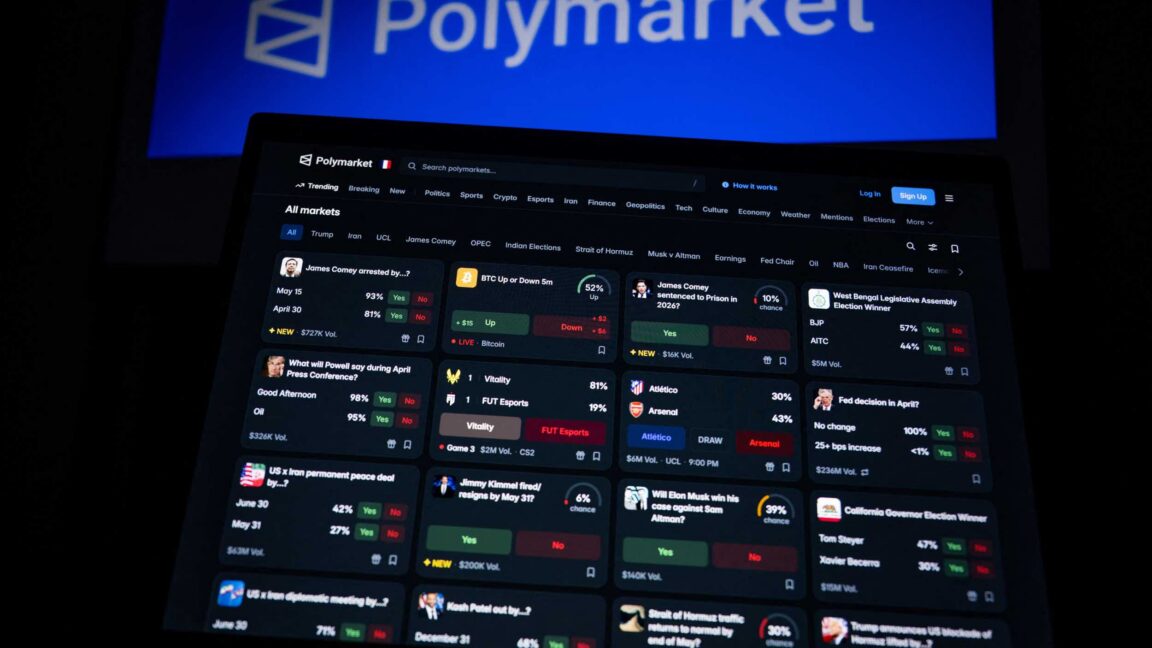
Polymarket paid social media creators to stage bets and apparent wins on look-alike versions of its prediction-market site, according to a Wall Street Journal investigation. The report raises questions about the company’s promotional practices while its main exchange remains unavailable to U.S. users and Polymarket seeks a broader U.S. return.
The Journal said the campaign used videos that appeared to show ordinary users placing wagers and collecting large payouts. In one January video cited by the Journal, college student George Makihara appeared to win $100,000 on a bet that President Trump would publicly say “McDonald’s” that month, but the Journal said Polymarket trading data showed no such winning bet occurred.
According to the Journal, Makihara appeared to place 145 Polymarket bets from January through May, and all were fake. The newspaper said it reviewed 1,105 videos from 10 creators and found staged bets totaling $1.9 million.
Replica sites and scripted posts
The Journal reported that Polymarket created near-identical copies of its site for creators to use in videos. One password-protected site used the domain poiymarket.com, which can resemble polymarket.com when the “i” is capitalized, the Journal said.
A person familiar with the matter told the Journal that Polymarket built the poiymarket.com site. The Journal said that site was removed after it contacted Polymarket for comment.
Creators told the Journal they sent videos to Polymarket for review, and that the company asked for reshoots when clips looked too obviously staged. The Journal said some videos still briefly showed URLs tied to test environments used by Polymarket engineers.
The Journal also reported that Polymarket gave creators talking points and encouraged posts to appear personal and organic. Creators were told not to put “Polymarket” in their account names and not to disclose they were being paid, according to the Journal.
The creators were paid $2,000 to $3,000 a month, the Journal reported. Some later added “@polymarket partner” to their bios after the Journal began asking the company about the marketing effort, according to the newspaper.
Campaign focused on U.S. viewers
The Journal said the promotion was aimed at U.S. audiences, with creators paid only when at least 60% of their viewers were in the United States. Polymarket’s main platform has been restricted in the U.S. since 2022, when the Commodity Futures Trading Commission found that it had operated an illegally unregistered exchange.
Polymarket’s main site is limited to view-only access in the U.S., according to Ars Technica. Ars reported that users can bypass that block by using a virtual private network.
Polymarket is seeking CFTC approval to bring its main exchange back to the U.S., according to Bloomberg, and it also offers a narrower U.S.-regulated service through a mobile app. Ars Technica reported that Polymarket launched the app after acquiring QCX, a CFTC-licensed exchange and clearinghouse now operating as Polymarket US.
The Journal said 118 videos showed creators reacting to old footage or fake headlines suggesting they had won. Those videos depicted nearly $900,000 in winnings, but the bets would actually have lost more than $166,000, according to the Journal.
The campaign drew more than 140 million views on TikTok, YouTube and Instagram, the Journal reported, citing analytics provider Tubular. The newspaper said Polymarket worked with a marketing firm that helped recruit accounts to repost content from 10 Polymarket creators.
In a statement to Ars Technica, Polymarket did not directly address the Journal’s findings but said it was reviewing its marketing. The company said it is conducting “a comprehensive audit of active promotional content” for compliance with its standards and legal disclosure requirements.
This story draws on original reporting from Ars Technica.