
Paint-on electronic tattoos turn skin designs into biosensors
Penn State researchers report a conductive ink that dries on skin as a working electrode for biomonitoring.
By Maya Lindqvist · Senior Technology Correspondent
3 min read
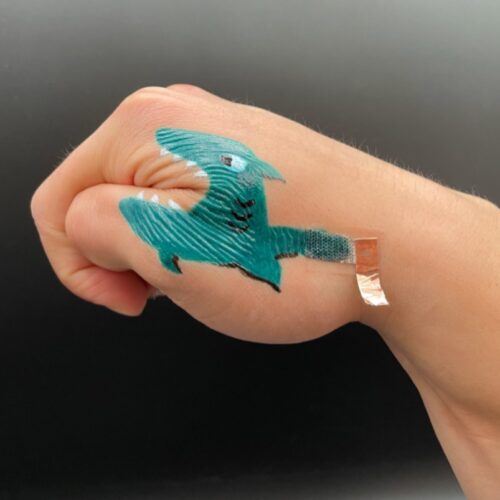
Researchers at Pennsylvania State University have created a conductive ink that can be brushed onto skin and used as an electrode after it dries. The team described the material in a paper published in the Proceedings of the National Academy of Sciences, where they reported that the ink can form colorful, custom designs while supporting biomonitoring.
The work adds a new approach to epidermal electronics, a field that has been trying to make body-worn sensors thinner, less obtrusive and easier to place. Existing electronic tattoos have shown promise, but Ars Technica has reported that they can struggle on curved or hairy areas and may need individualized layouts when sensors must cover larger parts of the body.
How the painted ink fits into e-tattoo research
Electronic tattoos, often called e-tattoos, have been studied for more than a decade, according to prior Ars Technica reporting. These devices typically sit on the skin like temporary tattoos, using ultrathin polymer materials that carry embedded circuit elements.
Because they attach without conventional adhesives, e-tattoos can be difficult for wearers to notice, Ars Technica has reported. The devices can record electrical signals and can also be designed to measure other body-related changes, including temperature and strain.
The Penn State work takes a different route by using a conductive ink that is applied directly to the skin rather than relying on a prefabricated temporary tattoo. According to the PNAS paper, the painted material becomes a functional electrode once dry, allowing the skin design to serve a monitoring role.
The researchers also reported that the ink can be used in colored, customized patterns. That design flexibility could matter for devices meant to be worn on the body, where placement, comfort and appearance can affect whether a sensor is practical.
Why placement remains a challenge
Sensor placement is a major issue in biomonitoring because biological signals can vary across the body, Ars Technica has reported. For larger sensing areas, that can require electrode layouts tailored to the person or the measurement target.
Hair and curved body surfaces add another problem for conventional e-tattoos, according to the same reporting. Those conditions can make it harder for thin electronics to maintain effective contact with the skin.
Other teams have been exploring printed or painted electronics to address similar barriers. In 2024, researchers reported polymer-based conductive inks that could be printed onto a person’s scalp to measure brain waves even through hair, according to a study linked by Ars Technica.
That 2024 work was presented as a possible step toward mobile electroencephalography outside clinical settings. The new Penn State ink sits in the same broader push to make wearable sensing less dependent on rigid devices or standard adhesive electrodes.
The PNAS paper does not make the painted designs sound like a finished consumer product. It does, however, show another way researchers are trying to move biomonitoring electrodes closer to the skin in forms that are lighter, more adaptable and easier to customize.
This story draws on original reporting from Ars Technica.