
NASA’s lunar Gateway habitat faces work stoppage
A contractor on the HALO habitat has been told to stop work as NASA shifts its Moon plans from an orbital station toward a surface base.
By Maya Lindqvist · Senior Technology Correspondent
3 min read
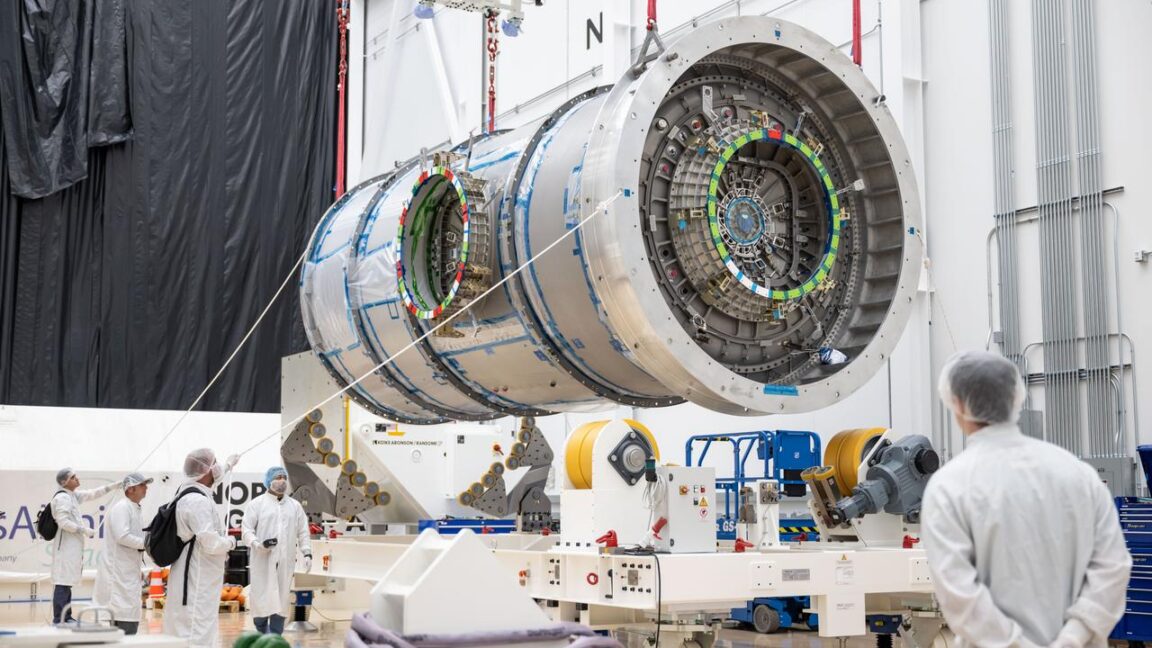
Work on a major habitat planned for NASA’s Lunar Gateway appears to have stalled, raising fresh doubts about whether the module will be used in the agency’s revised Moon program. Ars Technica reported that Paragon Space Development Corp., a key supplier for the Habitation and Logistics Outpost, was told last week to stop work on the vehicle.
The development comes three months after NASA said it would shift the center of its lunar strategy from a station orbiting the Moon to a base on the lunar surface. At that time, agency officials said work on the Gateway would be paused while NASA redirected attention to surface systems.
Gateway had been planned as a small outpost in lunar orbit to support astronaut missions under the Artemis program. Two of its most advanced pieces were the Power and Propulsion Element and HALO, a pressurized living module built around astronaut visits to the station.
NASA has said the Power and Propulsion Element would be reassigned for a nuclear-electric propulsion demonstration in deep space, according to Ars Technica. The future of HALO has been less clear.
HALO is a 6.1-meter-long pressurized module where astronauts would have lived and worked during Gateway visits. NASA has awarded Northrop Grumman contracts valued at $1.1 billion to design, build and integrate the module with the Power and Propulsion Element, Ars Technica reported.
Paragon’s role was tied to HALO’s life-support system. The company received a contract in 2022 worth more than $100 million for that work, according to a Paragon and Northrop Grumman announcement cited by Ars Technica.
Northrop Grumman has not publicly confirmed that HALO is being ended. A company spokesperson told Ars Technica that HALO could be adapted for several lunar missions and described it as the most mature technology available to support a deep-space or lunar habitat.
The spokesperson also said Northrop Grumman and its suppliers would keep working with NASA as the agency considers how to use existing resources. The company added that most employees affected by changes to HALO could be moved to other work within Northrop’s space business, according to Ars Technica.
Ars Technica reported, citing two sources, that the halt has not created a major dispute between NASA and Northrop Grumman. One NASA source told the publication the agency and contractor had reached good terms on how Northrop would support the Moon base effort.
The reason for stopping HALO work is not clear. Ars Technica reported that NASA may have concluded that a large orbital habitat is not needed for early surface operations, or that the module would be too heavy to land on the Moon under the agency’s current approach.
HALO would have a mass of roughly 8 to 9 metric tons once fully outfitted, according to Ars Technica. The publication also noted that a previously reported corrosion issue with HALO could affect the cost or schedule of any attempt to reuse the hardware.
The reported stoppage leaves the Gateway with fewer clear paths forward as NASA prioritizes a lunar surface base. The agency has not publicly announced a final disposition for HALO.
This story draws on original reporting from Ars Technica.