
Male dragonflies use aerial tactics similar to fighter pilots
A new study found territorial male dragonflies maneuver for position behind rivals rather than flying like they do when hunting prey.
By Hana Yoshida · Markets Reporter
3 min read
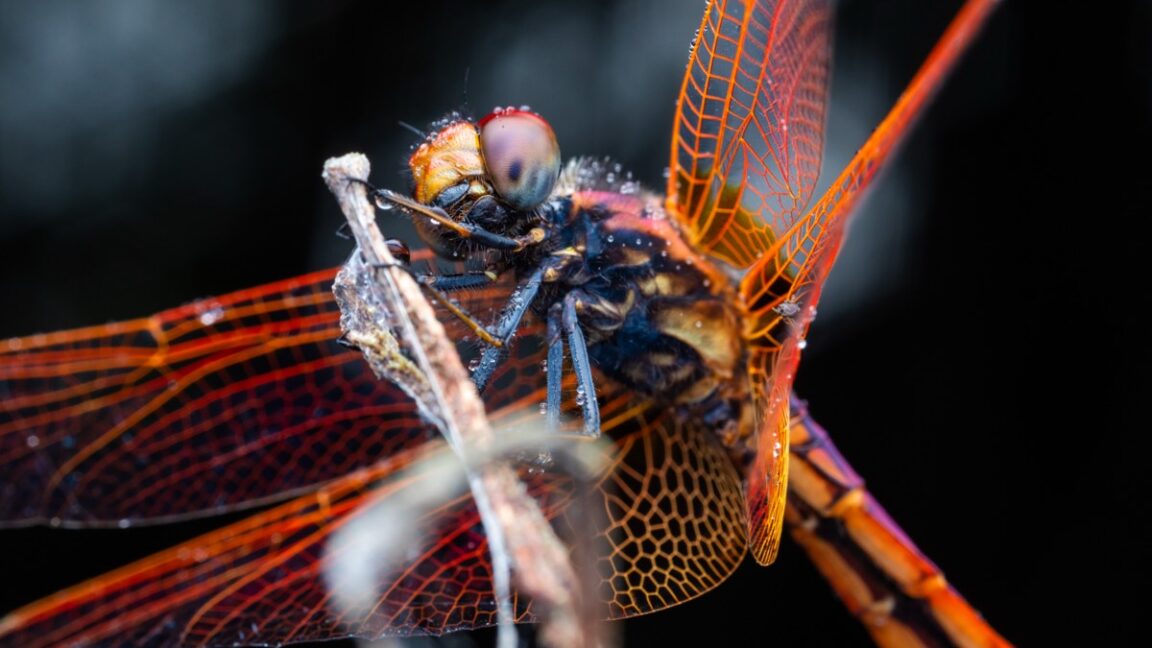
Male dragonflies defending breeding territory appear to use air-combat tactics that resemble those used by fighter pilots, according to a study published in the Journal of the Royal Society Interface. The finding could help engineers design drones that steer with relatively simple visual rules instead of heavier computing demands, the study authors said.
The research examined male Trithemis aurora dragonflies, a crimson-colored species whose males aggressively guard perches around ponds. The authors said that made the insects well suited for studying contests between two flyers with similar goals, rather than the more familiar chase between a predator and prey.
In hunting or mating pursuits, one animal typically chases while the other tries to escape or be intercepted. Male territorial fights are different, the researchers said, because both insects try to gain a better position during the same encounter.
Tracking fights in three dimensions
Earlier work on dragonfly encounters often depended on direct observation or footage from a single camera, according to the study. For the new work, the researchers used a portable stereo video system with two synchronized cameras, recording the insects in color and monochrome.
The team reconstructed 102 paired flight paths from male-on-male contests and compared them with nine flight paths from dragonflies intercepting prey. That allowed the researchers to examine the insects’ three-dimensional movements and build a model of the rules that appeared to guide them.
The study found clear differences between hunting and territorial flight. When pursuing prey, the dragonflies tended to approach from below, placing the target against the sky from the insect’s point of view. During male contests, the flight paths were more tangled, and rivals were more often seen against foliage or the ground.
Position mattered more than interception
The researchers concluded that male dragonflies in these contests were not mainly trying to intercept a rival the way they would intercept prey. Instead, each insect appeared to seek a tactical position behind the other, similar to the “tail-chasing” aim of aerial combat.
The authors compared the behavior with fighter-pilot tactics, including tight turns, spirals and downward vertical maneuvers. They suggested the similarity may reflect comparable constraints: fighter aircraft use forward-facing weapons and radar systems, while dragonflies rely on vision that is especially useful for tracking targets ahead of them.
The insects’ contests involved repeated loops, spirals and role changes, with each male alternating between advantage and disadvantage. The researchers reported that the dragonflies could turn at forces up to 6 Gs, while generally trading top speed for better maneuverability.
The study also found that dragonflies glided at least one-third of the time even in intense fights. The authors said gliding may help conserve energy or may make it easier to keep visual contact with a rival, while flapping powered the sharpest turns.
The comparison with fighter aircraft has limits. The authors wrote that pilots often treat altitude as stored energy that can be converted into speed by diving, making a higher position desirable at the same speed. Dragonflies did not appear to use altitude that way, according to the study; they tended to fly slightly below rivals, a position the researchers said may improve visual tracking rather than energy advantage.
The paper, credited to Samuel T. Fabian and colleagues, was published in 2026 in the Journal of the Royal Society Interface. Its DOI is 10.1098/rsif.2026.0131.
This story draws on original reporting from Ars Technica.