
Isar Aerospace Spectrum launch reaches orbit from Arctic Norway
Germany’s Isar Aerospace placed five small satellites in orbit, marking the first commercial orbital launch from continental Europe.
By Hana Yoshida · Markets Reporter
2 min read
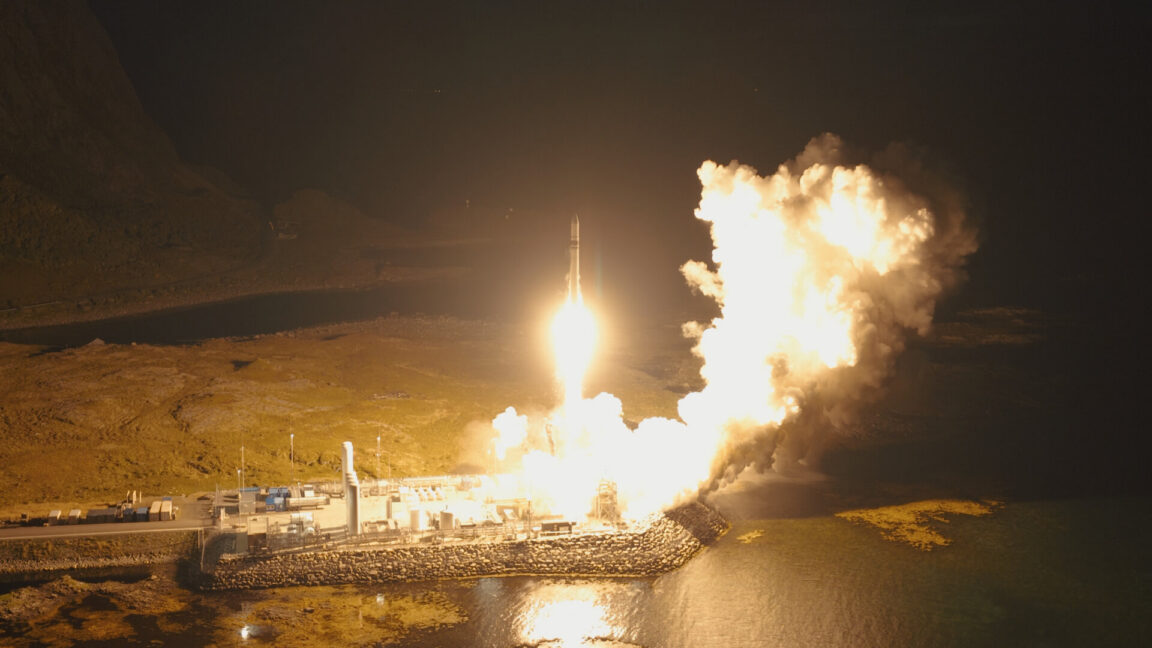
Isar Aerospace’s Spectrum launch reached low Earth orbit from Andøya Spaceport in Arctic Norway on September 5, carrying and deploying five small satellites. The flight gives Europe a commercially developed launch vehicle that has now completed an orbital mission, alongside the continent’s established providers.
The Munich-based startup’s uncrewed, two-stage Spectrum rocket lifted off at 20:12 UTC, according to Ars Technica and Al Jazeera. Ars Technica reported that the 28-metre, or 92-foot, vehicle reached orbit roughly seven minutes later; Al Jazeera reported that Isar said spacecraft separation after deployment was completed successfully.
Why is Spectrum called the first commercial orbital launch from continental Europe?
The milestone is narrowly defined. Multiple outlets describe Spectrum as the first privately developed or fully commercial rocket to reach orbit from continental Europe; it does not mean Europe had never previously conducted an orbital launch.
Europe’s existing launch sector includes Arianespace and Avio, which operate the Ariane 6 and Vega-C rockets and have received substantial government support, Ars Technica reported. Spectrum’s success adds a privately developed option to that field after a single completed orbital flight.
Isar was founded in 2018 by Technical University of Munich students Daniel Metzler, Josef Fleischmann and Markus Brandl, according to Ars Technica. The company is based in Munich, the Financial Times reported.
A second attempt succeeds
The flight was Spectrum’s second launch attempt. The Guardian and Financial Times reported that the first mission, about 18 months earlier, ended soon after liftoff when the rocket crashed; The Guardian said it fell into the sea and exploded.
The successful flight carried five small satellites. The Guardian also reported an in-flight technology experiment, while the Financial Times said the satellites reached orbit aboard Spectrum.
Isar has said it has five more rockets in production and ultimately aims to conduct about 40 launches a year, according to The Guardian. Those are company plans rather than an established launch rate.
European officials and companies have been pursuing greater independent access to space. The launch is a step toward that goal, although the record so far is limited to one successful orbital mission by Spectrum.
This story draws on original reporting from Ars Technica.