
Helium loss spotted from rocky exoplanet near LHS 1140
A Nature study reports helium escaping from a rocky exoplanet about 50 light-years away, offering clues about what remains in its atmosphere.
By Maya Lindqvist · Senior Technology Correspondent
2 min read
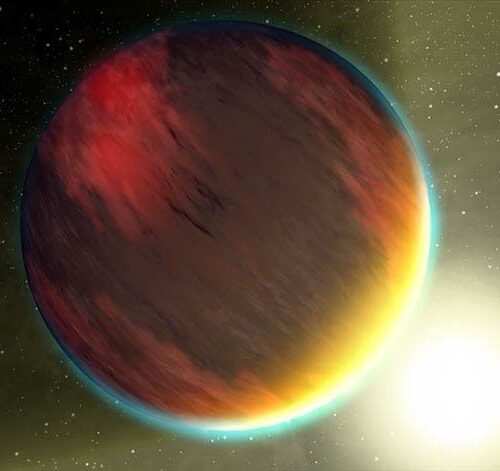
Astronomers have observed helium escaping from the atmosphere of a rocky exoplanet orbiting LHS 1140, a star about 50 light-years from Earth, according to a study described in Nature. The finding matters because the rate of helium loss can help researchers infer what kind of atmosphere the planet still has.
Ars Technica reported that the observation adds a direct data point to a difficult problem in planetary science: how planets lose or change their early atmospheres over long periods. Many planets are thought to begin with atmospheres dominated by hydrogen and helium, matching the most common gases in the universe, according to the report.
Over billions of years, those original envelopes can change substantially, Ars Technica reported. Hydrogen can become part of other compounds, while both hydrogen and helium can escape into space. Venus, Earth and Mars are believed to have secondary atmospheres after their original hydrogen-helium envelopes were lost, chemically altered or both, according to the report.
The Nature study focuses on helium leaving the atmosphere of the exoplanet around LHS 1140. Ars Technica reported that researchers can use the measured loss rate to draw conclusions about the atmosphere that remains, although the dynamics behind atmospheric escape are complex.
Why atmospheric loss is hard to predict
Ars Technica reported that lighter elements tend to escape more readily than heavier ones, but the details depend on several factors. Hydrogen, for example, may be less exposed to loss when it is bound into molecules such as methane or ammonia.
A planet’s gravity also affects whether gases stay bound to it, according to the report. A magnetic field can reduce the ability of radiation to drive material out of an atmosphere, while a planet’s distance from its star influences both the radiation it receives and the heating of its upper atmosphere.
Ars Technica reported that heat from a nearby star can cause an atmosphere to expand, weakening the planet’s hold on its outer layers. That combination of radiation, temperature, chemistry, gravity and magnetic protection makes it hard to predict what astronomers should find when they study exoplanets.
The LHS 1140 observation gives researchers a way to test those ideas against an actual planet outside the solar system, according to the Nature study. By watching helium escape, scientists gain evidence about how a rocky planet’s atmosphere may be changing now and how its earlier hydrogen-helium envelope may have evolved.
This story draws on original reporting from Ars Technica.