
Health nominees face Senate grilling over vaccines and CDC autonomy
Senators challenged Erica Schwartz and Sean Kaufman on vaccine policy, CDC independence and emergency preparedness roles.
By James Whitfield · Staff Writer
4 min read
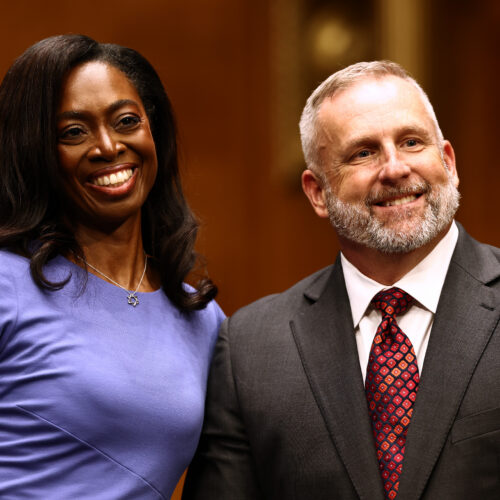
Two nominees for senior Trump administration health posts faced sharp scrutiny Wednesday before the Senate Health, Education, Labor and Pensions Committee, Ars Technica reported. The hearing put vaccine policy, CDC independence and federal emergency readiness at the center of their confirmation fights.
The committee questioned Erica Schwartz, nominated to lead the Centers for Disease Control and Prevention, and Sean Kaufman, nominated to become assistant secretary for preparedness and response. That office oversees the Administration for Strategic Preparedness and Response, which helps prepare the country for pandemics, bioterror threats and other health emergencies.
Schwartz questioned on CDC independence
Schwartz entered the hearing with credentials senators did not seriously dispute, according to Ars Technica. She has medical, public health and law degrees, served as a Navy officer, worked as chief medical officer for the U.S. Coast Guard and served as deputy surgeon general during Trump’s first administration.
The harder issue was whether she would push back against Health Secretary Robert F. Kennedy Jr. if she believed politics were overriding science. Sen. Bill Cassidy, the Louisiana Republican who chairs the committee and is a physician, asked Schwartz whether she would show the same integrity he attributed to Susan Monarez, the previous Senate-confirmed CDC director.
Schwartz did not answer that question directly, Ars Technica reported. She told Cassidy she had led with integrity and referred to the Hippocratic oath, but Cassidy pressed her for a firmer commitment.
Cassidy also asked whether she would have authority as CDC director to reassign agency staff if Kennedy directed employees toward work Cassidy described as counterproductive, including efforts to look for harms from vaccines. Schwartz said Kennedy would allow her to be CDC director, according to Ars Technica, but did not give the yes-or-no answer Cassidy sought.
Sen. Bernie Sanders of Vermont, the committee’s ranking member, asked Schwartz whether she accepted the scientific evidence that vaccines do not cause autism. Ars Technica reported that Schwartz first said scientists do not know what causes autism, then said she accepted the evidence after Sanders pressed her.
Sanders also asked whether Schwartz would alert Congress if Kennedy or another Trump administration official directed her to carry out policies she viewed as unscientific and harmful. Schwartz replied that she did not believe the president or the secretary would do that, prompting Sanders to challenge her view of the administration’s record.
By the end of the hearing, Cassidy said he felt Schwartz had repeatedly avoided his questions, Ars Technica reported. He told her he liked her personally but had to represent public health against ideological pressure.
Kaufman pressed on vaccine comments
Kaufman faced questions over past vaccine statements reported by Stat News. Stat reported that Kaufman had raised the debunked claim that vaccines cause autism, promoted “natural immunity,” opposed vaccine mandates and criticized supporters of the hepatitis B vaccine birth dose.
At the hearing, Kaufman confirmed he had once written that he would rather die than have his children receive a COVID-19 vaccine, according to Ars Technica. He also said he had recommended the vaccine to his wife’s mother and noted that his three children received the hepatitis B birth dose.
Cassidy, who has treated severe hepatitis B cases as a hepatologist, reacted angrily to Kaufman’s past statements about that vaccine. Ars Technica reported that Cassidy asked Kaufman why he had repeated “those damn lies.” Kaufman said he had deleted the LinkedIn post and argued that his wording had been ambiguous.
Senators also questioned Kaufman about mRNA vaccine research. Ars Technica reported that Kaufman said he supported Kennedy’s decision to cut mRNA research funding while also saying the United States should support more research into mRNA technology.
Sen. John Hickenlooper of Colorado said Kaufman’s position suggested the government could not do two things at once, according to Ars Technica. Sen. Patty Murray of Washington said she did not understand how Kaufman could favor more research while backing its cancellation.
This story draws on original reporting from Ars Technica.